
Were they trailing Ivy?
Spending far too much time with the police in Togo

TOGO
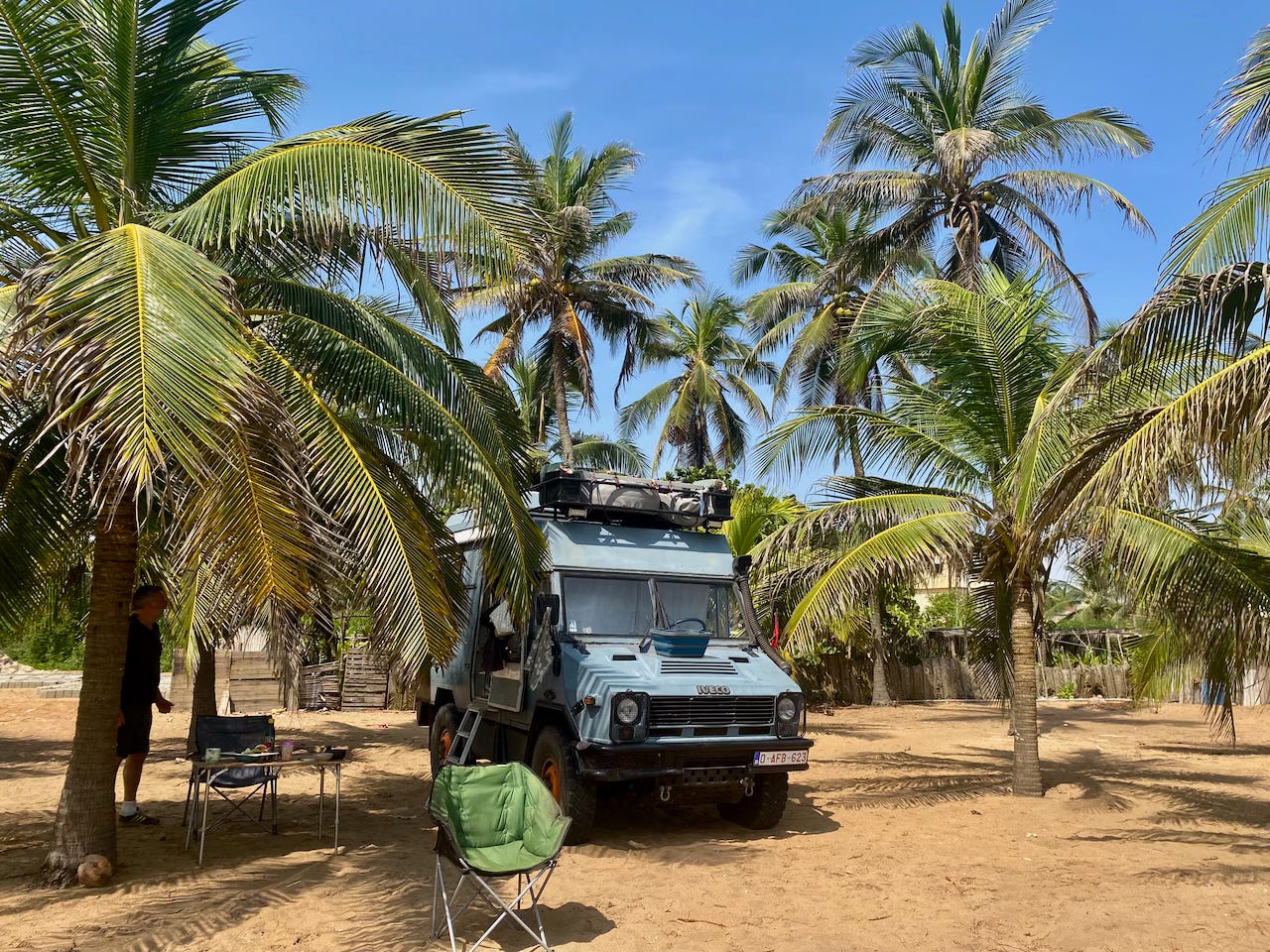
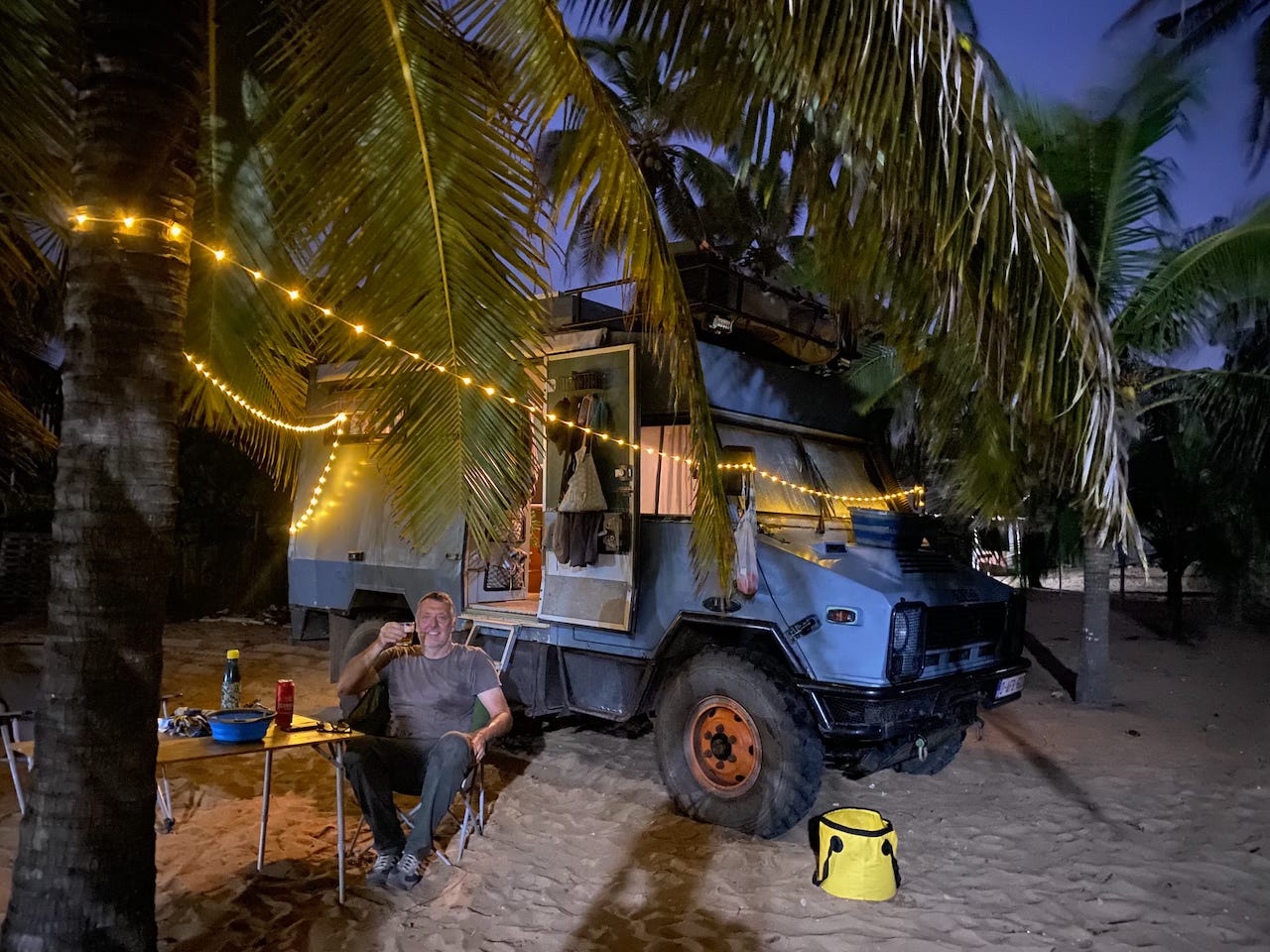
We were camped by a guesthouse on a lovely beach not far from Togo’s capital and feeling relaxed because we were settled in for a week so Jeremy could work. I was standing at the table preparing leaves for dinner later when, out of the blue, five or six policemen strode right up to our camp spot, the manager of our place trailing behind sheepishly. One officer stood at the back of Ivy, holding a large gun to block our exit.
The only thing I could think of to say to them was, “well, this is a large delegation”. They said they were from the ‘investigation bureau’, demanded our passports, kept hold of them and said we had to pack up and come to the station in Lomé with them to “verify” who we were. Suddenly we weren’t feeling remotely relaxed. I had jelly legs but tried to keep a calm face. What on earth did they want?
We’ll never really know how it came to this, but our theory is that it might have all started a few days earlier when we’d decided to spend a night in a secure compound in Lomé that also contains the home of the president…
So, it’s fair to say that after our time at Kailend farm our remaining time in Togo fluctuated in terms of blood pressure levels and overall vibes.
It started well from leaving the farm, with a lovely drive north towards the Danyi Plateau. We spent the first night camping in the grounds of a large monastery, Abbaye de l’Ascension, which grows and processes coffee as well as other things like citronella and avocado oil.
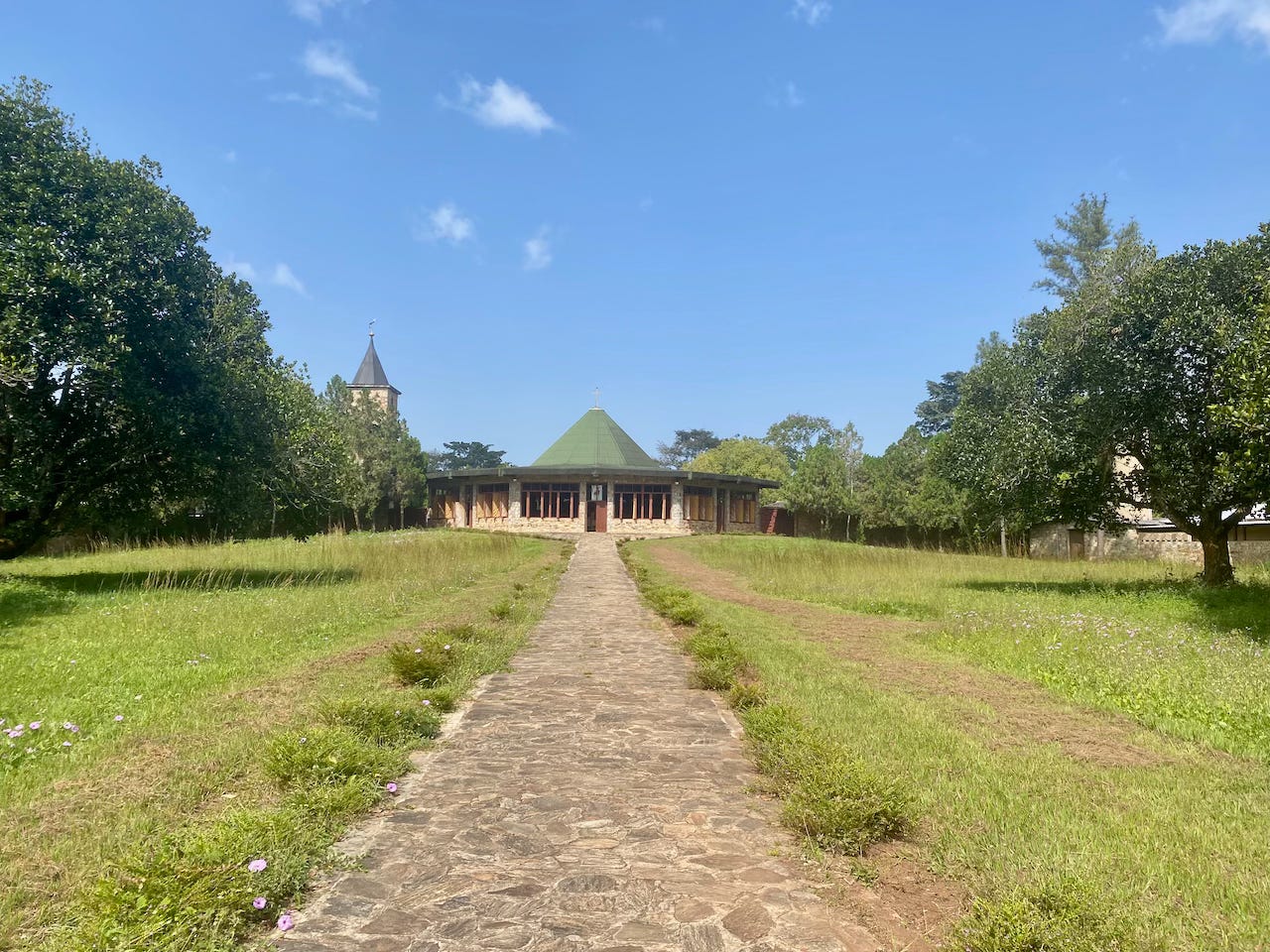
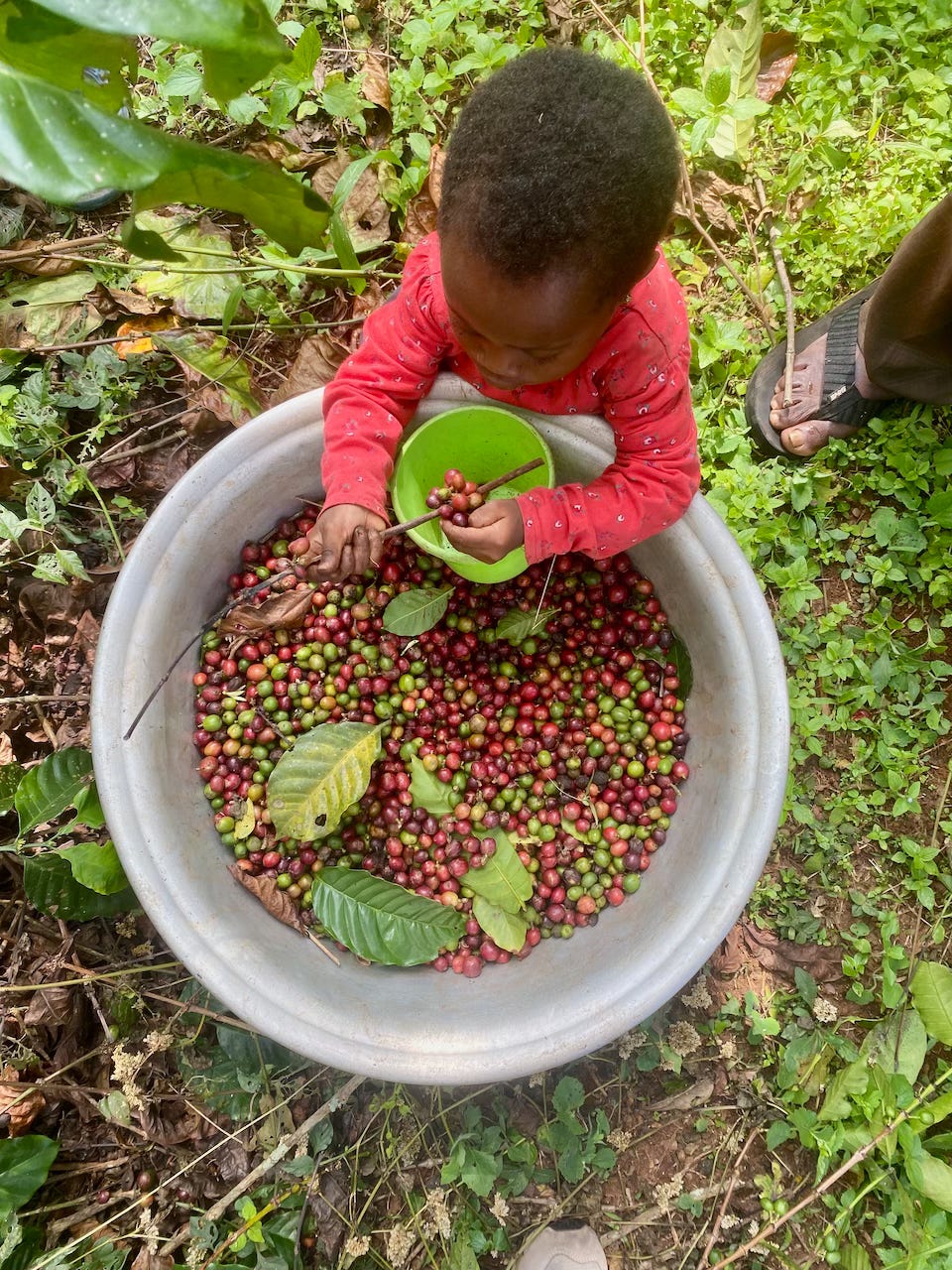
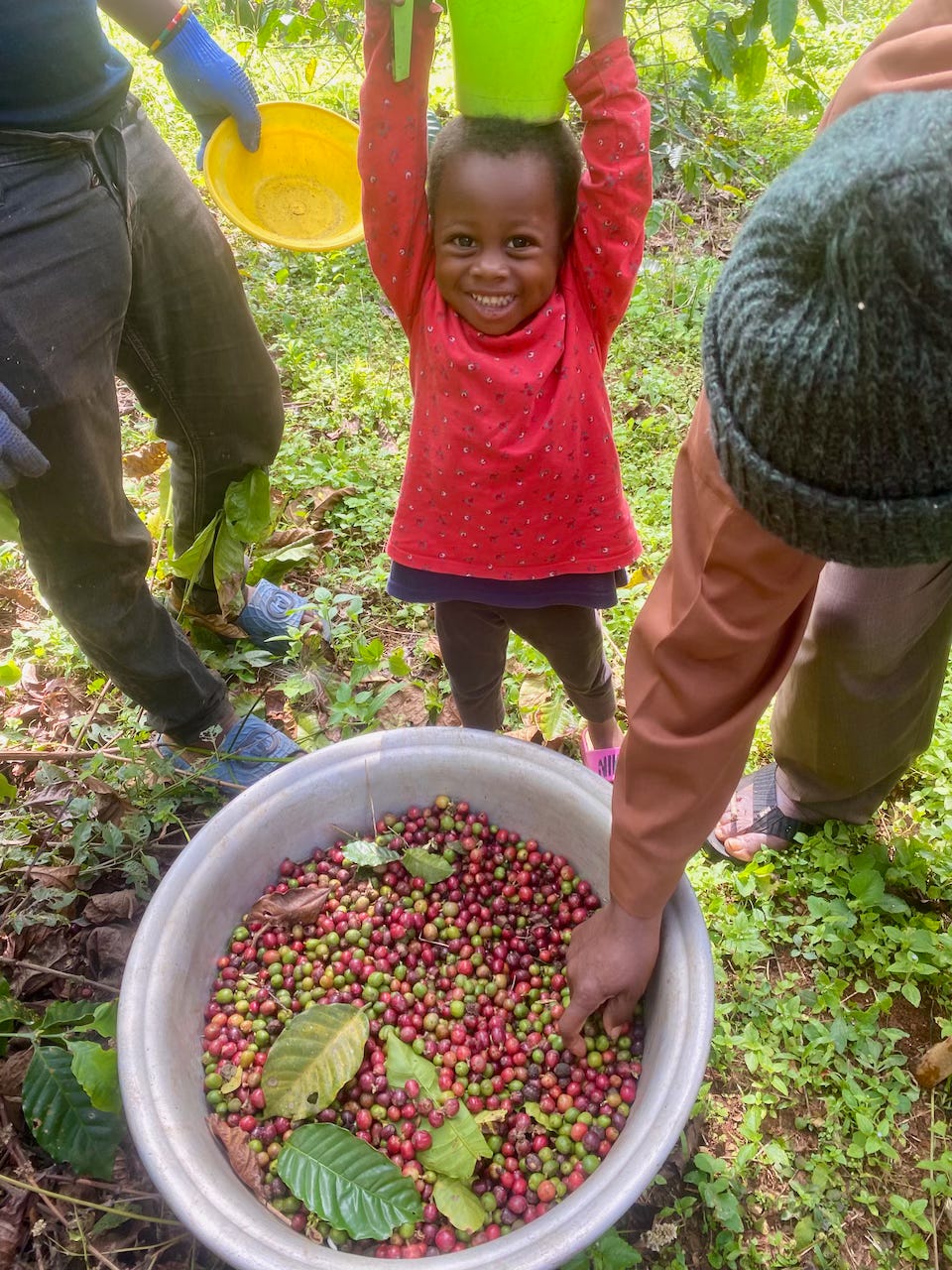
In the morning one of the monks took us on a little tour in their small forest and showed us where they grew and processed the products. Local people come to harvest the coffee beans and earn cash – this little girl was helping her mum and dad and proudly practising how to carry the beans on her head like the grown-ups.


Our monk friend was quite tickled with Ivy and was very keen for us to donate her to the monastery. We’re nice, but not that nice.
In their shop, Jeremy stocked up big time on packs of their delicious ground coffee; it’s remarkably difficult to find decent coffee in much of West Africa.
It wasn’t far to the next stop but it took a while over washed-out roads and around switchbacks as we climbed to about 750m. At the top there’s a hotel/events place called Golden Eye which has the view to die for. Like so many of these places we visit, it was practically deserted. Where is everyone? We camped in a huge adjacent space with a panoramic view and enjoyed a sunset beer on their balcony. Good vibes.
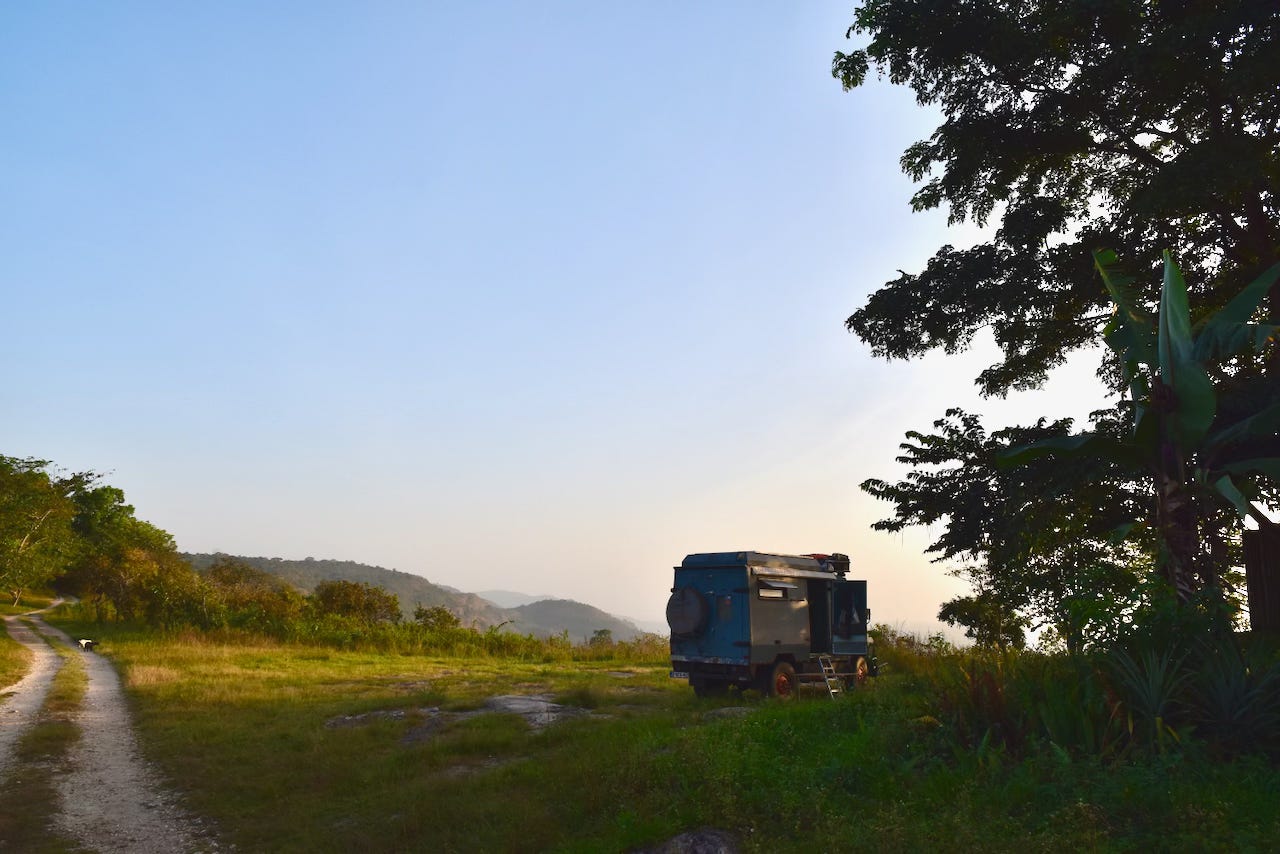
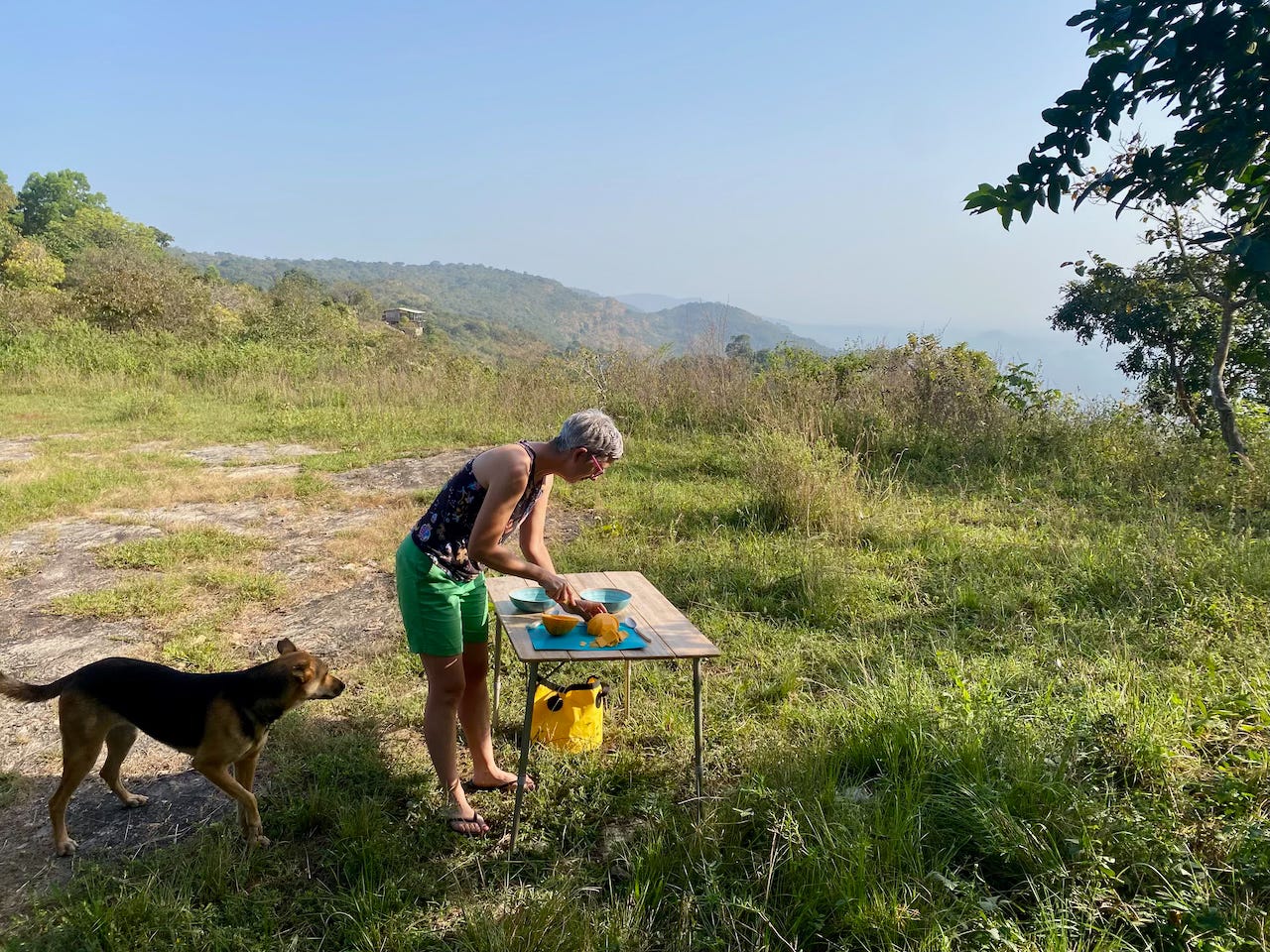
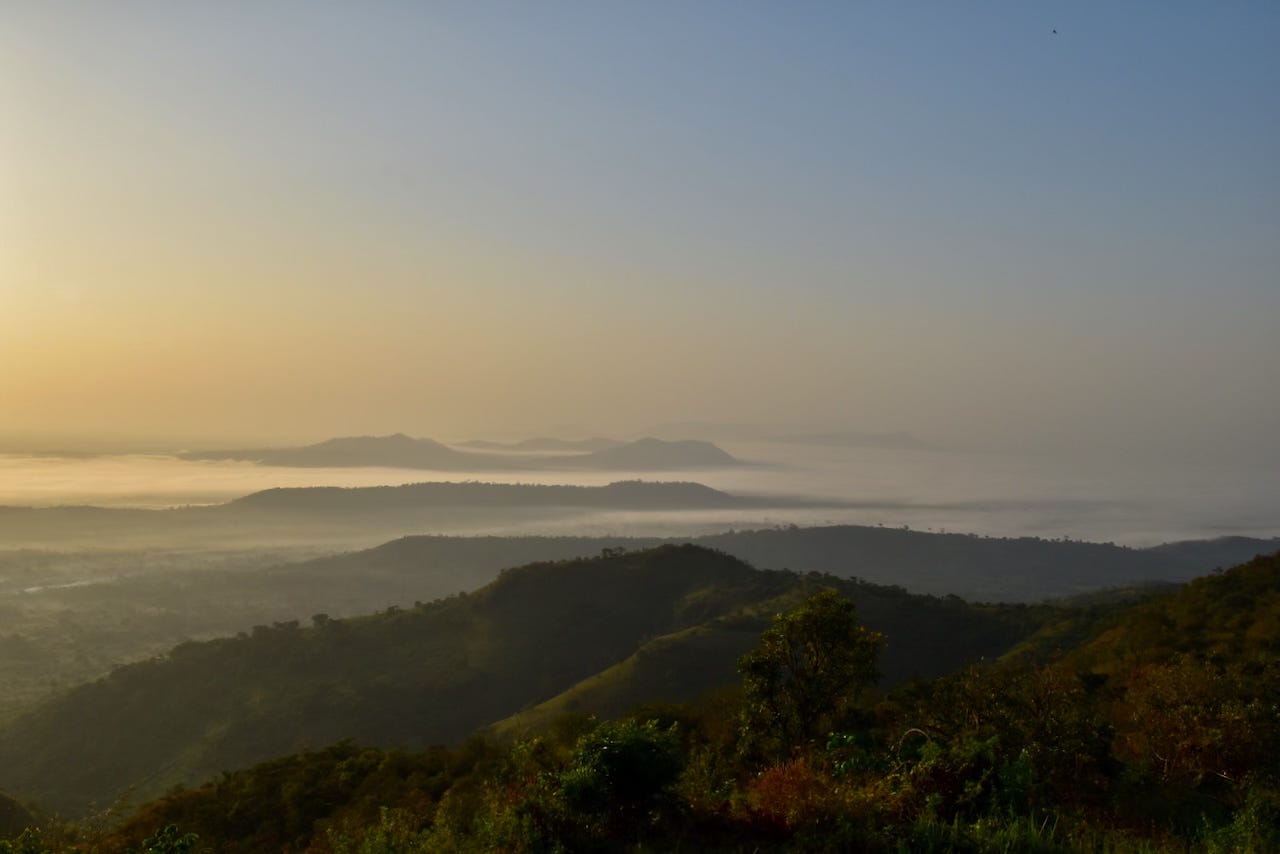
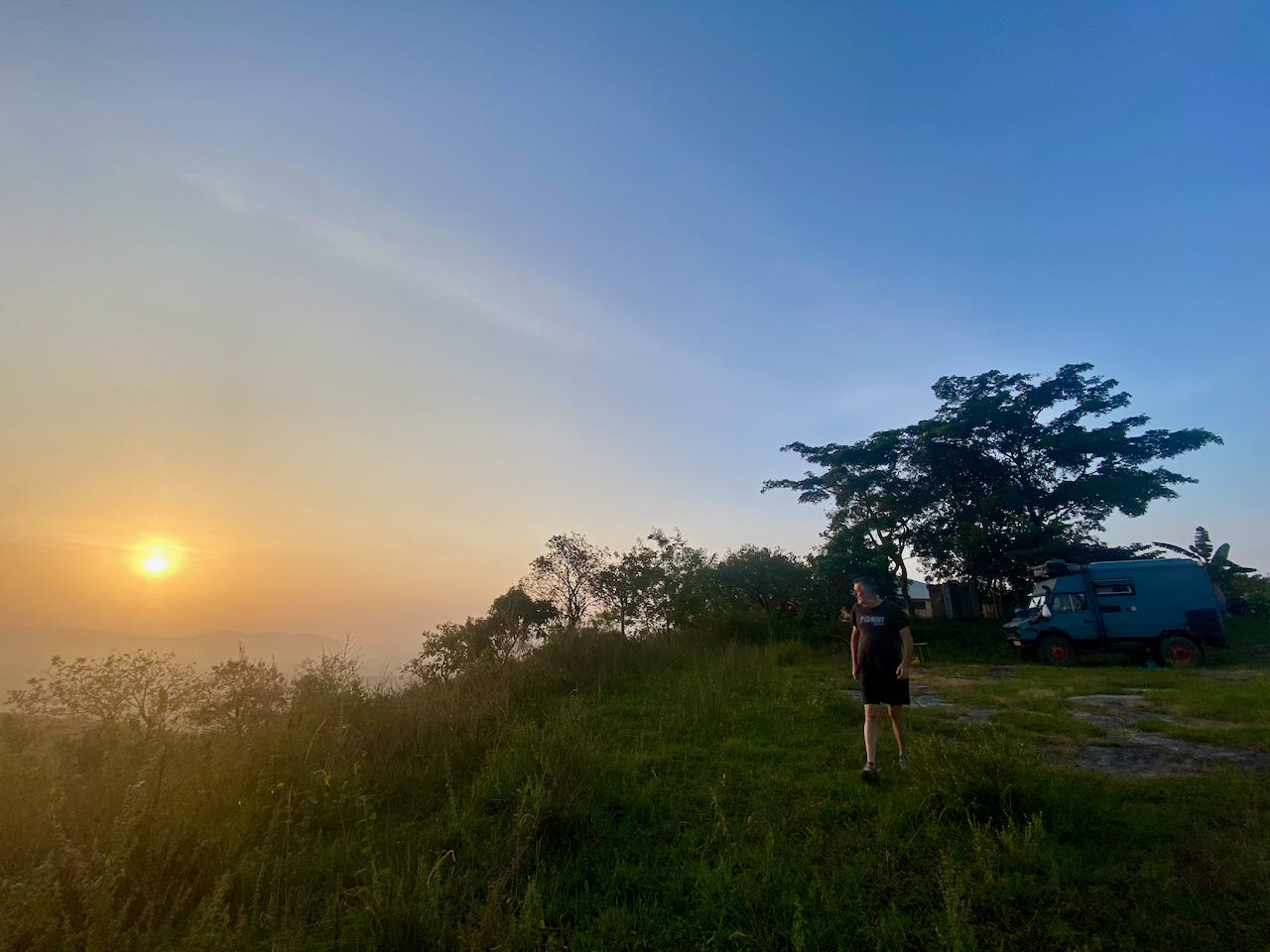
There was a brief blood pressure spike for Jeremy when we left and took a different road down the mountain which was even more spectacular and packed with switchbacks than our route up, but even he managed to enjoy the views.
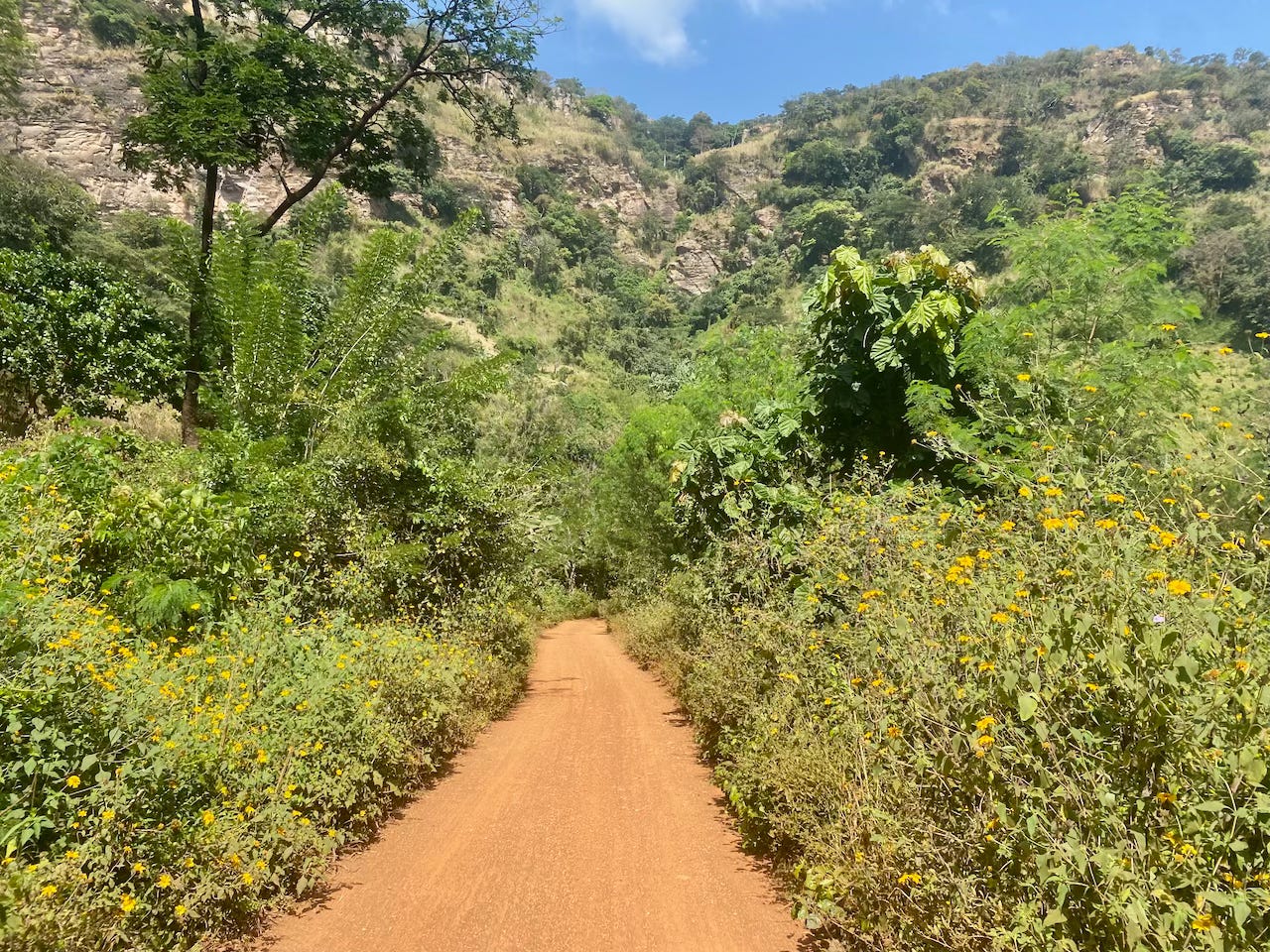
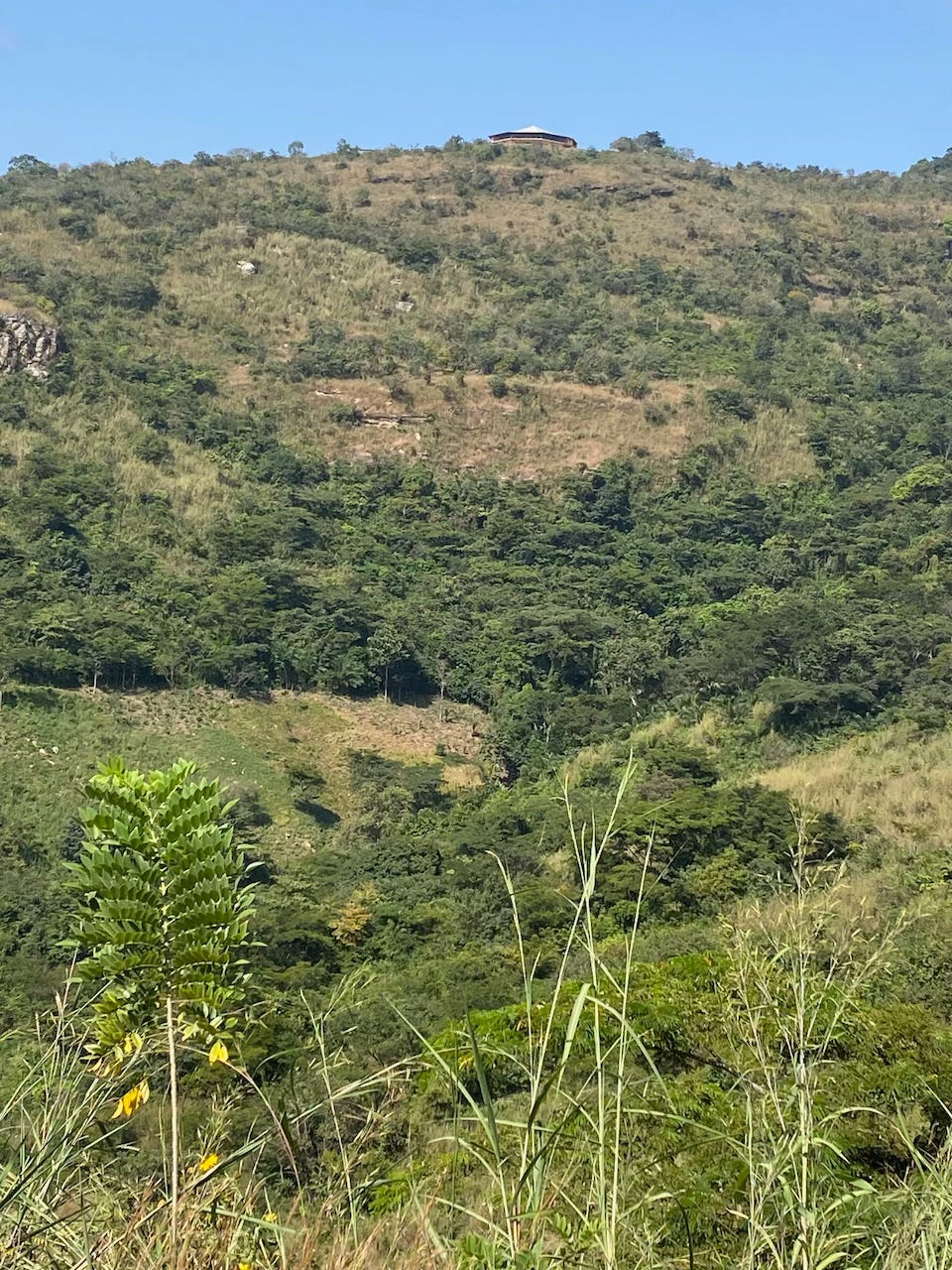
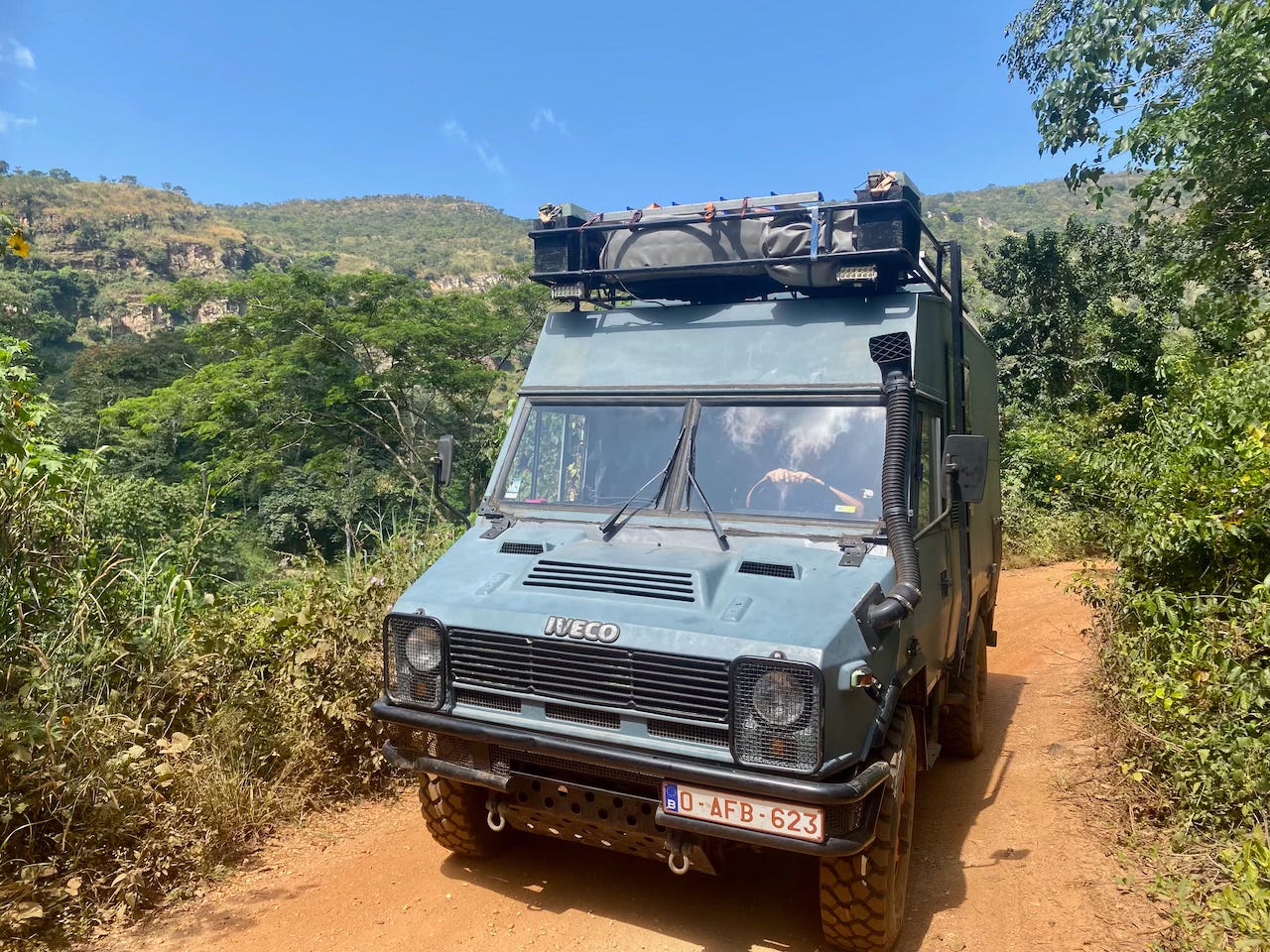
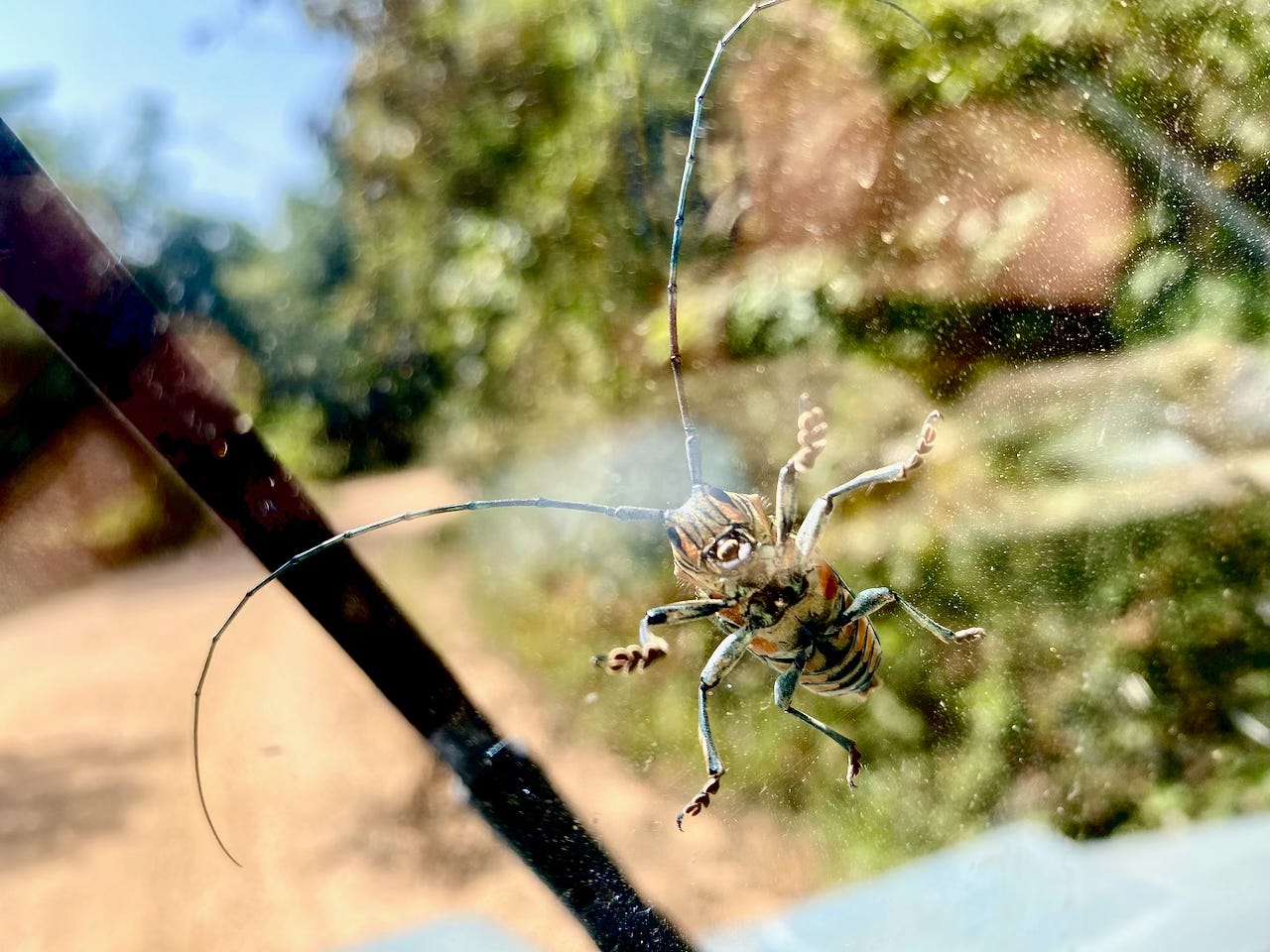
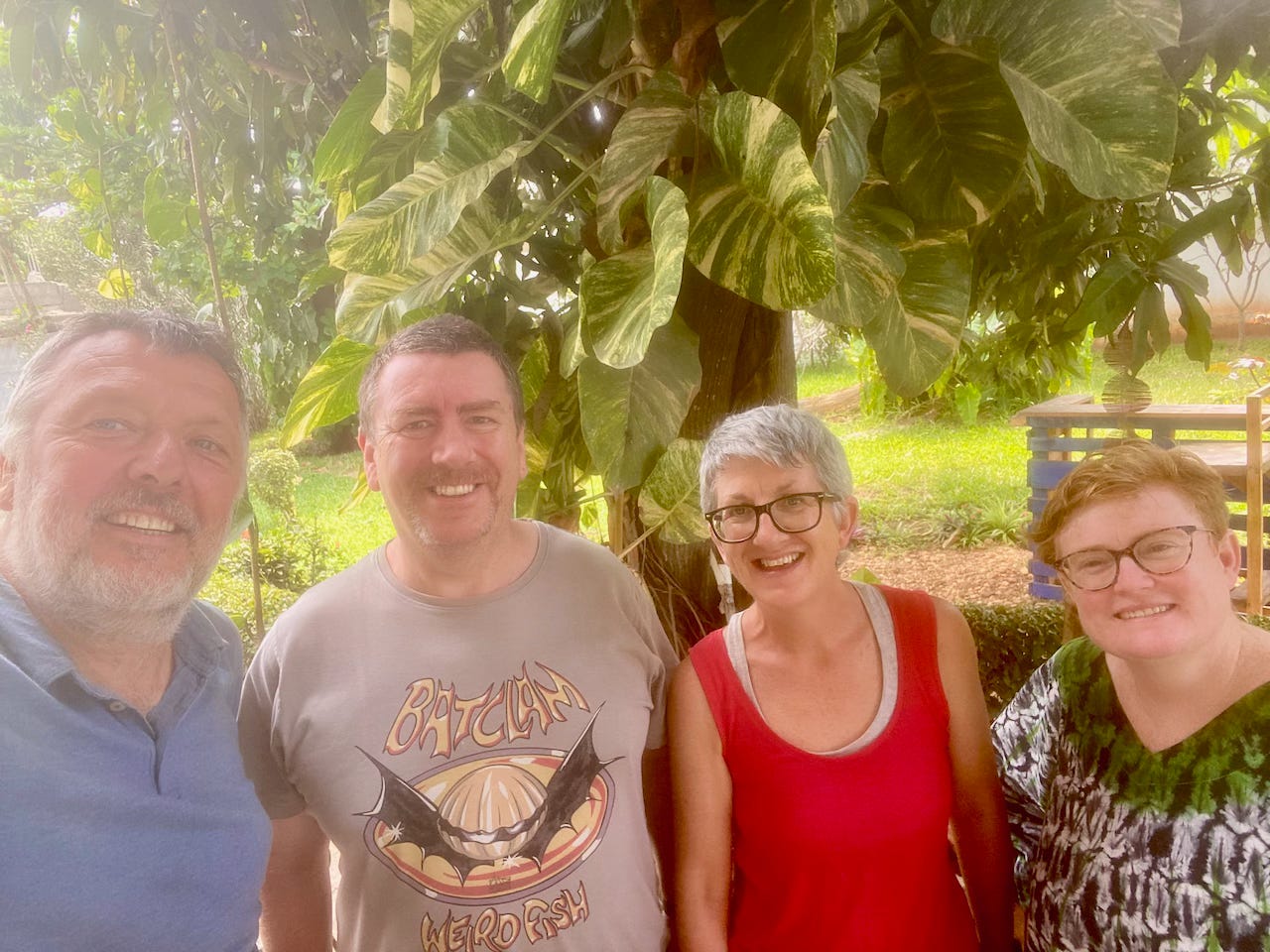
We’d decided by this point to head back towards Lomé – our original plan to visit the areas of the Somba tribes in northern Togo could be replicated later on the other side of the border, in Benin. We desperately needed to try to fix our broken inverter, and we wanted to accept a kind invitation from Jane and Darren – teachers at the British School of Lomé (BSL) – to go and stay with them and have a couple of nights out.
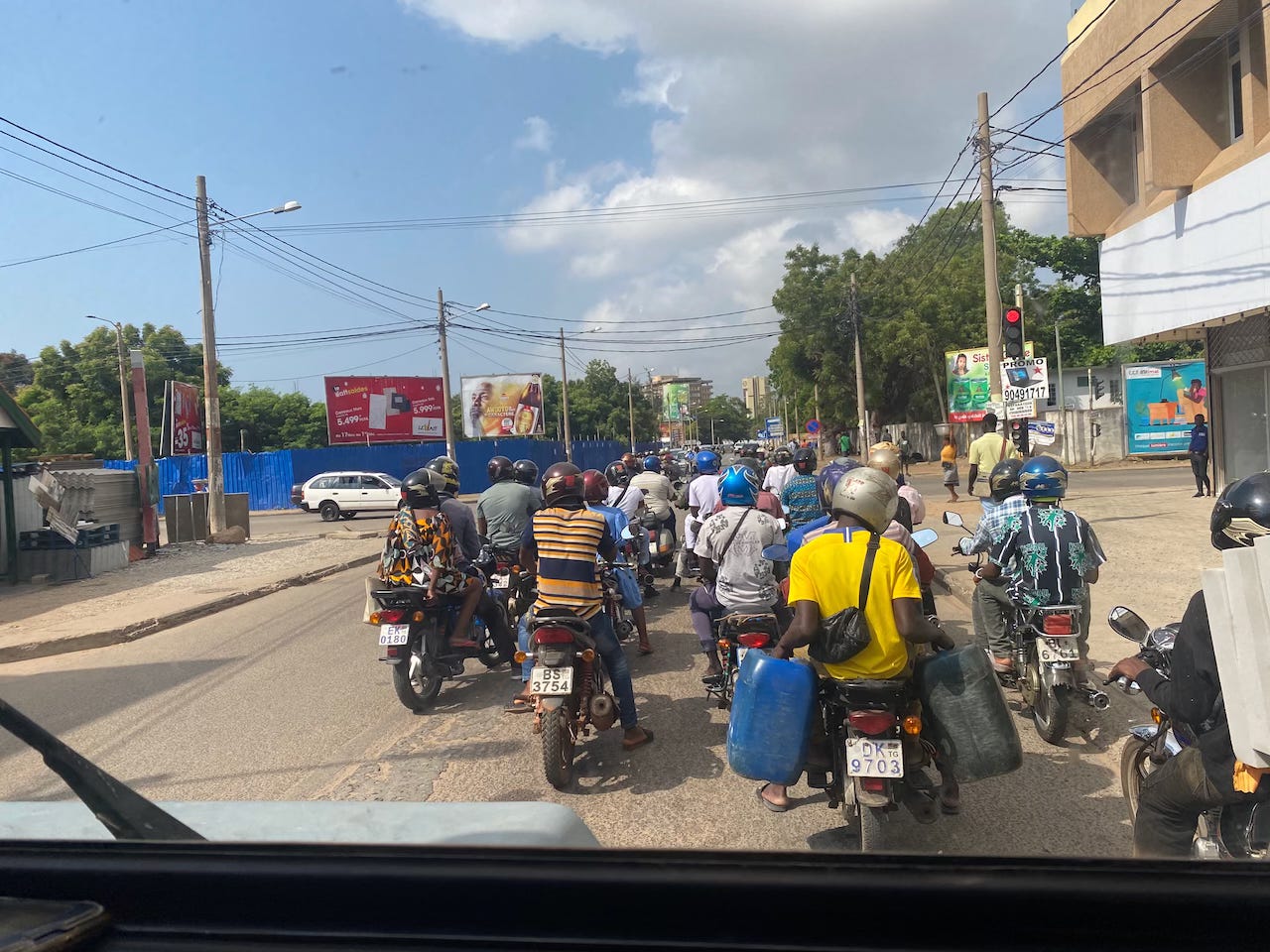
As we approached the city, I was getting messages from Jane to say it wasn’t permitted to park outside their house, as she’d thought. Their place is located near the BSL in a huge secure compound called la Caisse; the president of Togo also lives there and he was in town, which meant security was higher than usual. After many messages it was agreed that we could park at the school but could only enter la Caisse once – if we left the following day to go to the mechanic as planned, we could not return for the second night. Bummer, but we went ahead anyway and reported to the security gate. After a wait, the police came and asked us to take Ivy into their station yard. We’d already sent our ID in advance and thought that would be enough, but the police proceeded to empty the entire truck of its contents and search every corner. Even though we’ve nothing to hide, this kind of thing makes us uncomfortable. It’s weird having people rifle through all our things, from underwear to food to valuables. Also, generally speaking, police corruption is rife in the region and it only takes one bad apple to spot an opportunity and suddenly you could be in a discussion about ‘gifts’ or fines for fictional infractions.
The search took about an hour and a half, by which point we were wishing we’d found another parking space in the city. We also felt bad for causing all this fuss. However, it was incident-free and we understood the reasons behind it – a random foreign truck driving up the president’s street needs to be checked out. We smiled through it, got out of there and took our stinking unwashed bodies straight out for an overdose of pizza (actual cheese!) and a beer or two with Jane and Darren. Aaaaand breathe...
It was a dilemma about going to the mechanic the following morning – all that trouble with the police search to give up our spot after just one night, but it was a Friday and we had to get on and find a solution for the inverter. The guy had been recommended by our mechanic in Accra – surely it was worth the hassle? We drove out and navigated the traffic to get there, pulled into the workshop and moved our stuff to open up the battery compartment and show him the inverter. I flicked the on/off switch to demonstrate the fault and the damn thing spontaneously started working again. WTAF. You couldn’t make this up.
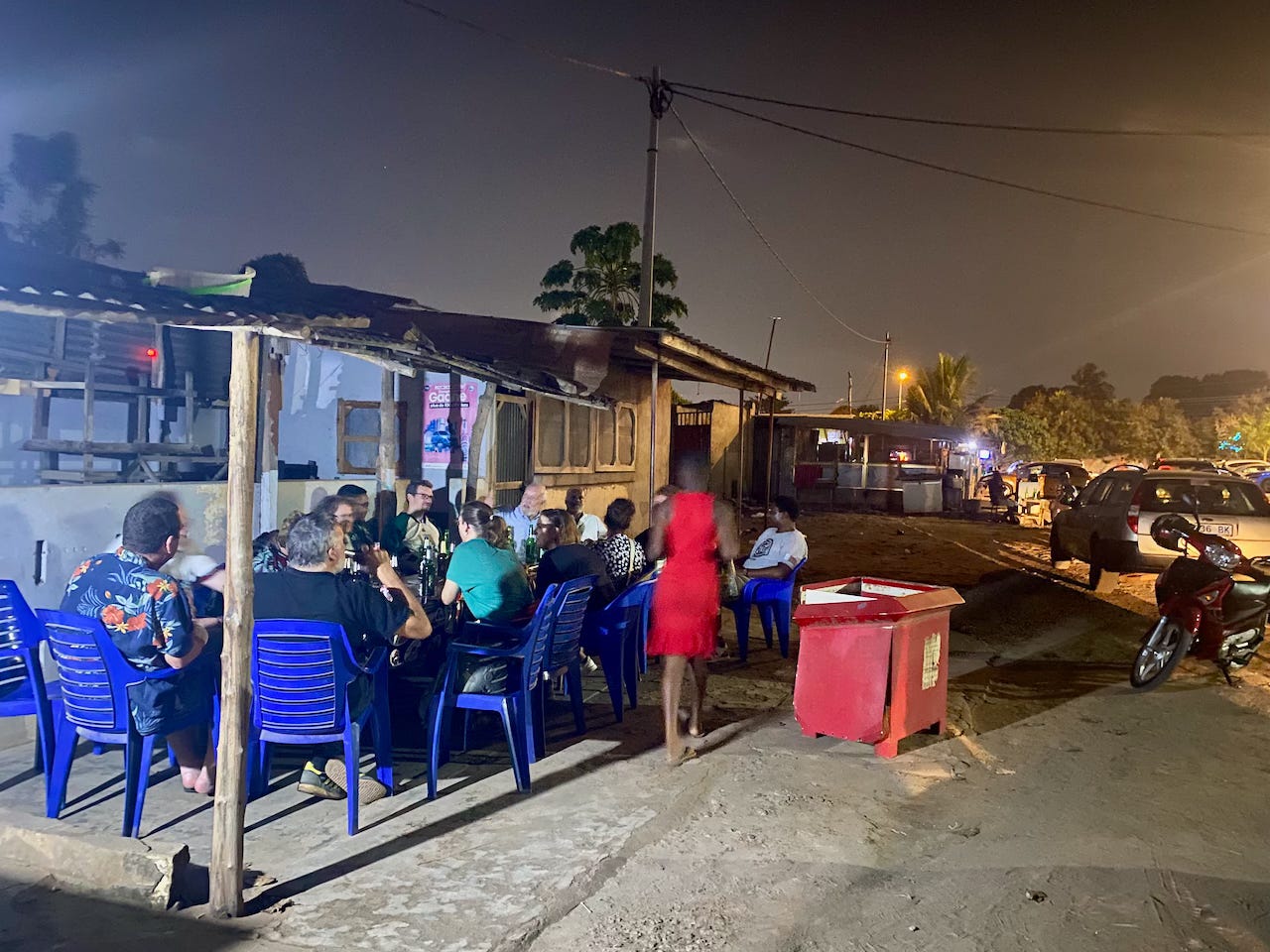
We switched it on and off again a zillion times to make sure it wasn’t just a fever dream, checked the cables again for a loose connection and, well, what else could we do? If it ain’t (currently) broke, you can’t fix it. Amid much head-scratching we headed back towards la Caisse and parked nearby, then Darren later took us to a secure spot elsewhere to leave Ivy for the night. We were keen to join them on their weekly BSL night out at a local spot nicknamed the ‘Blue Bar’– a little backstreet shop with tables outside which reportedly sells enough beer to the expats on a Friday to provide their income for a whole week. A long tradition for BSL staff, it has since evolved to include people from NGOs, UN, embassies and other organisations too. It was a really enjoyable and interesting night, and just our kind of grungy African bar!
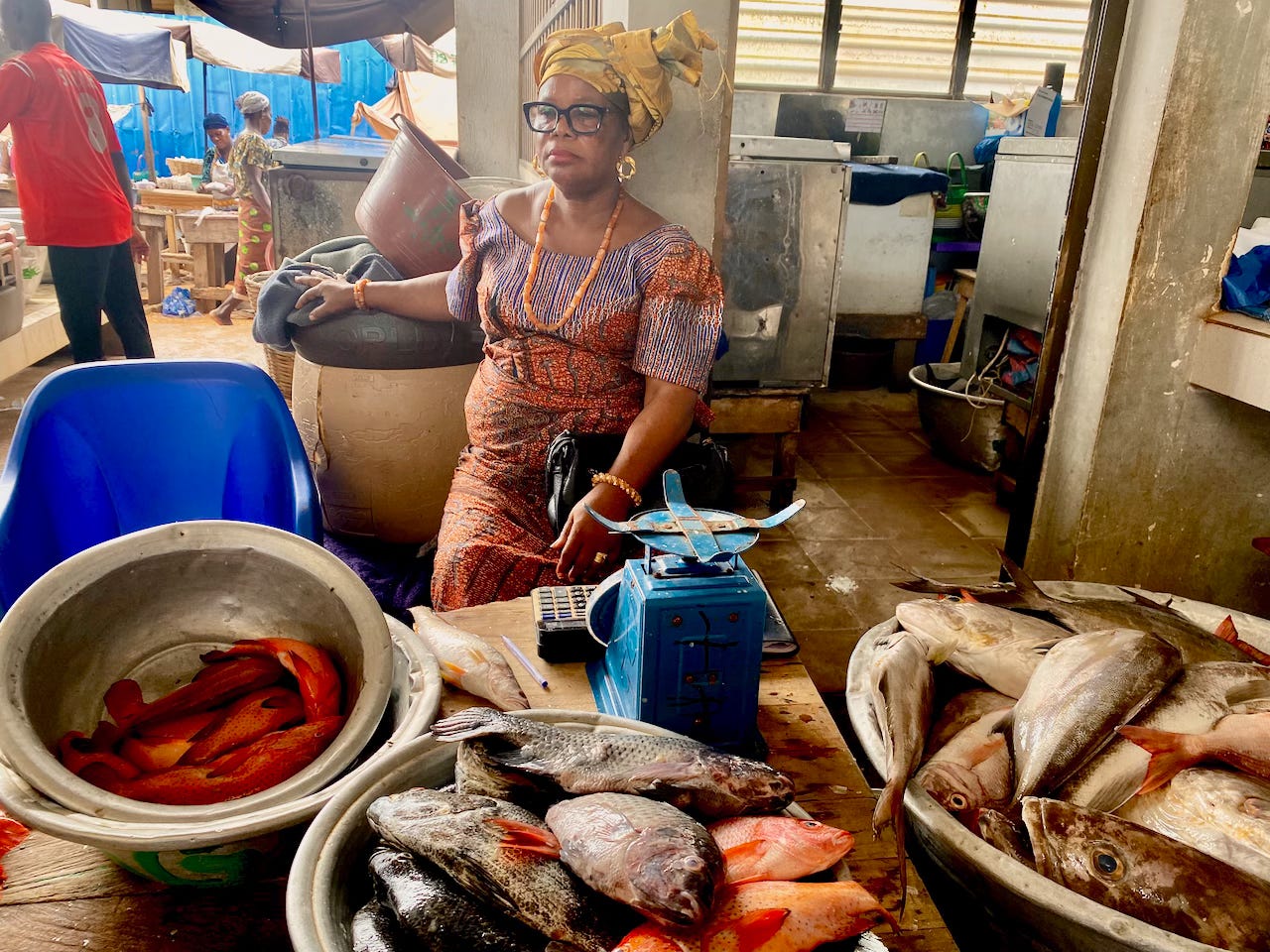
We headed off after breakfast the next day and followed Jane’s directions to a marvellous fish market outside Lomé. It’s so long since we’d had the chance to buy fresh fish at a great market – we picked up a whole filleted merluza and some gambas and headed for our beach spot.
The guesthouse – a typical restaurant-with-cabins set-up – was deserted and we had a huge amount of space and a toilet and shower practically to ourselves. We cooked garlic prawns and merluza with plantains, and were getting fully into beach mode.
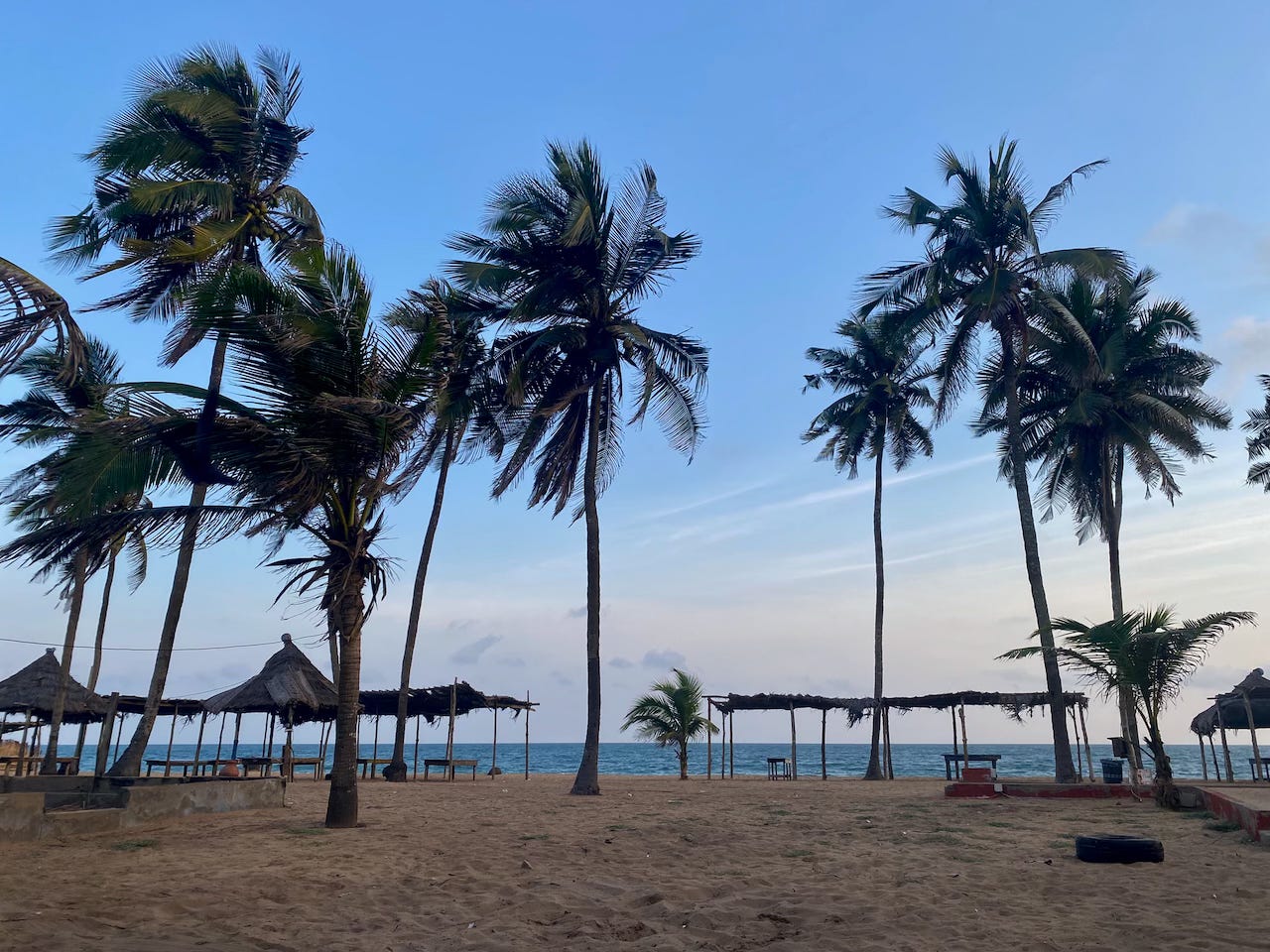
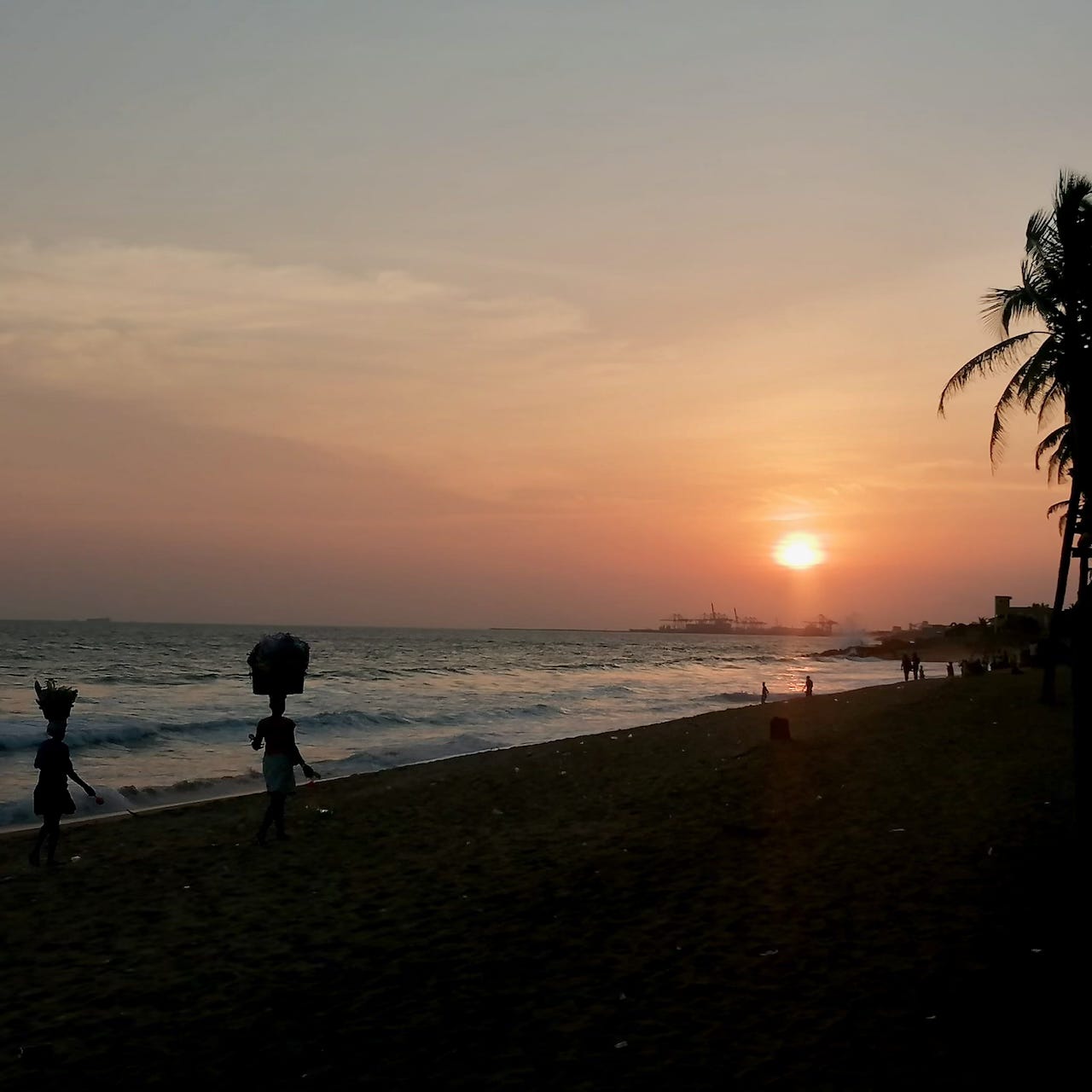
On day two we discovered that a neighbouring venue has a weekly house band and went along to find it packed with people enjoying the Afro-Cuban-style music and several beers. Weirdly though, that day Jane said after we’d exited la Caisse the school had received a call from the police to ask whether we had left the country. Odd. Why should they care?
The following lunchtime as I was chopping the leaves, up marched the armed police, rather ruining the vibe and sending our blood pressure through the roof. We had obviously been tracked and it gave us the creeps. We weren’t sure how to handle it. Our guts said, ‘don’t just go off with these people without them giving a proper reason’. But that’s not how it works here. We resisted, queried and stalled for maybe 20 minutes but their boss had told them to pick us up, and that was the end of it. We also called Jane and her colleague and they advised us to comply. The police waited while we packed everything up, and an officer drove with us for the 15km back to Lomé. As you can imagine it’s quite a long story; it was certainly a long day. We were taken to the chief who gave us a vague explanation of this being for their security and ours. No infraction was alleged, he said.
We were told to fill in forms which asked for astonishing amounts of detail – all the schools/colleges we had attended since the age of five, with dates and qualifications, all the jobs we have had and when, and more. We were then questioned about the info, as well as the details of our journey. “What is Dumfries?”, said one officer. It’s one of the towns in Scotland where I went to primary school. I couldn’t help wondering how it could possibly matter.
Just as they started indicating it was all over, they decided to search the truck. Cue another long and tedious process of explaining what was what, our stuff spilled all over the ground. You think you are travelling light until every bloody bag, box, drawer and cupboard is opened and discussed. So much stuff! The photos on my camera were all examined. They took four USB sticks from the drawer and said they needed to search the contents.
We sat for hours while they did this. It was vital to stay calm and appear as if we had all the time in the world. Any arguing or protesting just inflames the situation and changes nothing. I didn’t feel reassured that they hadn’t yet accused us of anything, because it felt like they were extremely keen to find something, anything. Those USB sticks were discussed in our absence for an eternity. Phonecalls were made. We could hear muffled conversations from our bench outside and it was impossible not to feel paranoid. It got dark and some staff were starting to go home for the night.
We got the USBs back after about three hours, but still our passports were in their possession and awaiting approval for release by a big boss in another office. The last remaining officer said we could leave and return for the passports the following day, to which our answer was a polite version of “F*** NO, we are not leaving here without them”. We said we would sleep in the truck in their car park, and proceeded to make some tea and settle in with a TV programme. That seemed to accelerate things and before long the officer appeared with our passports. Around eight hours after it all started, we were free to leave. He escorted us back to the beach and we were so tired with all the adrenaline we just pulled into the car park, cracked a beer and pretty much fell into bed while still holding it.
During all of this we found out that perhaps there was a heightened security situation in Togo that week due to some rumoured planned anti-government protests. The risk of uprisings and coup d’etats are pretty much a permanent spectre looming over the authorities in much of this region. We will never know the answer, but we were told that searches of foreign cars had seemed to increase in the weeks following. It was never explained to us. We did manage to enjoy the rest of our week at the beach but there was a feeling of being unwelcome in the country that took time to wear off. It certainly wasn’t a classic approach to encouraging tourism. Every day, police helicopters flew overhead – sometimes coming low to the ocean right in front of our truck – which fed our paranoia. We couldn’t just leave as our visa for Benin wasn’t valid yet, so we just stayed put and tried to keep our heads down.
Despite the temptation to stop wandering and just make for the border, we called in at a few fantastic places on our way out of the country: Lake Togo, Togoville and Aného.
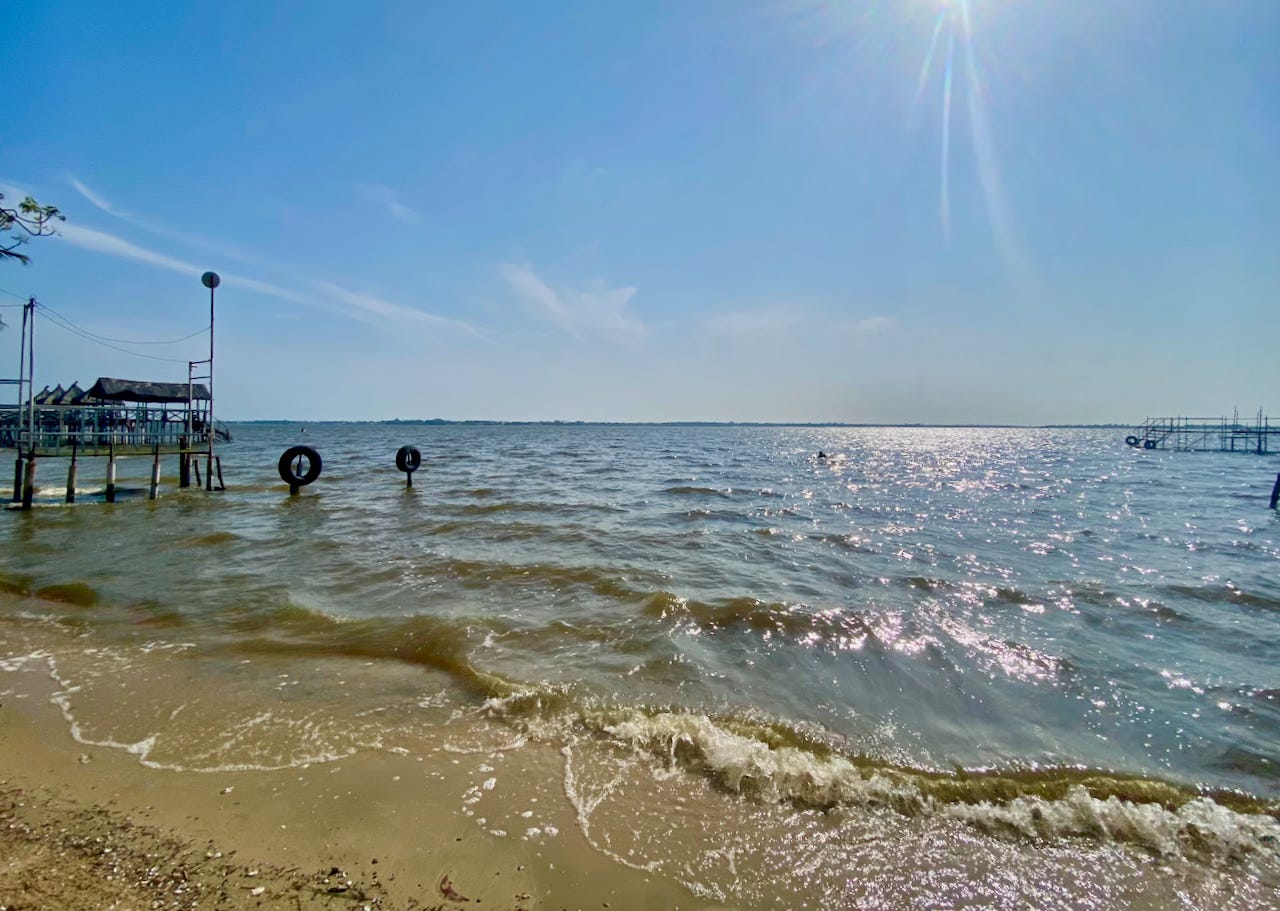
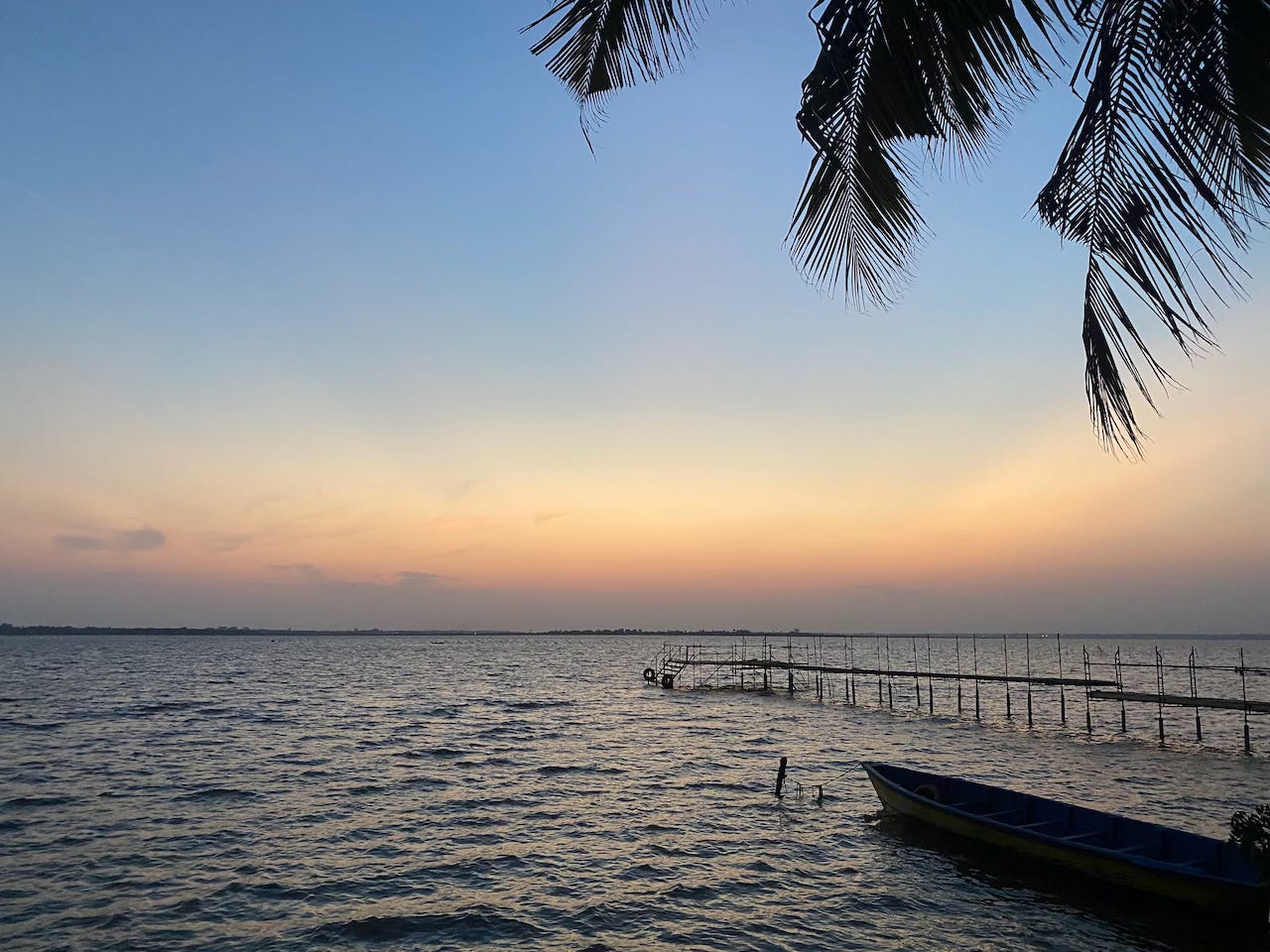
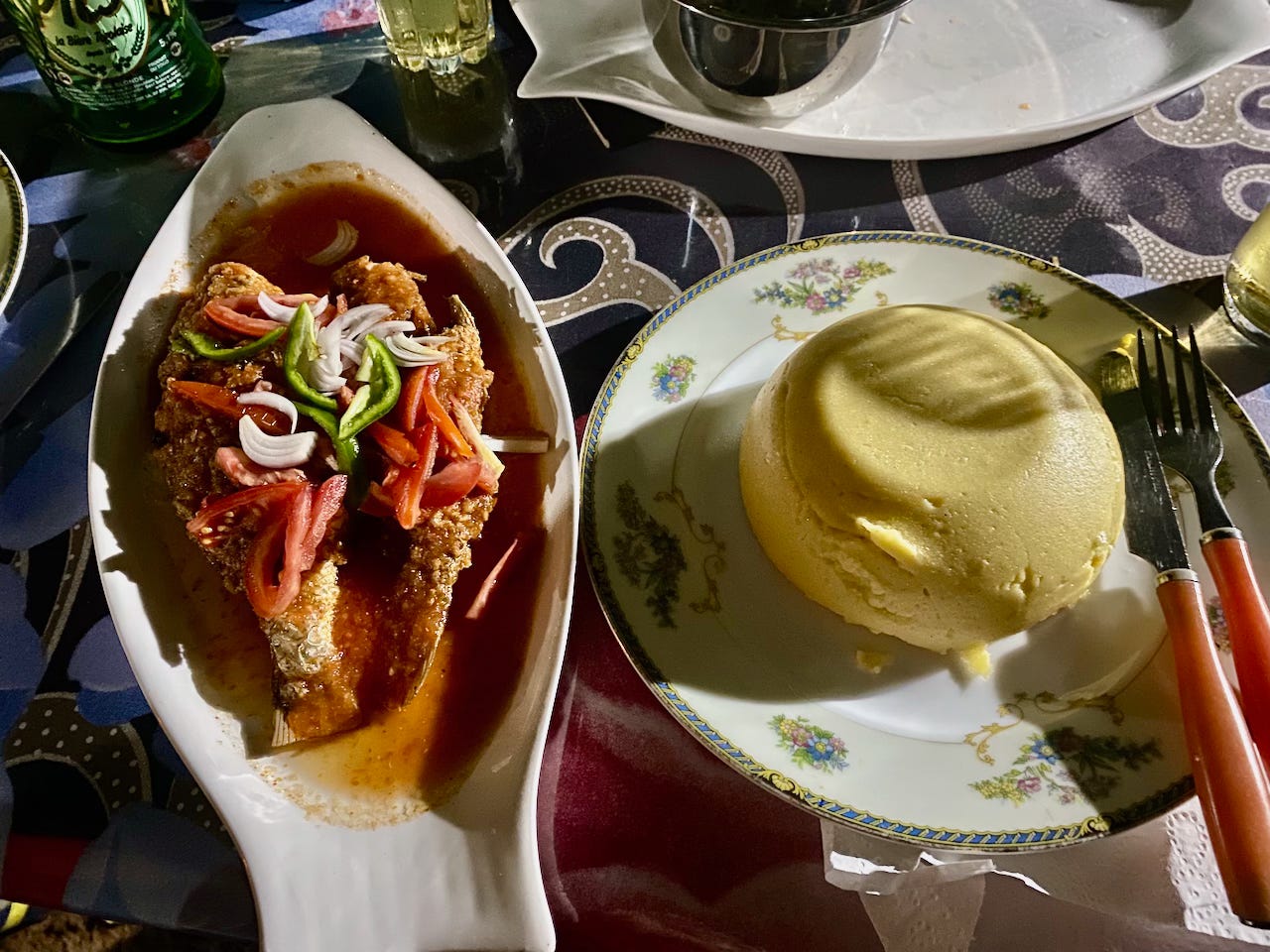
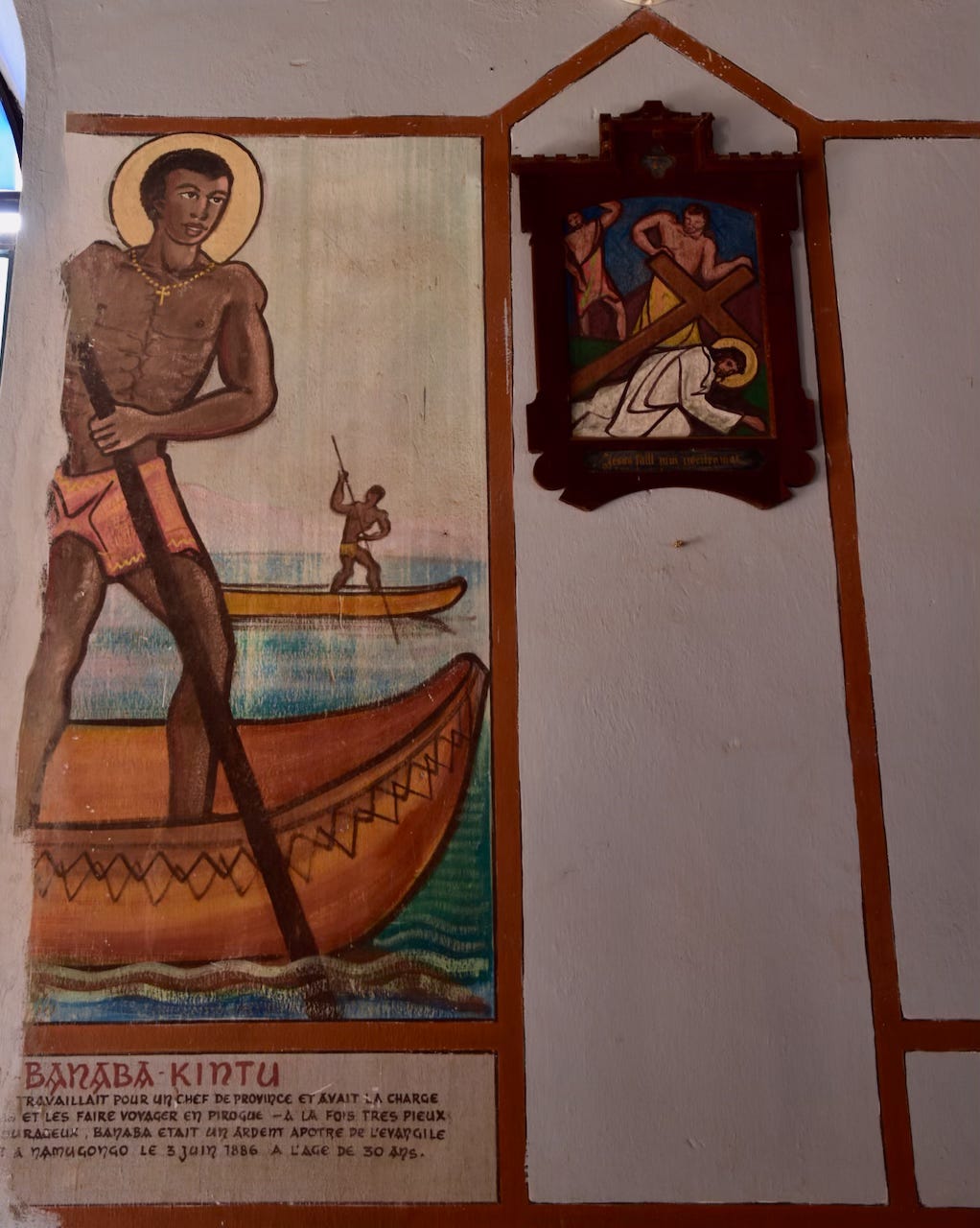
In Togoville we took a tour from the tourist office, which included a church built in 1910 by the Germans and later changed to a Catholic cathedral by the ruling French. Togoland, as it was previously called, was colonised by the Germans until WW1 when the French and British conquered it, and split it in two when joint rule collapsed. In 1957 British Togoland voted to join with the Gold Coast to form an independent Ghana, and the French part later became the independent Republic of Togo.


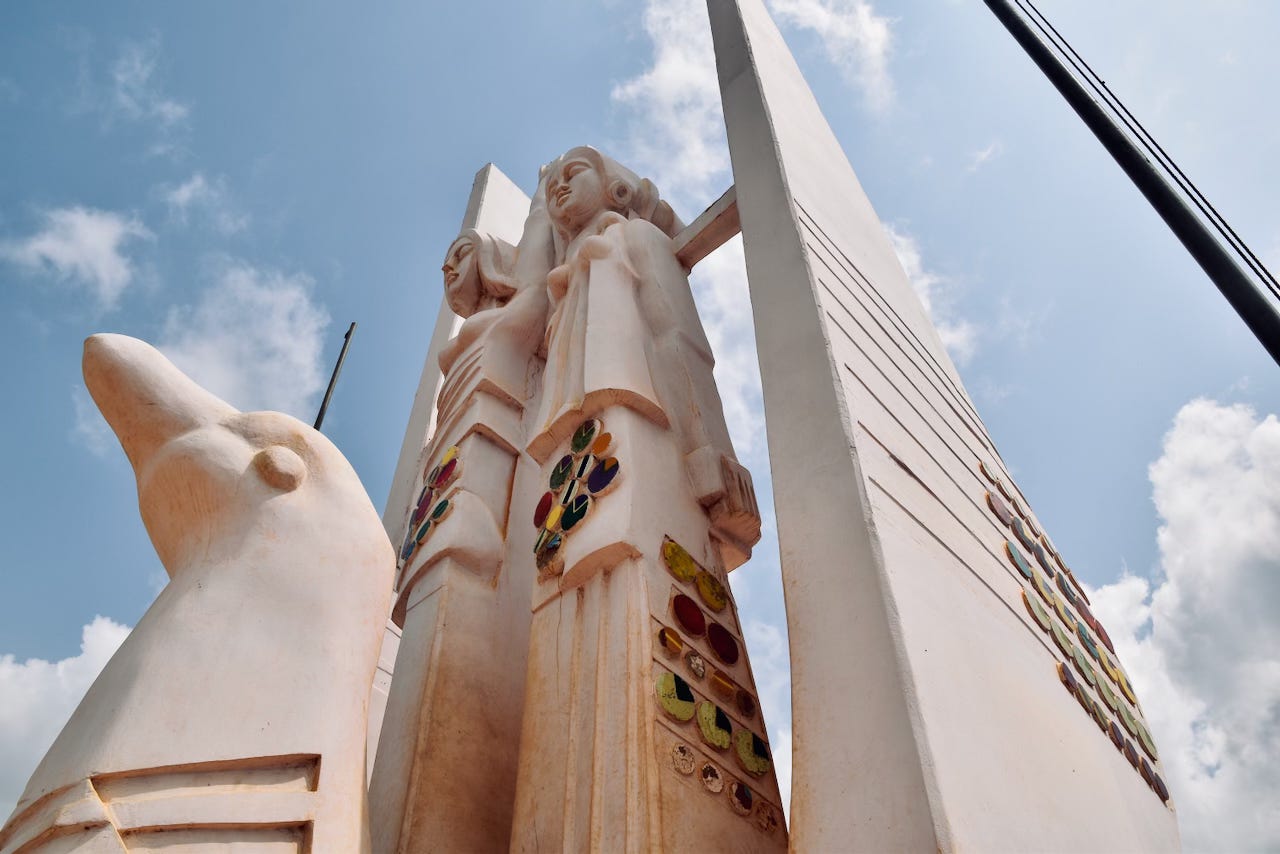
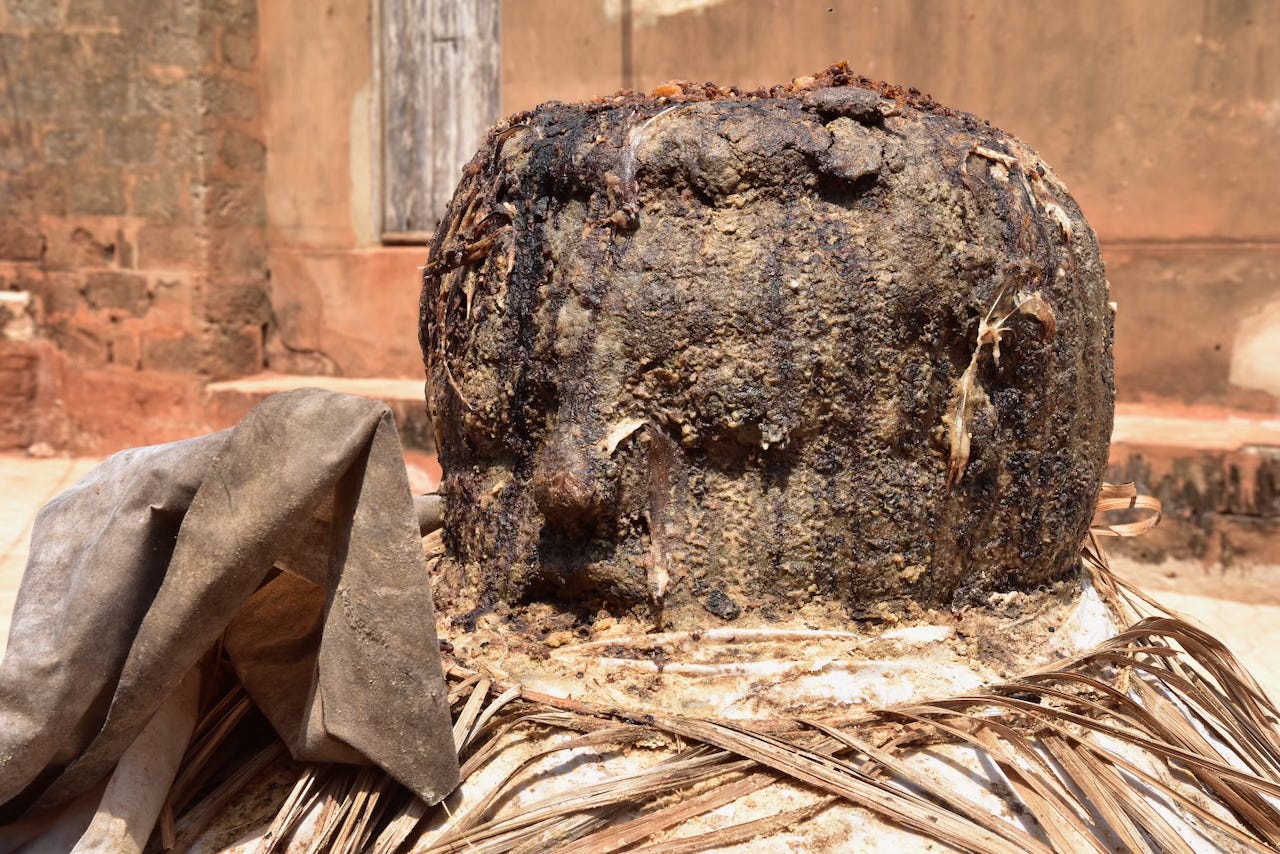
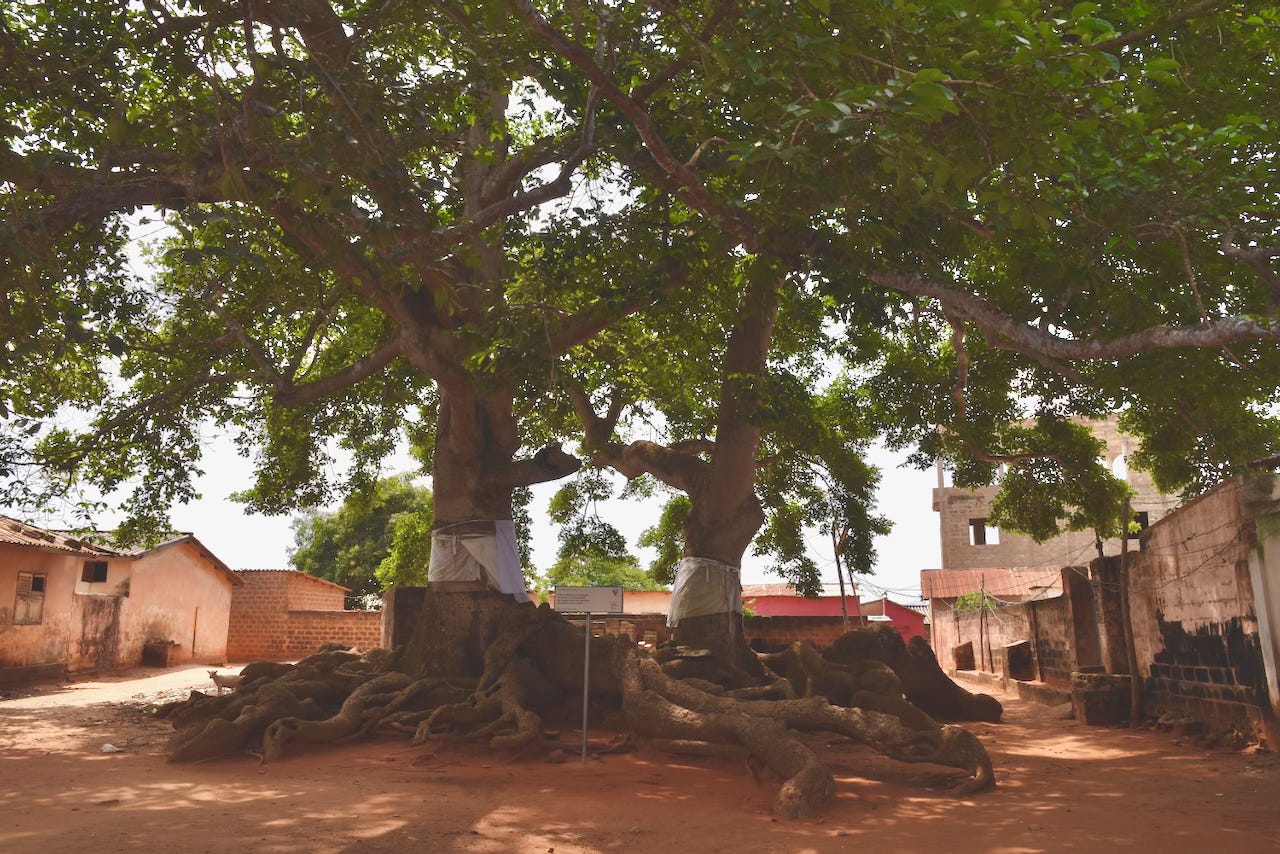
We moved on to Aného which wasn’t an ideal camping spot for us, but it had the best swimming beach and turquoise water that we have seen on this trip. After a hot day we were more than happy to throw ourselves in.
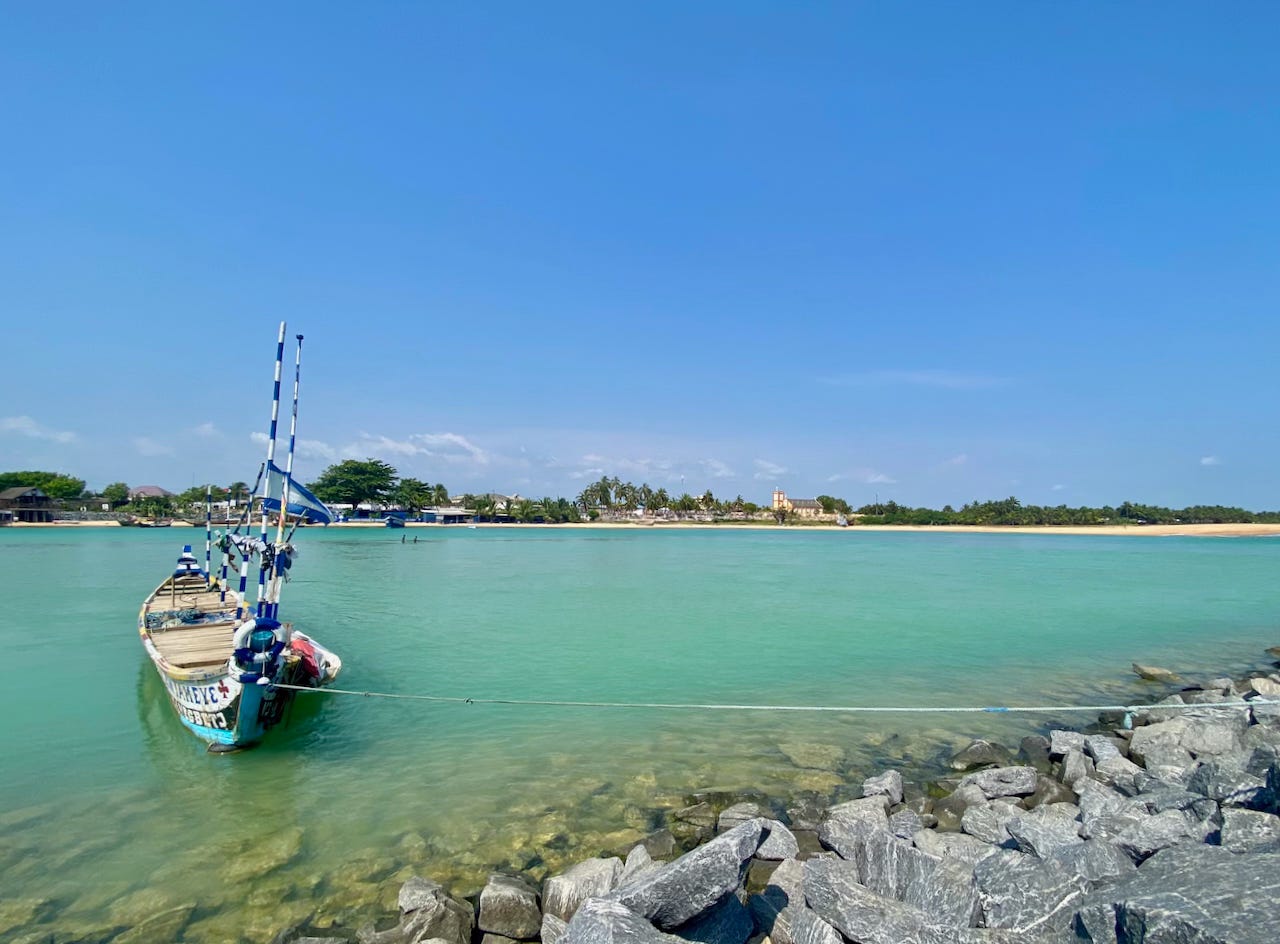
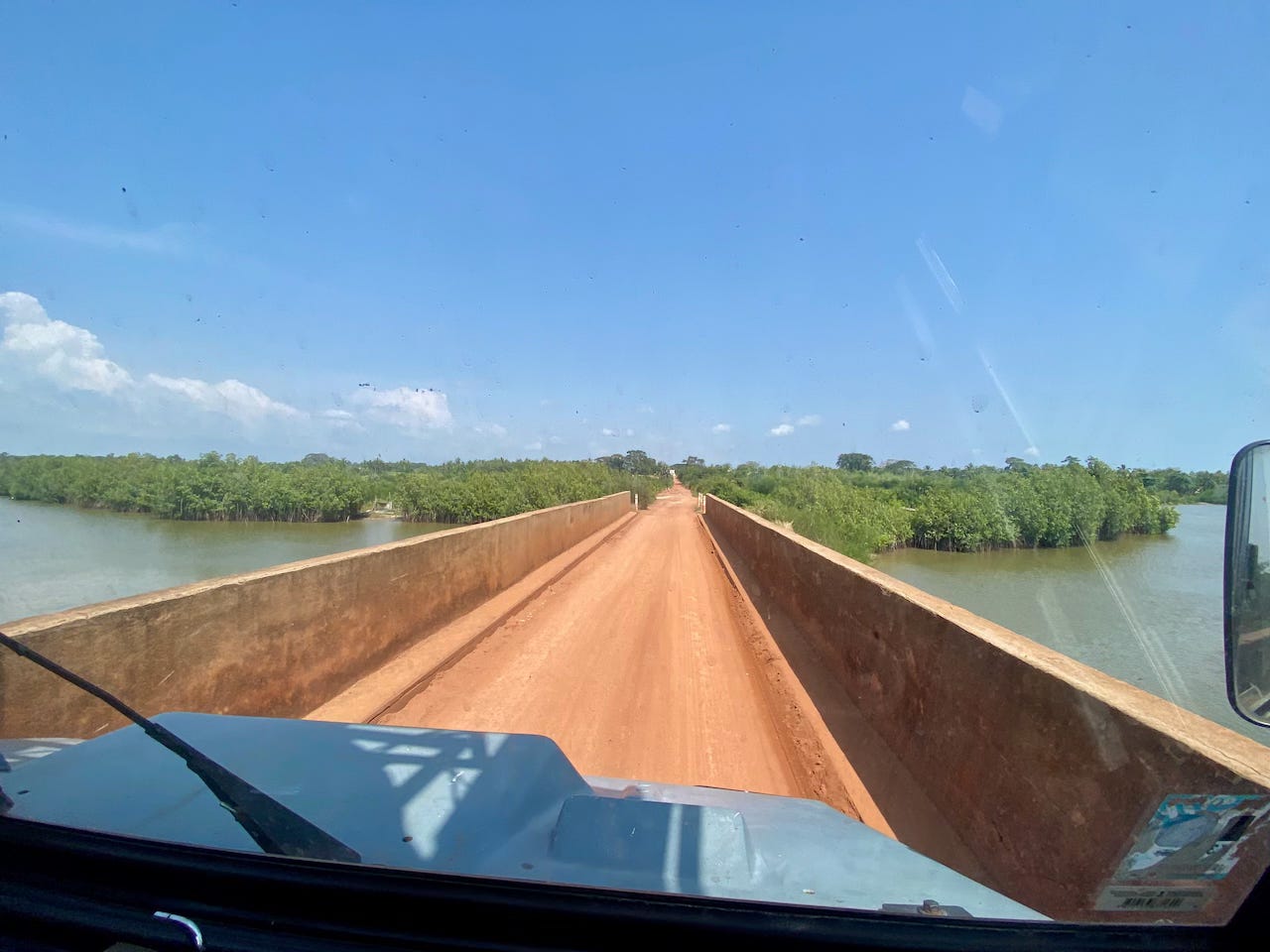
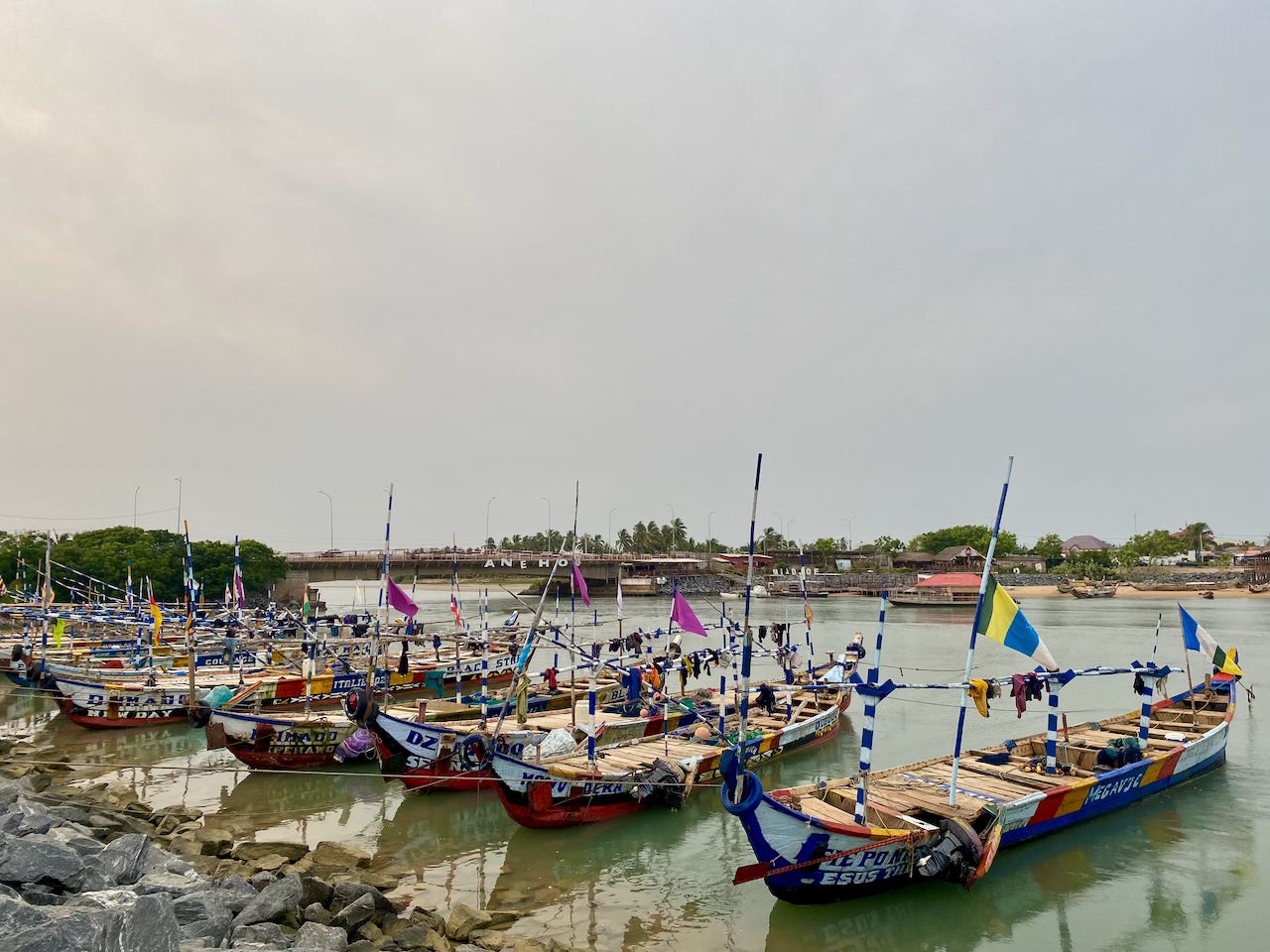
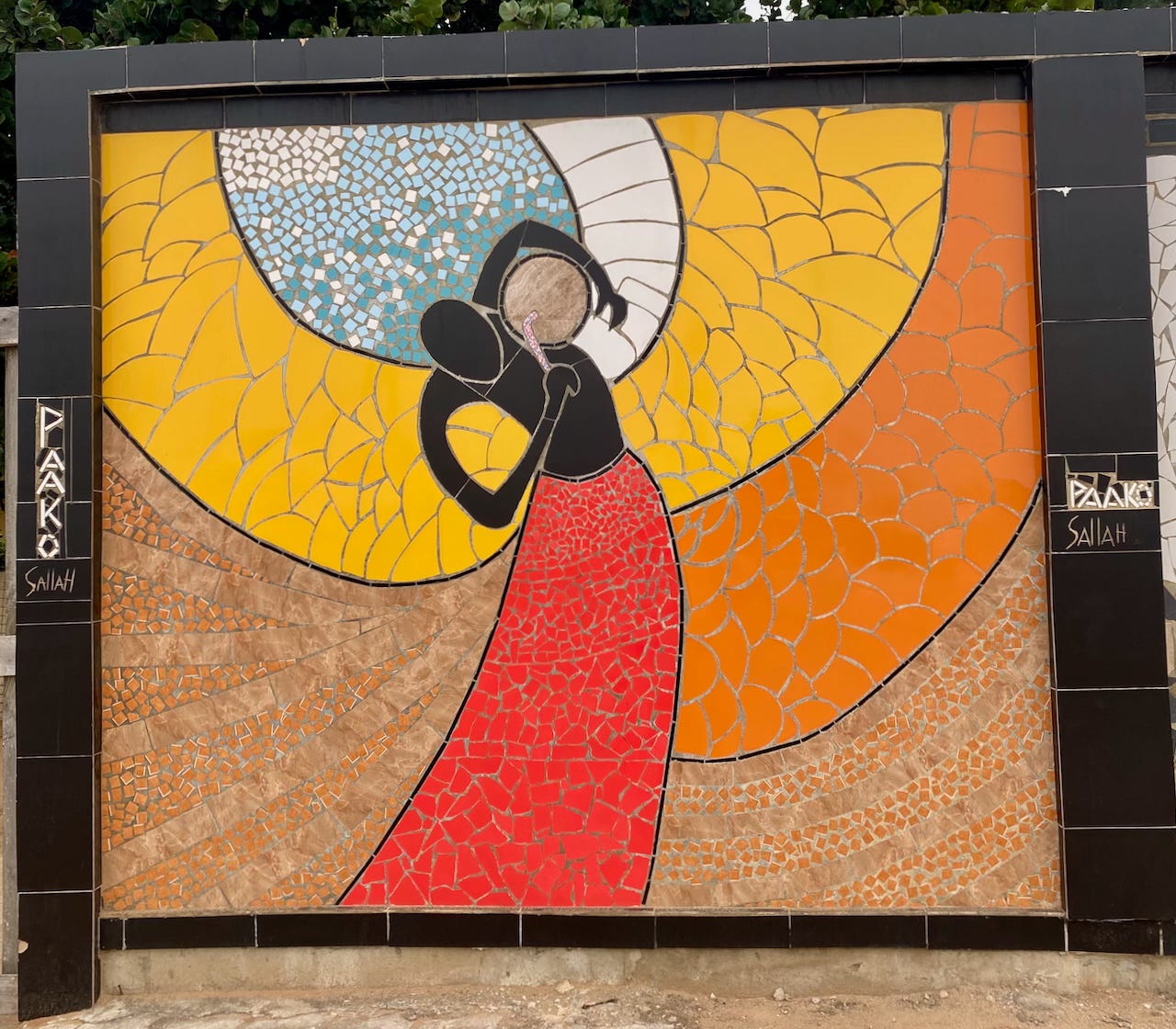
By now we could actually see Benin from the beach. When we did head for the border we still had a lingering suspicion that the police were staying on our tail and could collar us at the last minute for a parting gift. It was difficult not think that way even though it was probably irrational.
So, beautiful Togo, we did love your scenery, your vibes and almost all of your people, but it was with some relief that we stamped out of the country without any more encounters and entered Benin, which is one of the more stable countries round these parts. Or is it?
Scary stuff indeed, glad you made it out ok, but the pictures are stunning. Watch out for the virgin Mary next time you take a swim 🤪🤣 xx
The miracle of the inverter they will call it. Sorry for all the security hassle - sounds like Northern Ireland 1980. But glad you were set free despite a link to the notorious Dumfries! A very Happy Christmas from France to you both and safe onwards travels for 2026.❤️😘