
Hitting milestones
Including reaching the middle of the planet

Republic of the CONGO (Congo-Brazzaville) → CABINDA (Angola) → DRC (Congo-Kinshasa)
CONGO
Travelling through the complex cultures of West and Central Africa can leave you feeling as if you’re learning so much while simultaneously languishing in complete ignorance.
But while we were in Congo, at least one burning question was finally, unequivocally answered.
Do gorillas pick their noses and eat it?
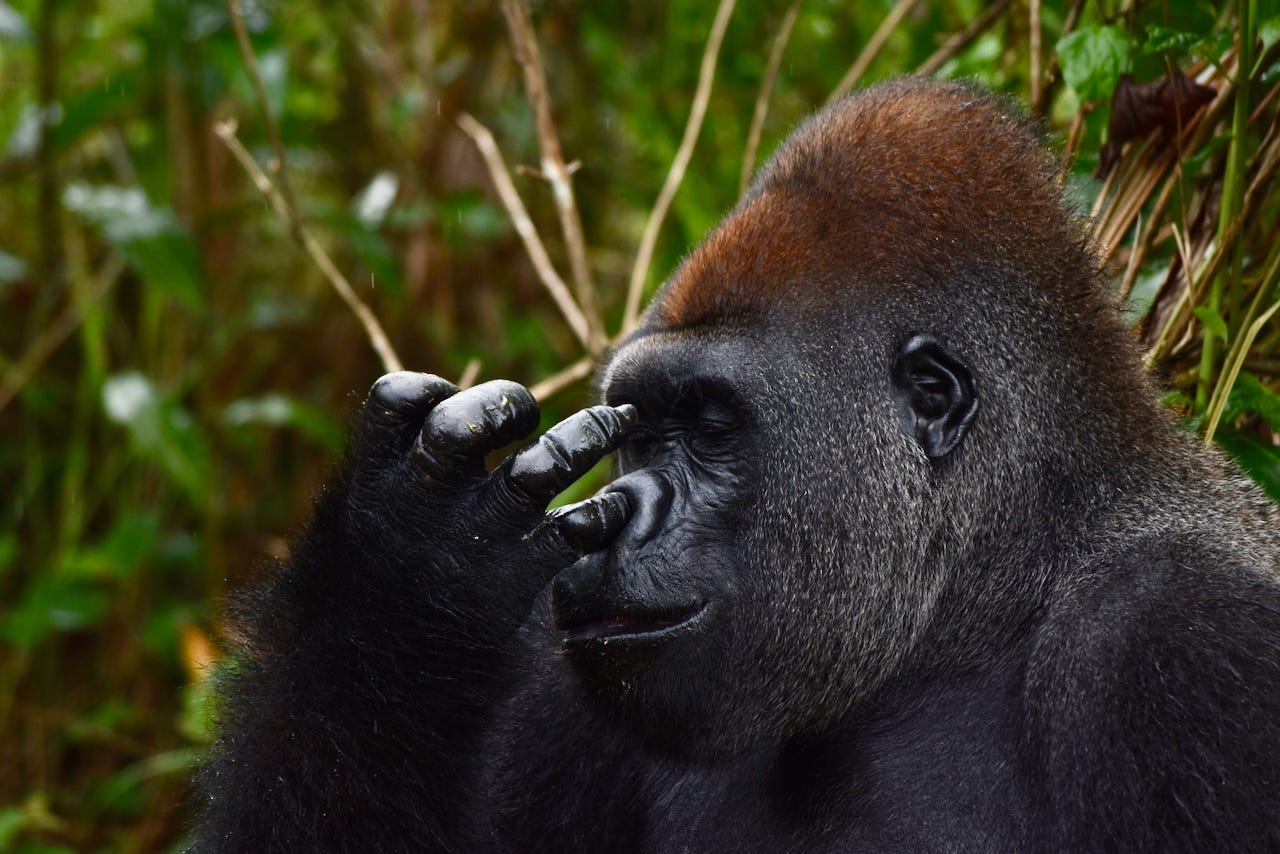
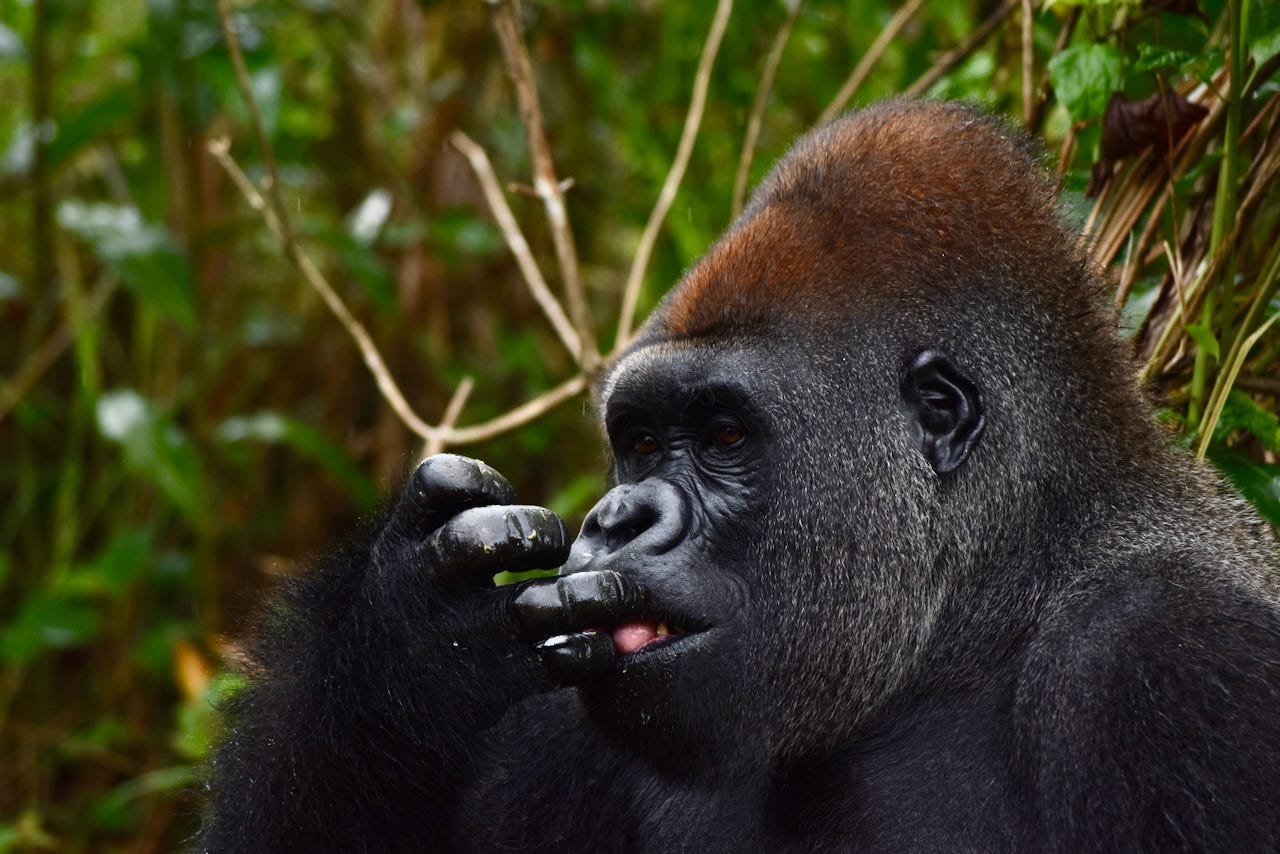
Well, at least that’s clear.
What was less certain was how this leg of the journey would work out. On exiting Cameroon, to continue south it’s a slightly convoluted overland route that passes through two Congos and a disconnected little nub of Angola, called Cabinda. The next major milestone on our route was reaching ‘proper’ Angola. And as goals go, it’s a biggie. Why? Because getting to this country – which is seen as a bridge between West and Central Africa and the more commonly-visited southern nations – means you’ve ‘made it’ through the hardest part. There can still be many challenges ahead, but West Africa is widely regarded as a toughie in comparison with other regions of the continent. And because the last country you must pass through on the way to Angola is the DR Congo (DRC; or Congo-Kinshasa) – which has a live conflict in the east and has periodically caused logistical headaches for overlanders – it’s just really nice to know that you’ve got that done without incident.
Here’s a simplified version of this leg. Because it’s not feasible to pass directly from the Republic of the Congo (also known as Congo-Brazzaville; referred to here as Congo) through DRC to Angola, we had to drive west to the Congolese coast at Pointe-Noire then traverse Cabinda, an exclave of Angola that’s like the filling in a Congo sandwich.
Are we all paying attention at the back of the class?
This leg generates a lot of conversation and questions among overlanders because it involves several border crossings in quick succession that include some complicated fees and tolls, and needs some advance planning on the visas front. Our last chance to obtain a visa for DRC had been way back at their embassy in Ghana, in November. If you don’t realise this in advance, you’re pretty screwed. At that point we had to state specific dates for passing through both Congos, which is always a risky business as you can never be sure what will happen. The DRC visas were the most expensive of the trip, at US$500 for two, so we couldn’t afford to mess up our timings.
Settle in for another catch-up ☕️🛋️.
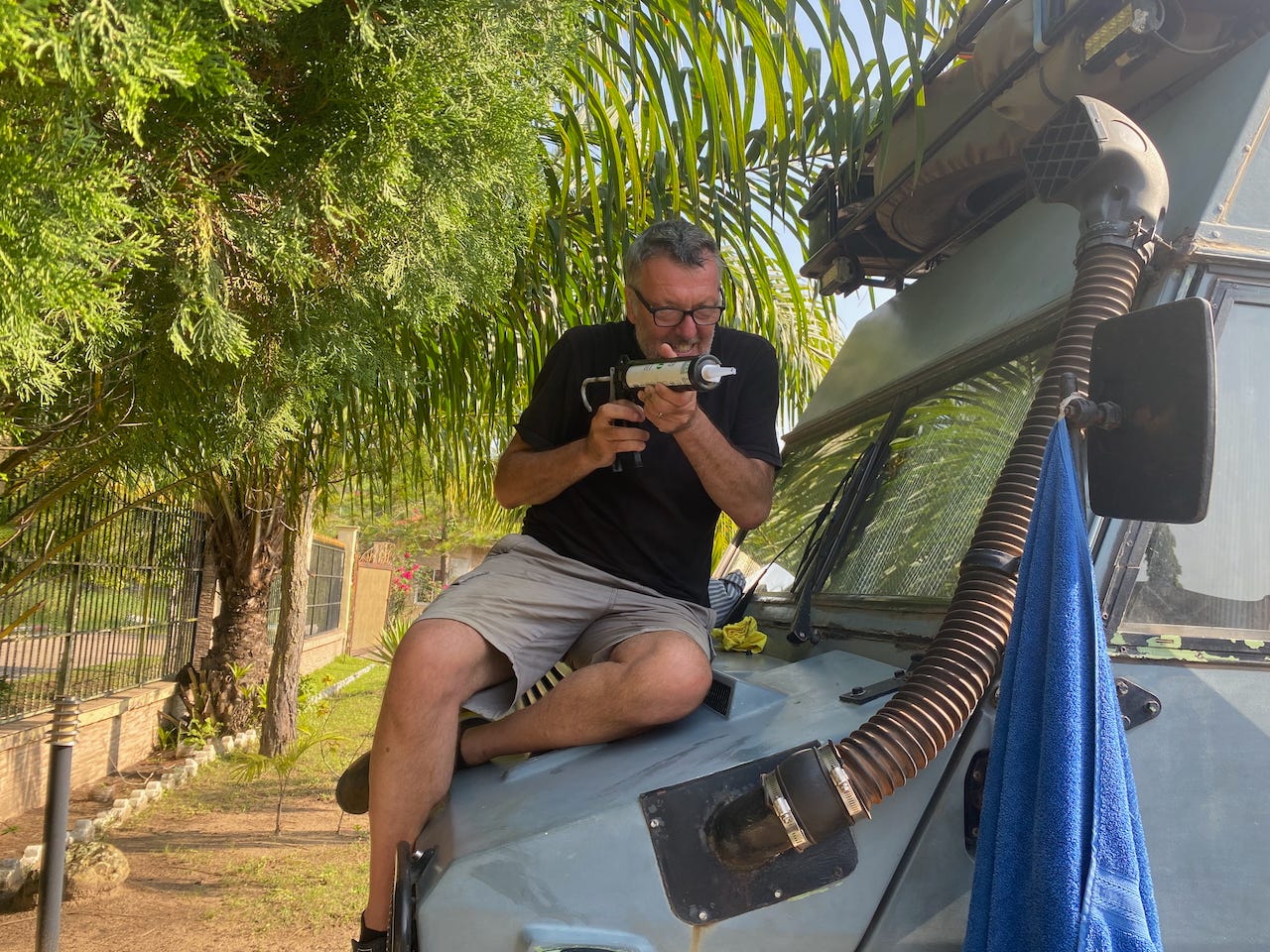
A lot of the convenient wild-camping spots in this part of Congo are in old gravel pits and quarries that are just off the road and serve as great, flat overnight spots. It’s lucky our stopover on night two was in a large clearing in the forest because we were starting to get some serious rain and the force of that evening’s storm sent a huge tree crashing down nearby. Ivy was in need of some re-sealing again, which became obvious when a waterfall appeared via a new hole at the top of my clothes cupboard and cascaded through my t-shirts onto the bed. When you live in an old truck, there is a specific bag of old towels for such occasions.
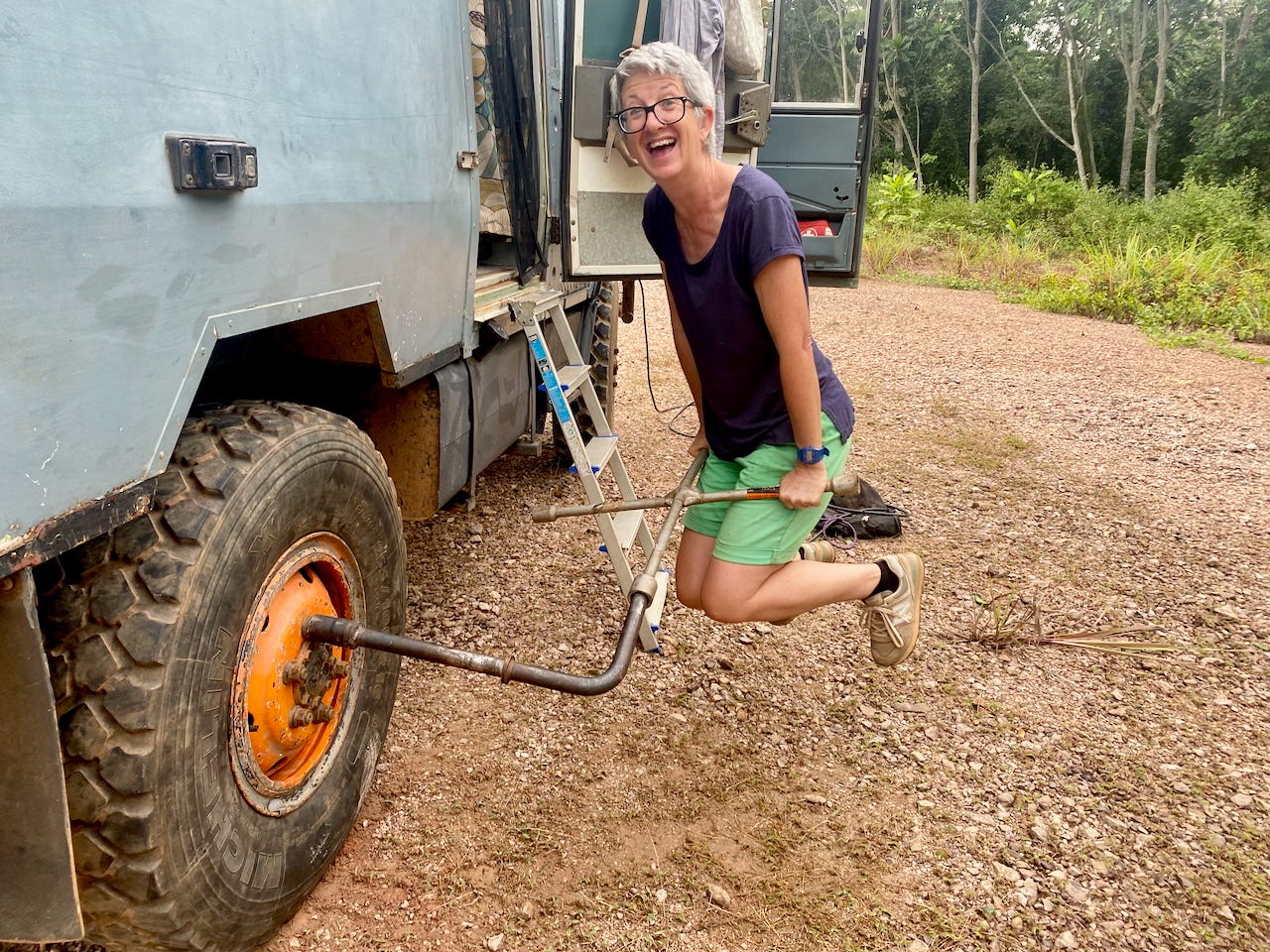
The following morning, we awoke to a flat tyre. A group of Dutch overlanders had shown up in the same spot and gave us a hand to change it. Ivy’s wheel nuts take a lot of brute strength to loosen and tighten – here’s me trying, and failing, to secure the spare wheel with all my bodyweight.
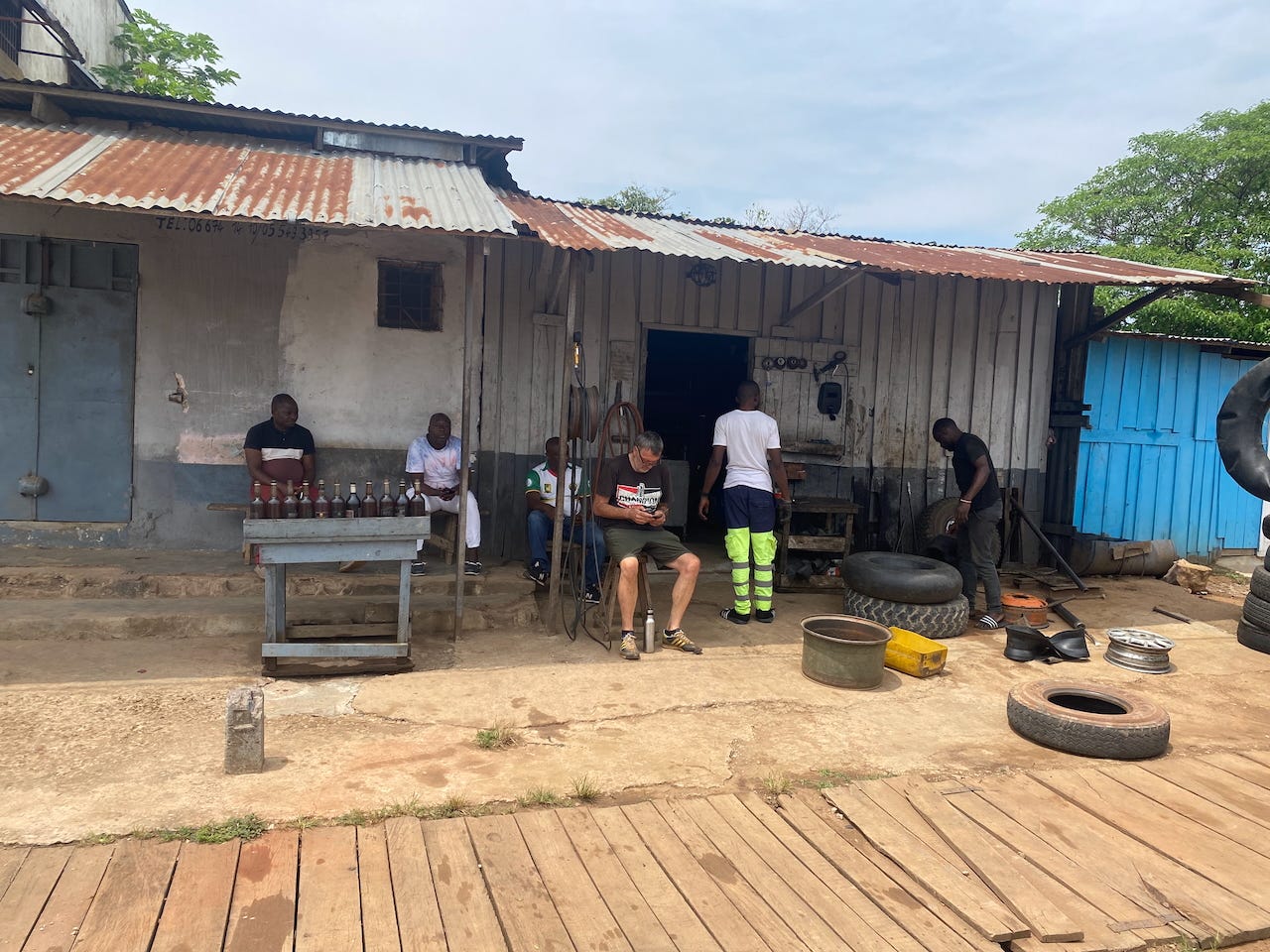
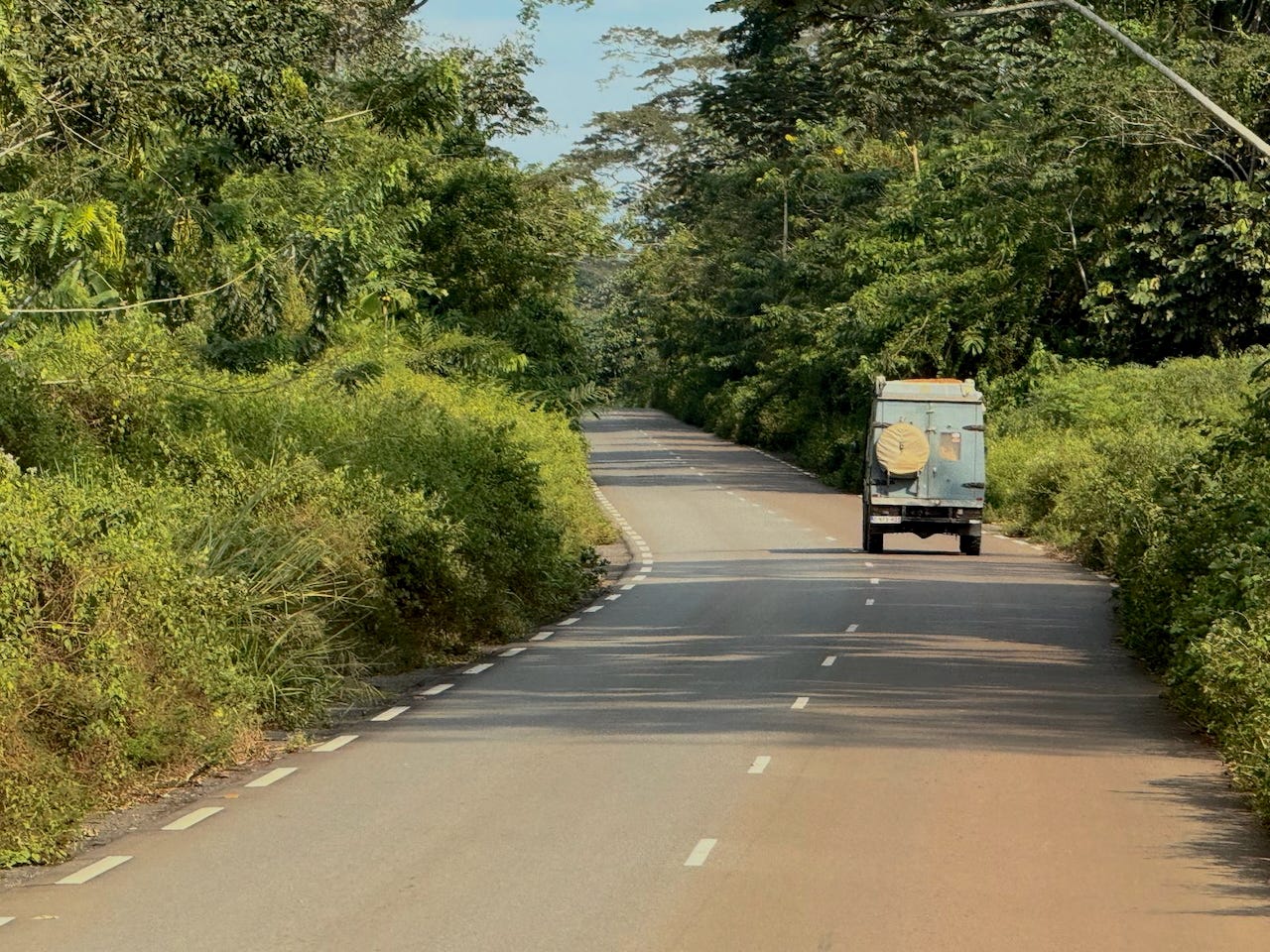
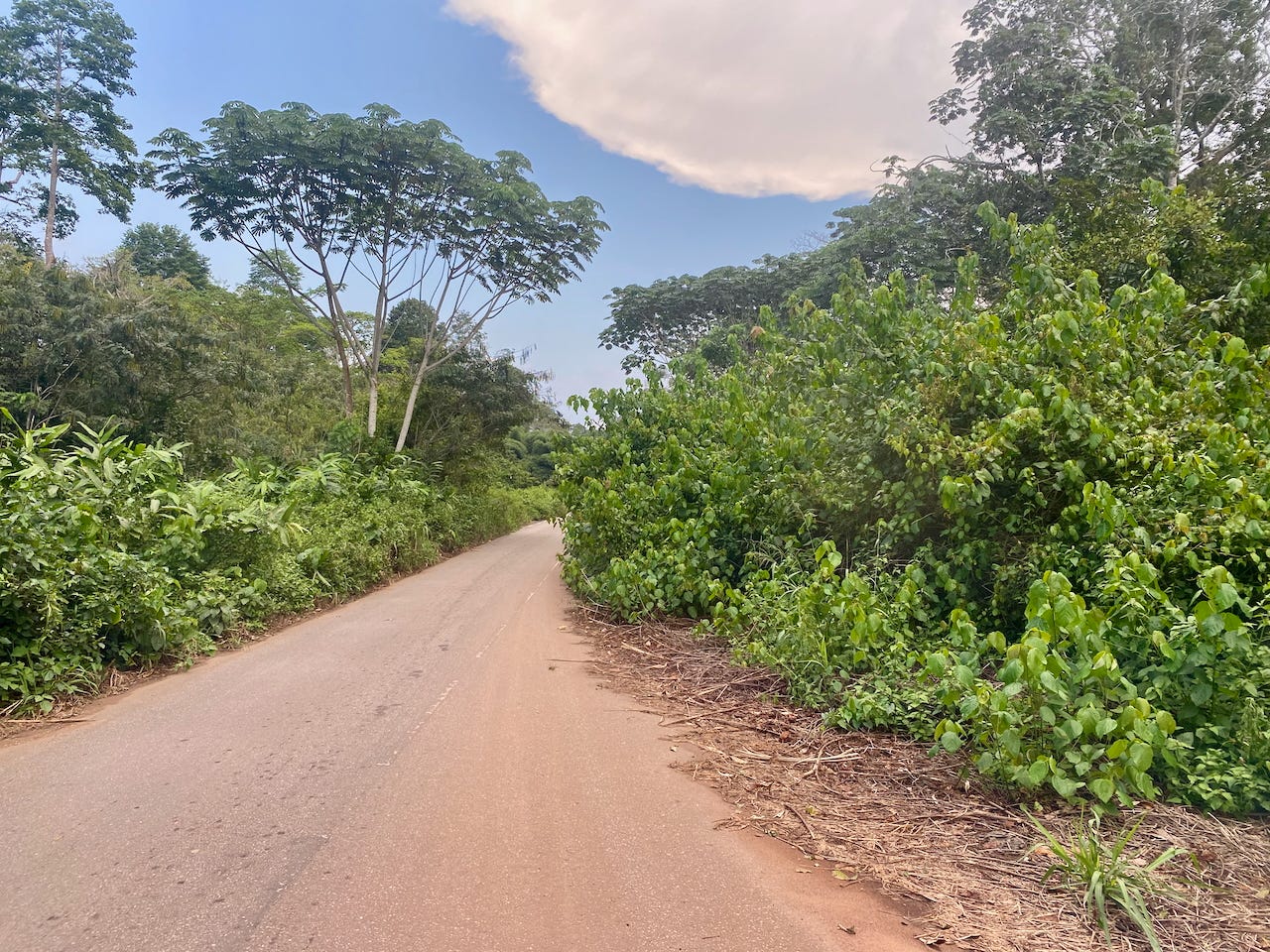
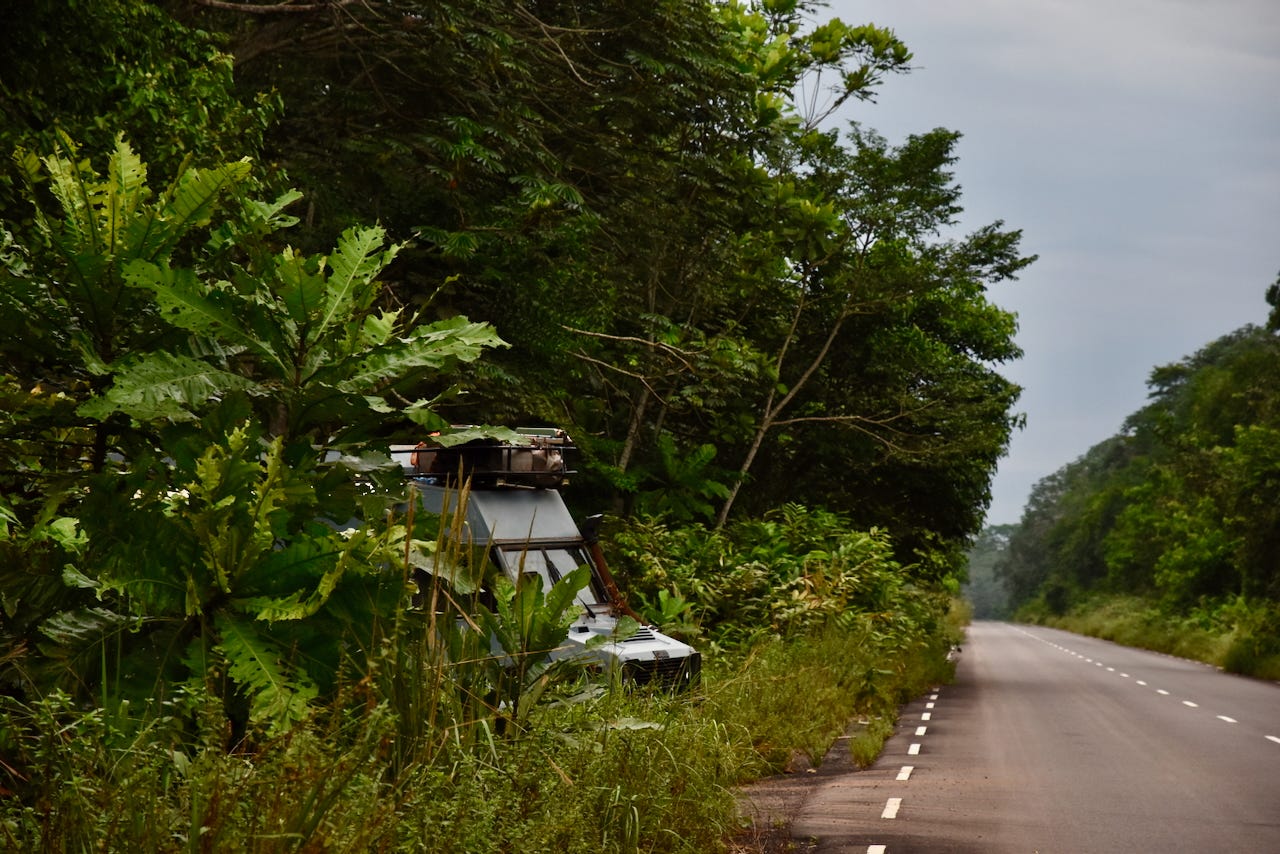
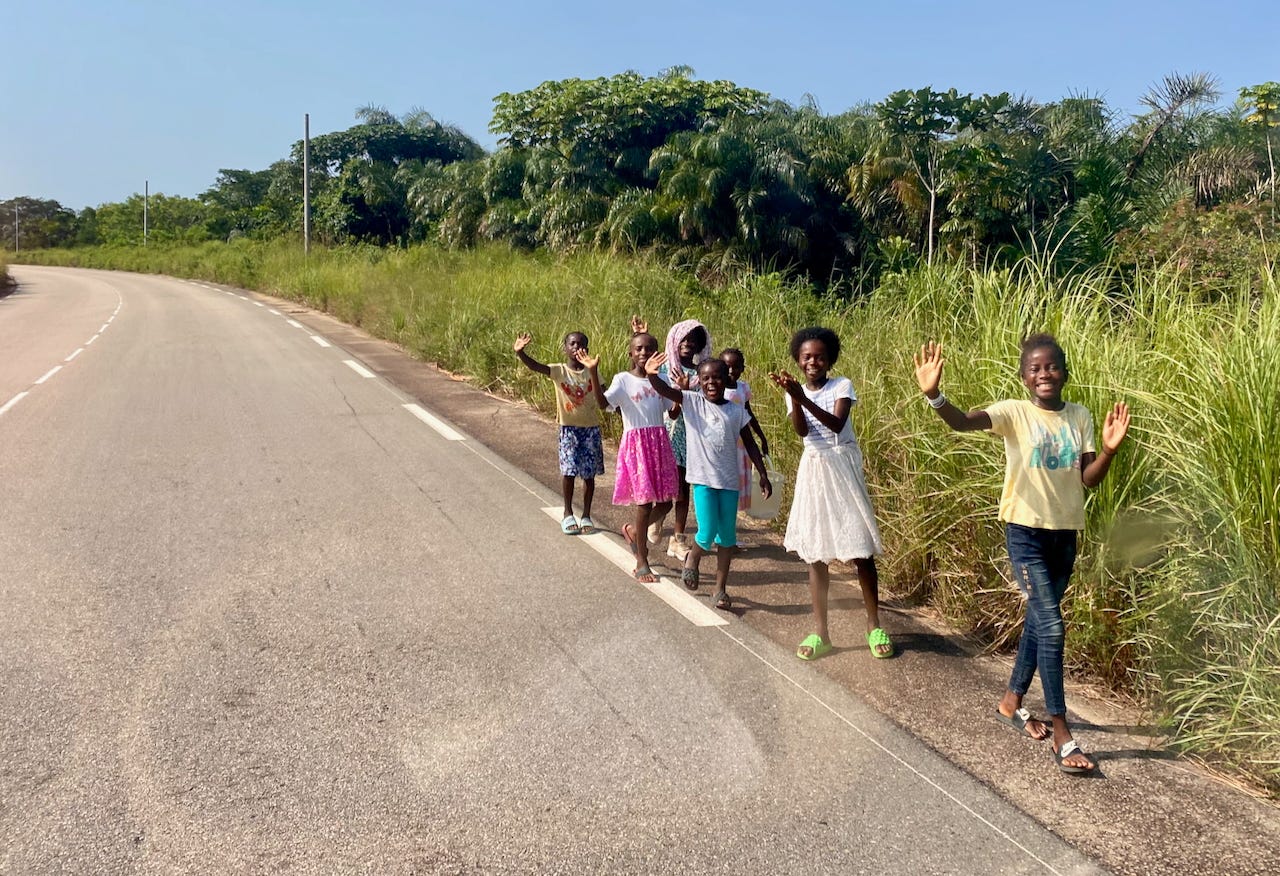
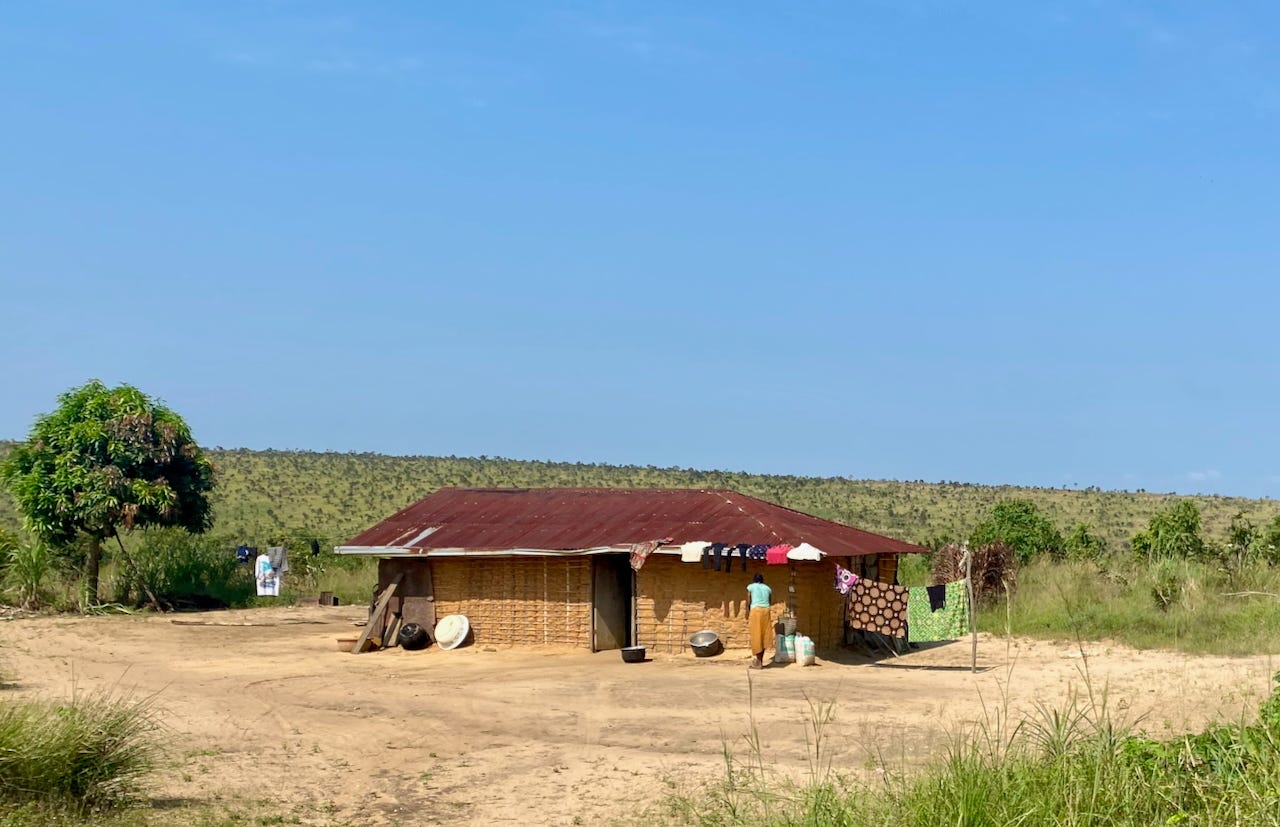
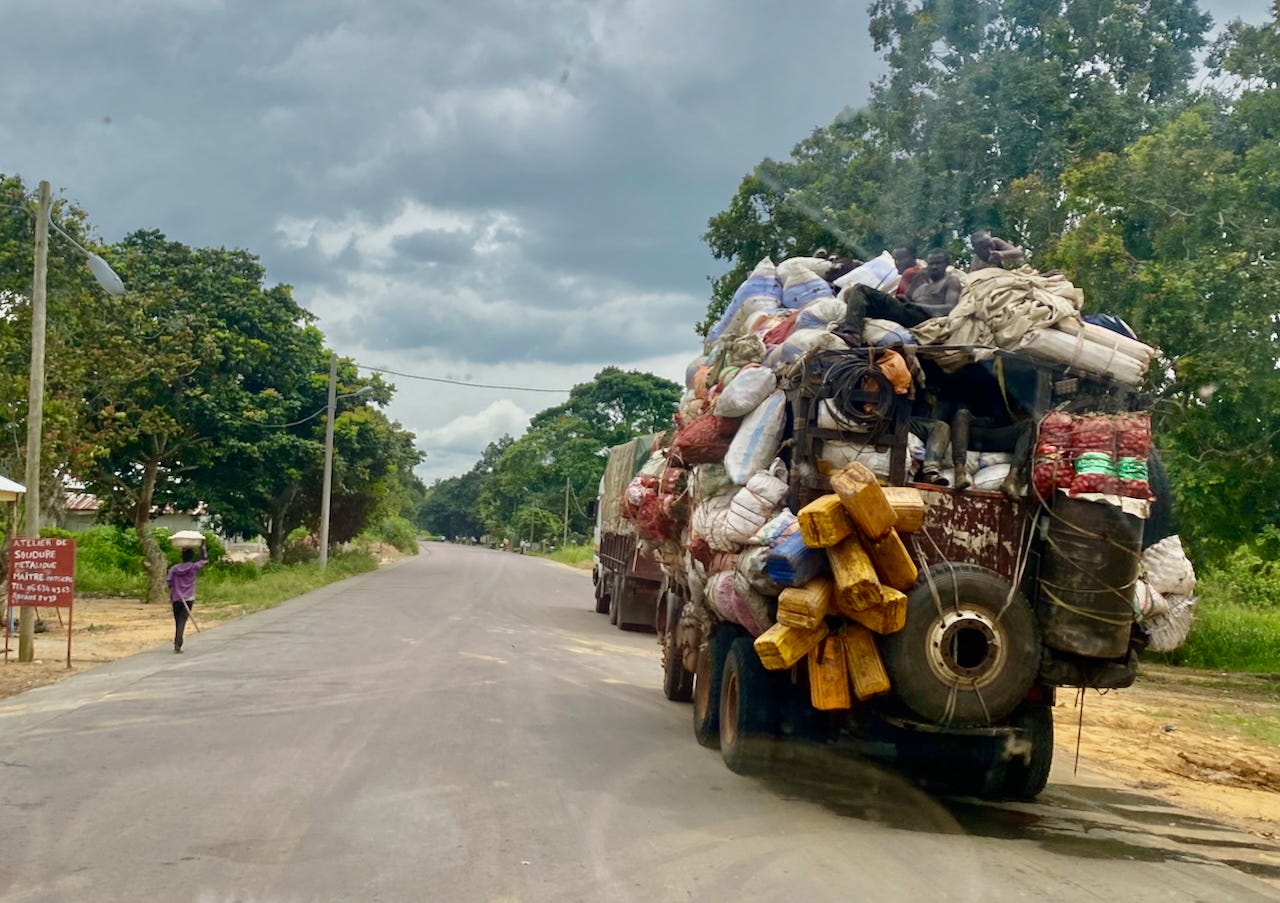
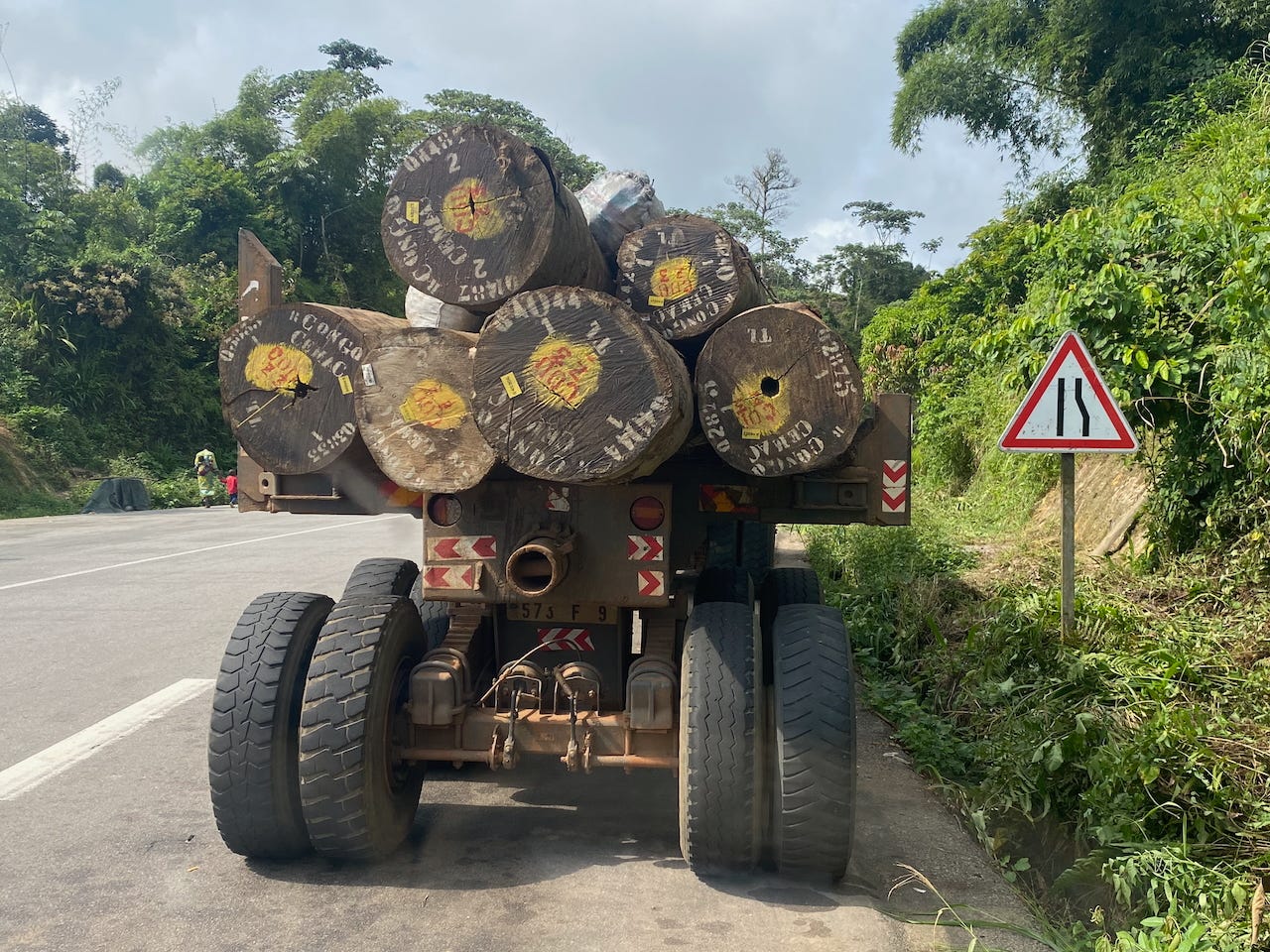
We were thoroughly enjoying the peaceful drive through the countryside. Barely a pothole. No police checks. Hardly any traffic at all. No signs of garbage. We zoomed through miles of vibrant green forest and past neat family compounds.
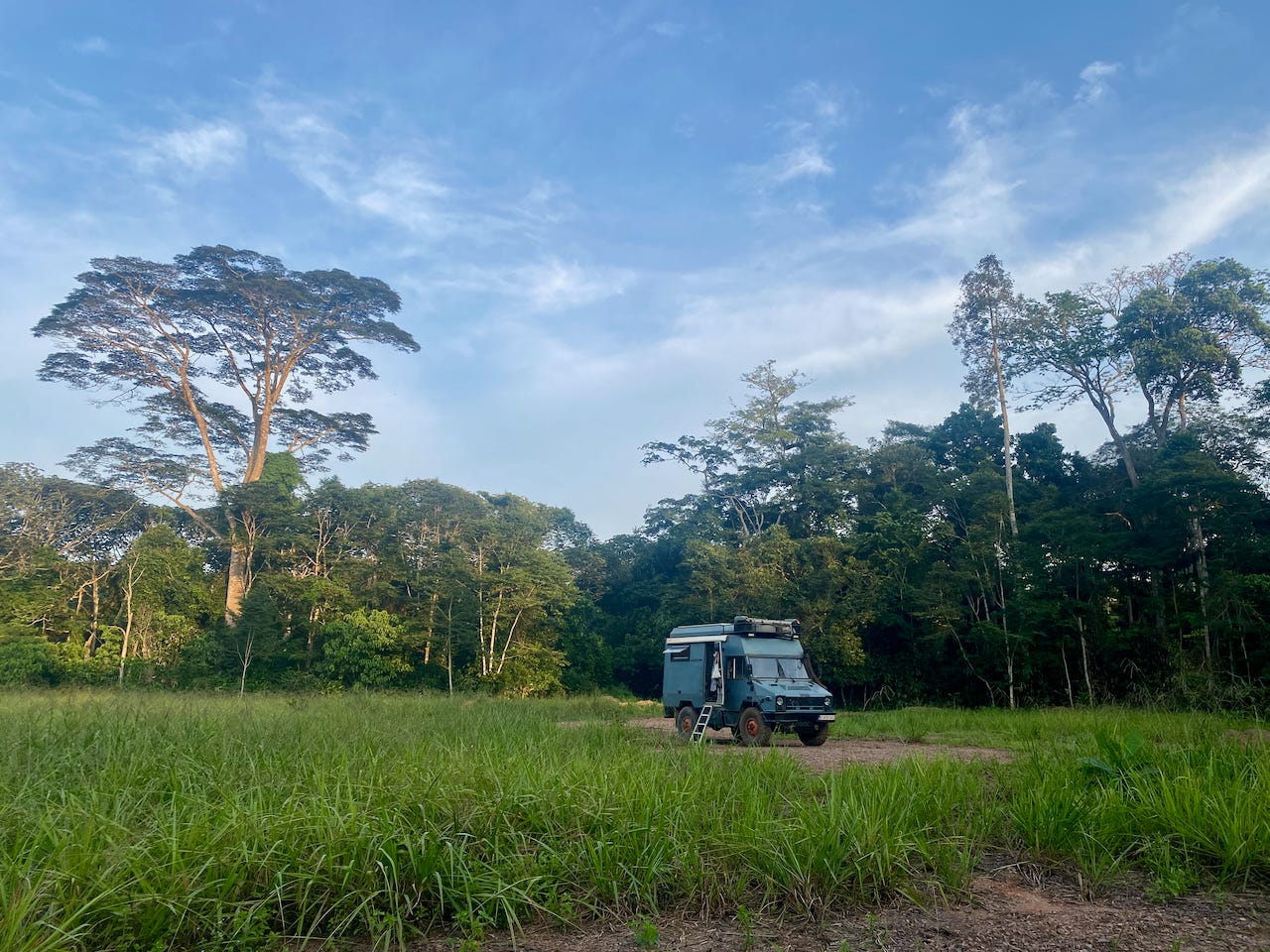
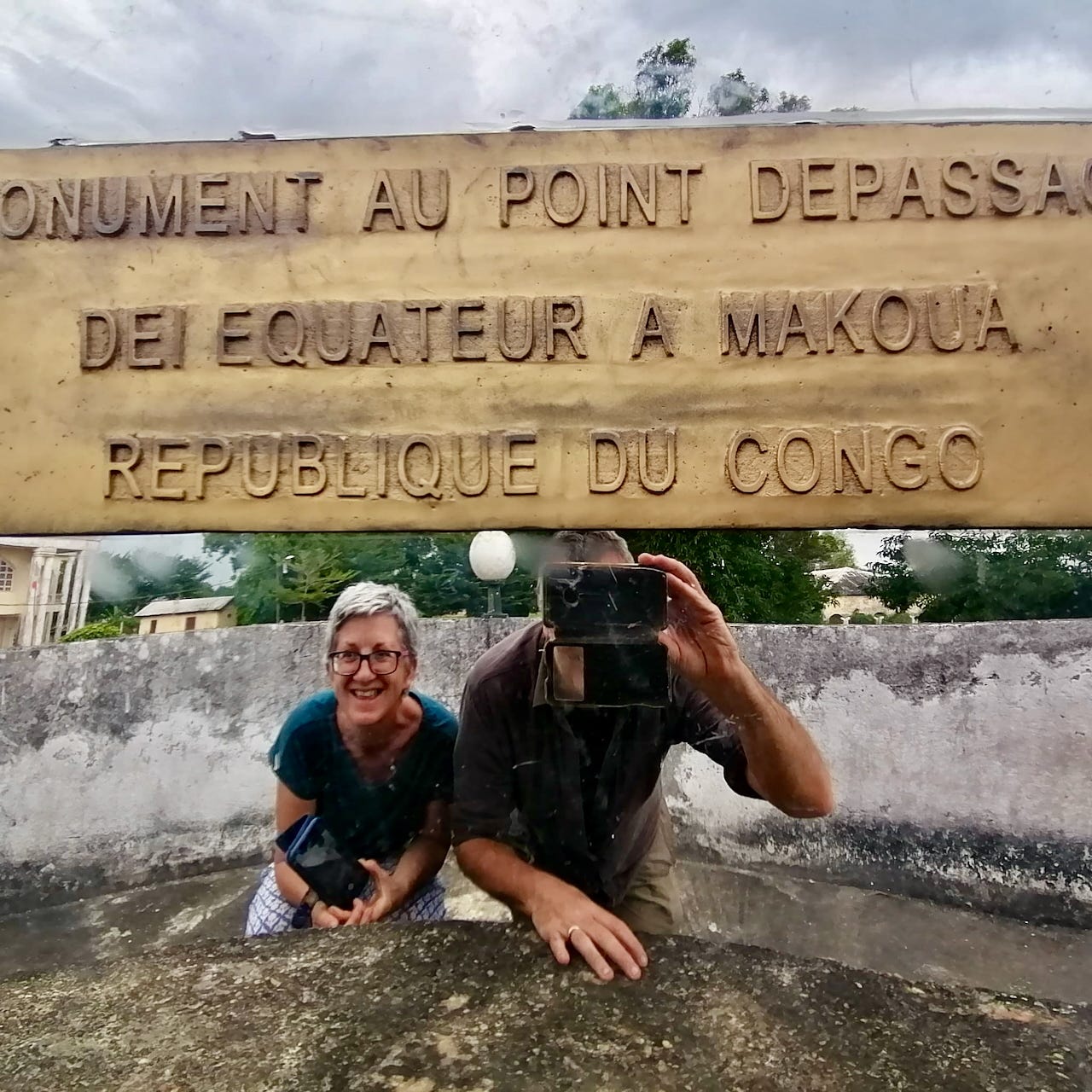
You might have spotted a significant line on the route map at the top of this post. A few days into our Congo leg we hit another milestone – the equator. It was one of those little shake-the-head-in-disbelief moments. We’d driven from our house to the centre of the planet. 🌍


We were very keen to see some gorillas in Congo. Partly due to time limits and cost we opted for Camp Abio in the Lesio-Louna reserve. To reach the camp you have to drive down a 14km sand and mud track. We weren’t sure how soft it would get and hoped it would stay dry but the skies blackened as we set off.
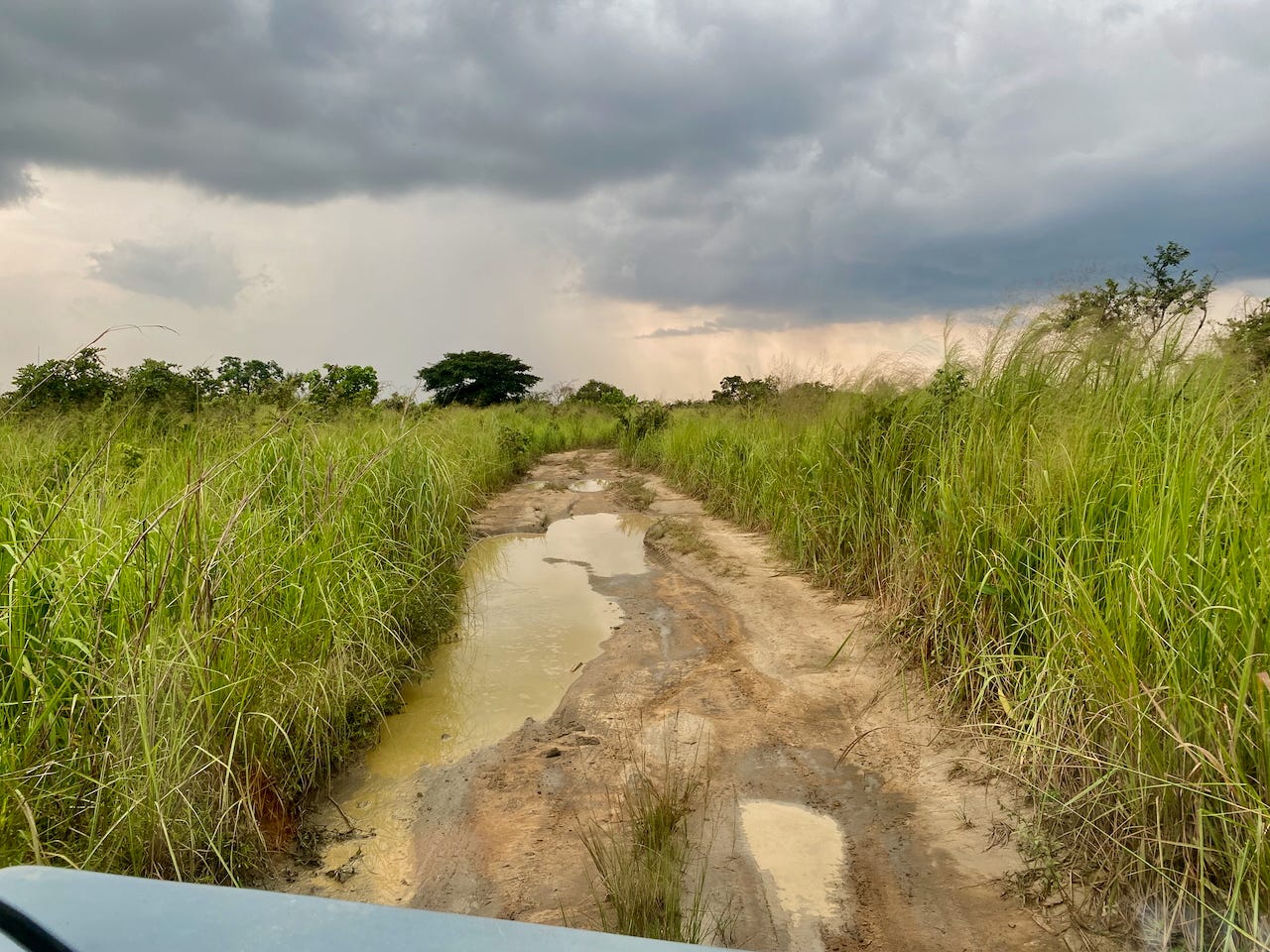
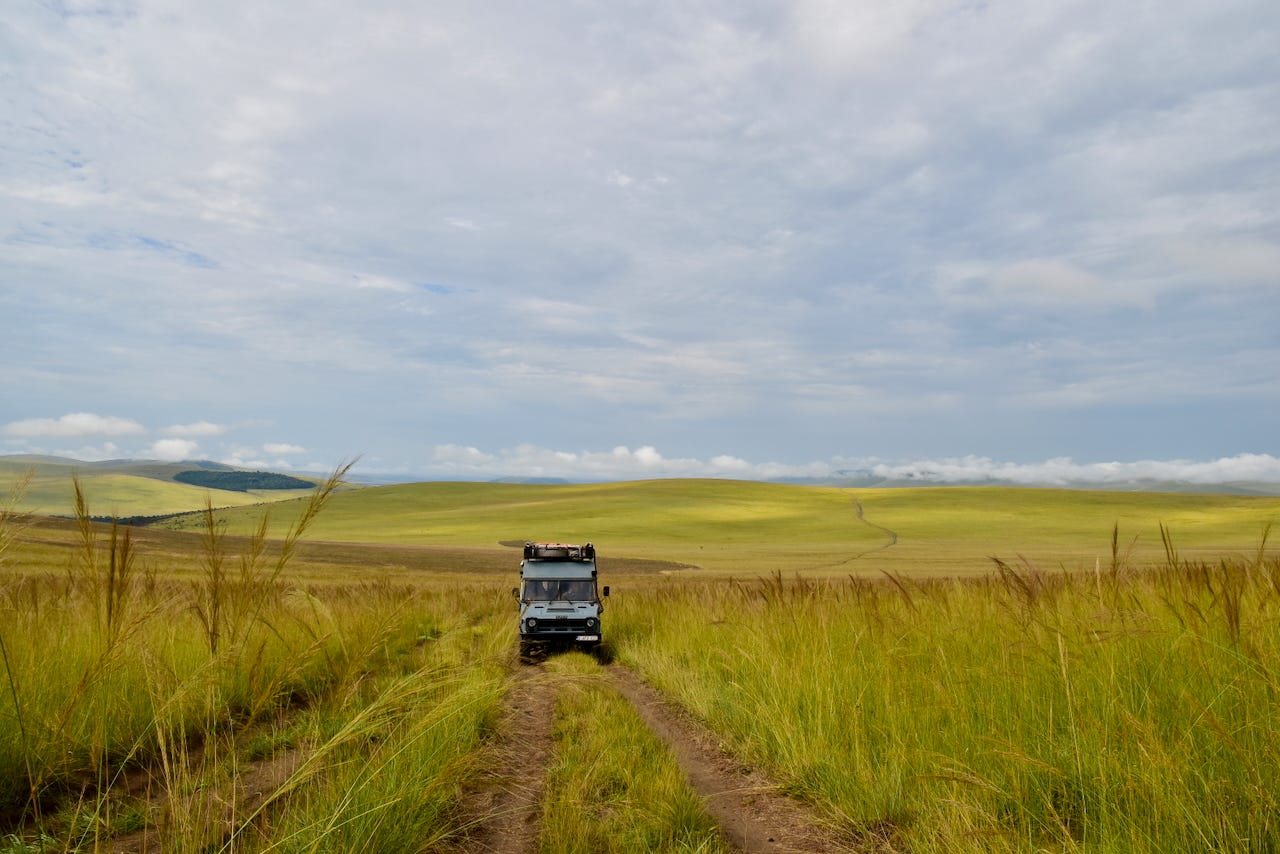
The weather didn’t spoil the spectacular views – the track was mostly hard-packed and we loved the drive.
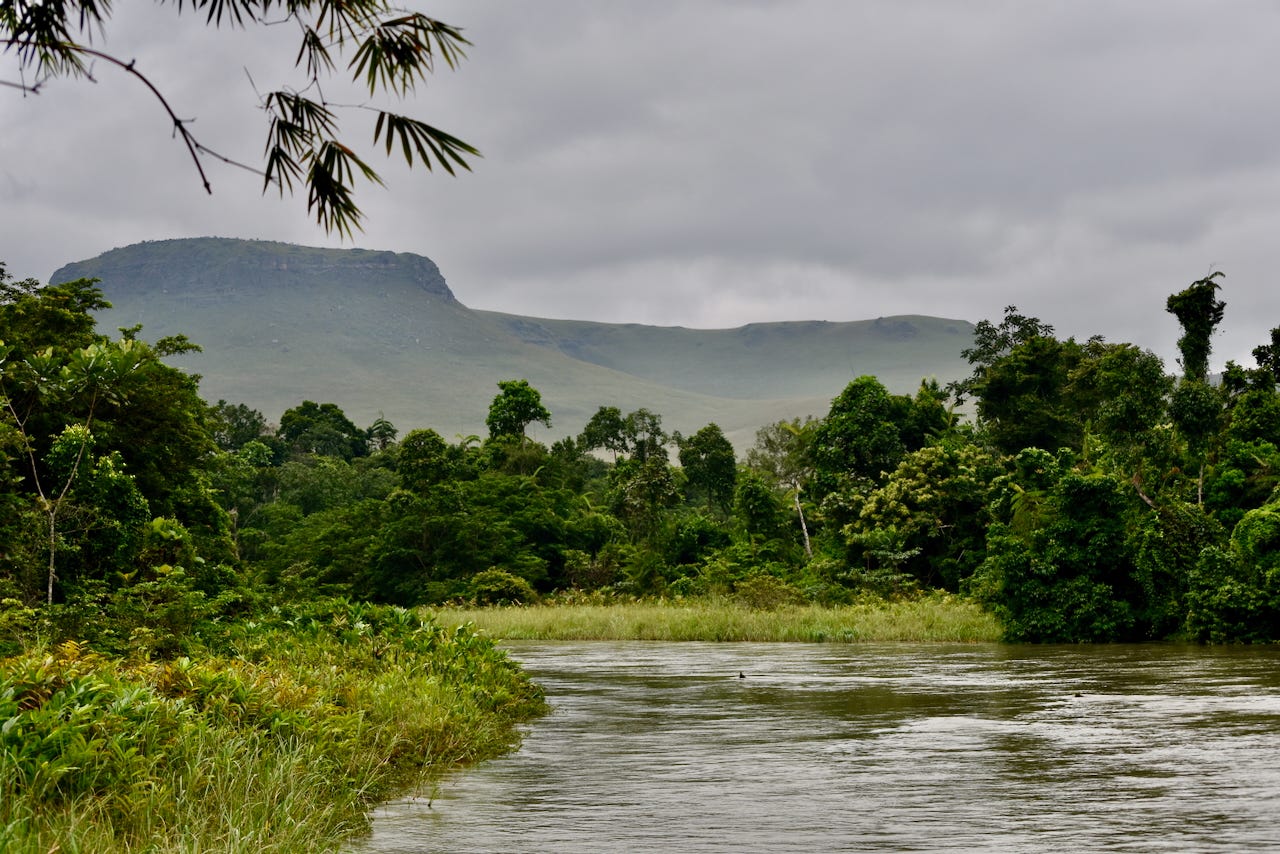
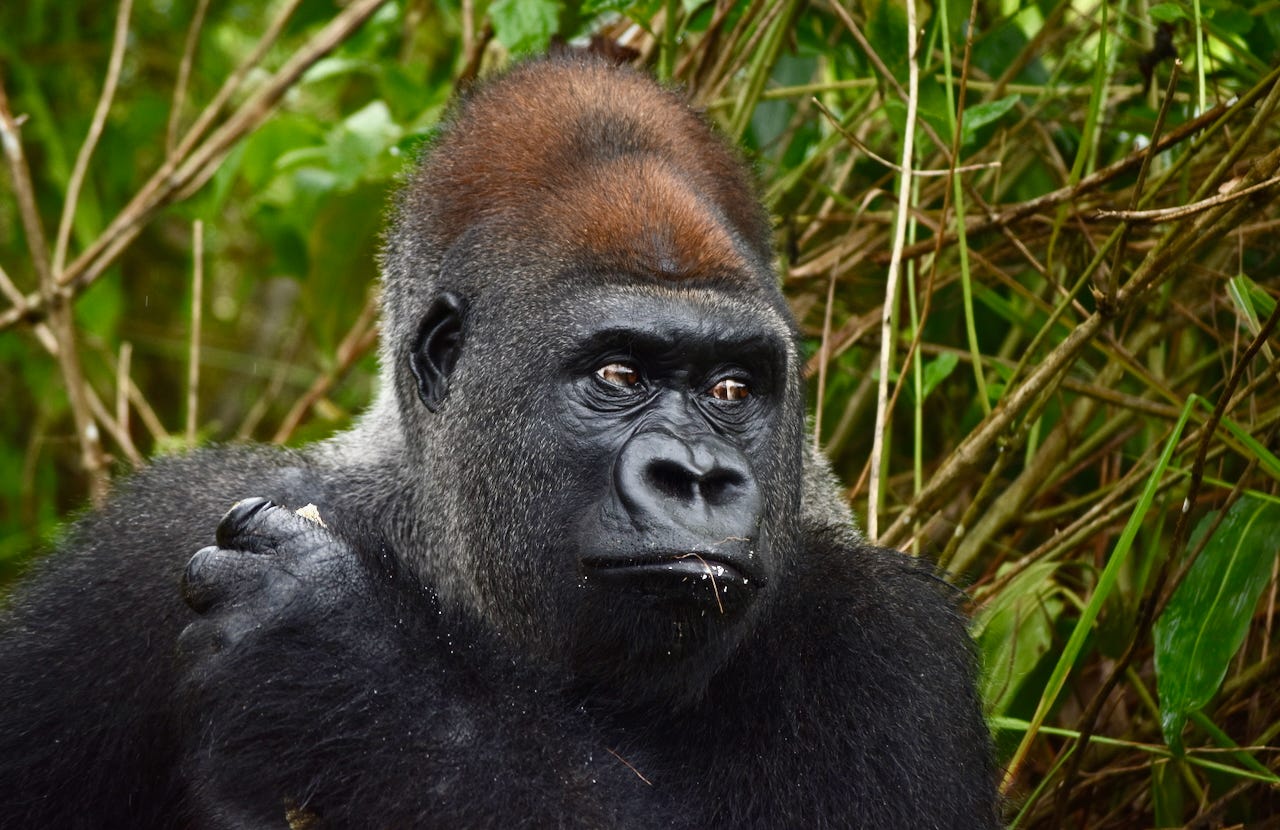
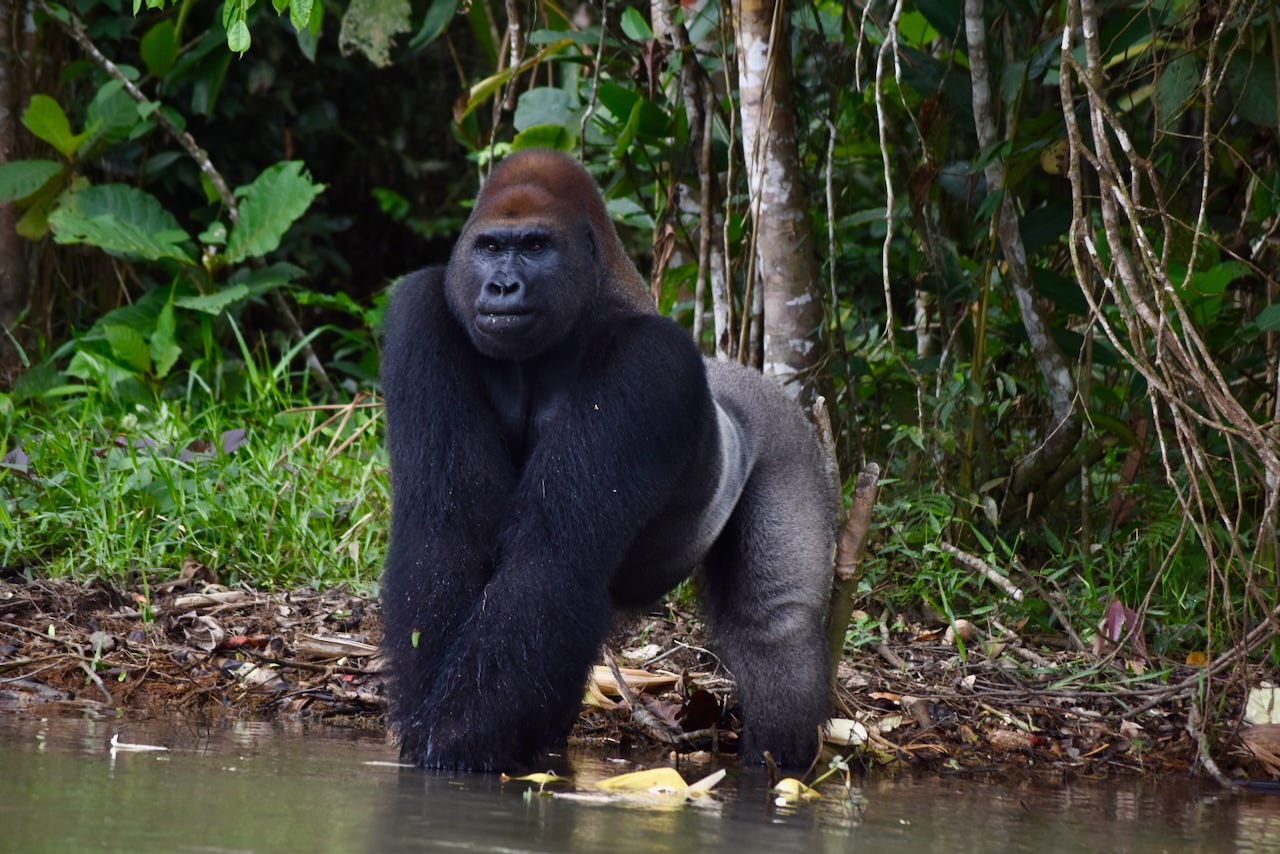
The Lesio-Louna initiative came out of a project started in the 1980s to care for orphaned gorillas who had been rescued while being trafficked. It now does a lot of work to reintroduce gorillas into the wild. Two of the silverbacks currently here were actually born in captivity in the UK and brought to Congo nine years ago.
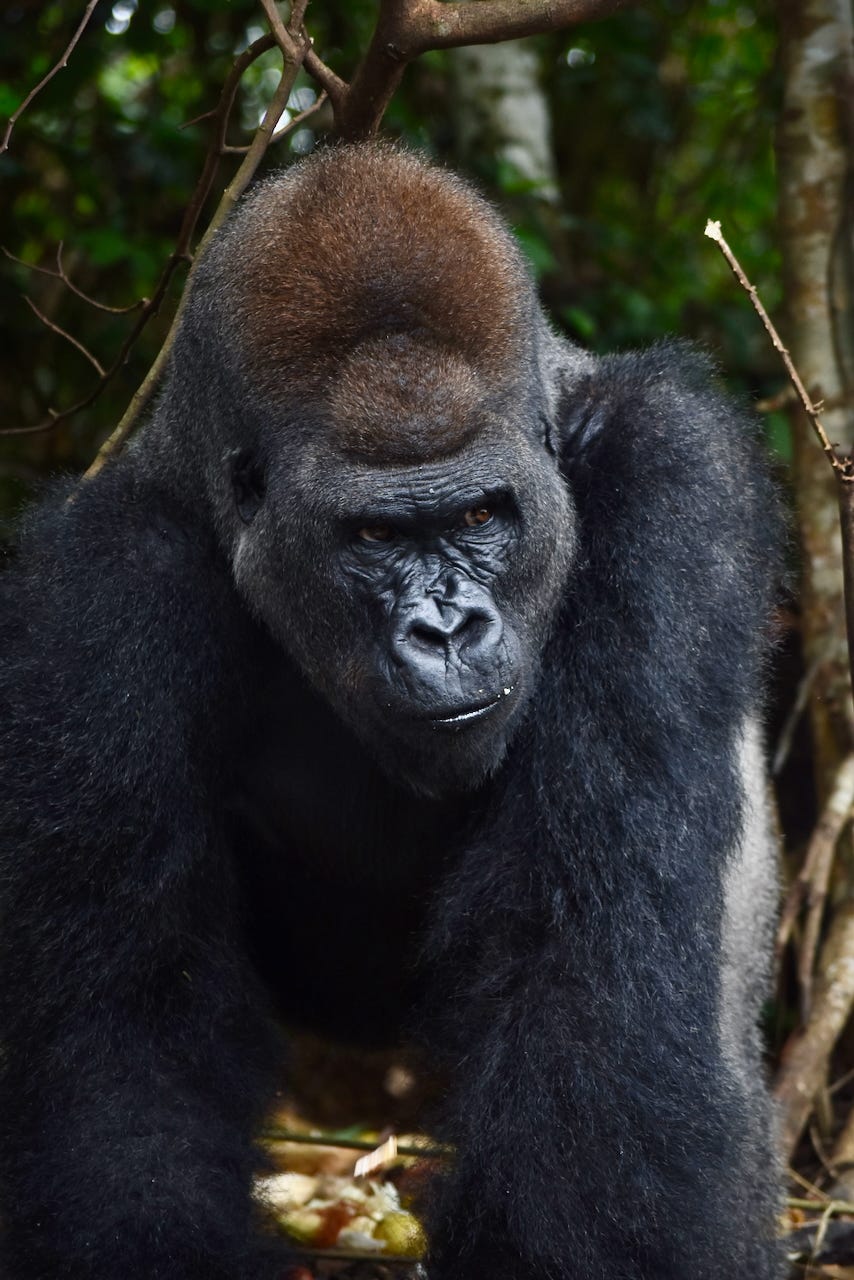
It was a lot of fun to get to close to these magnificent, huge creatures. Looking into the eyes of a primate is always a special, weirdly familiar feeling. We had a great couple of nights sleeping at the camp and then repeated the fun drive back up the track in drier weather.
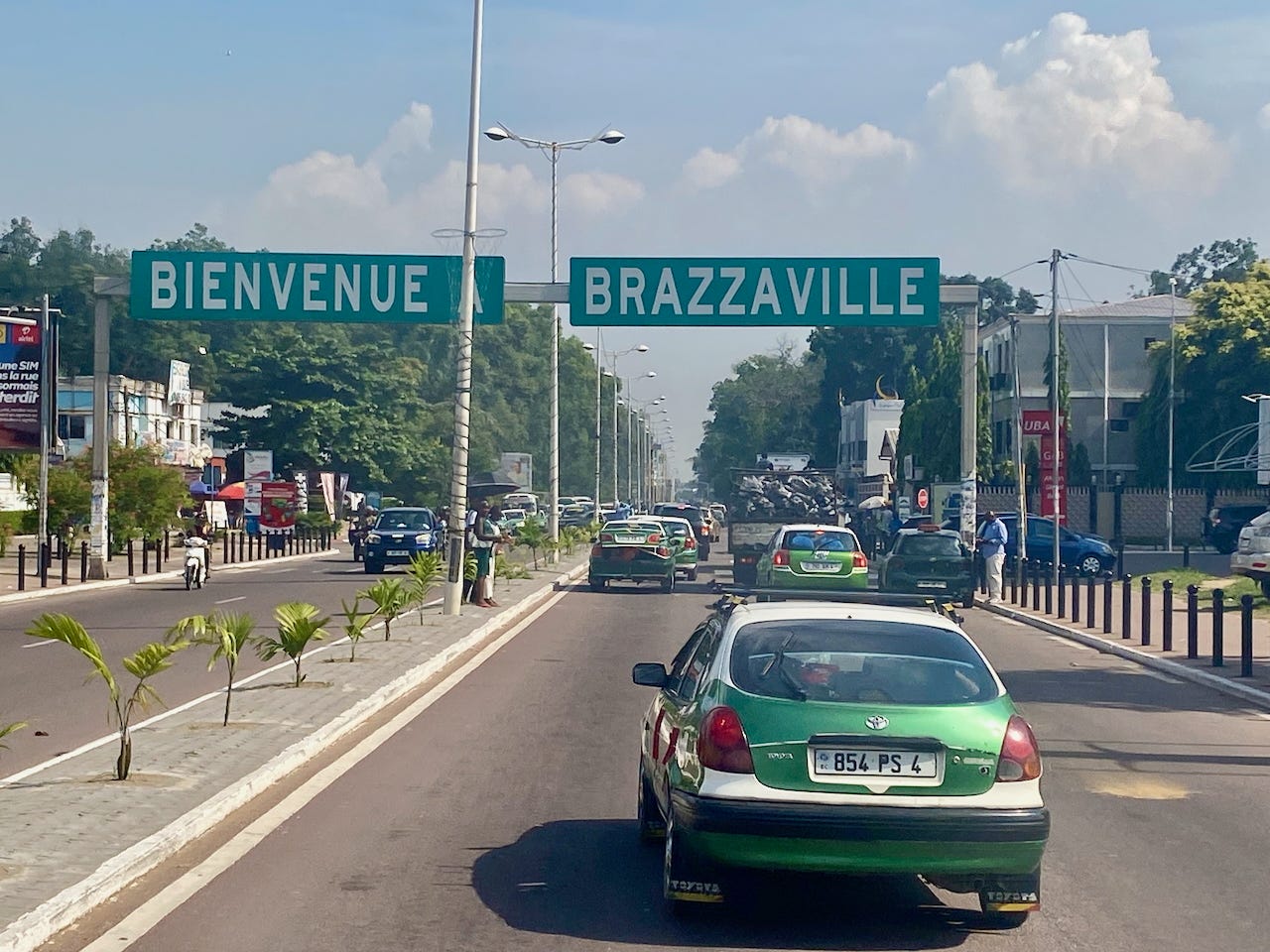
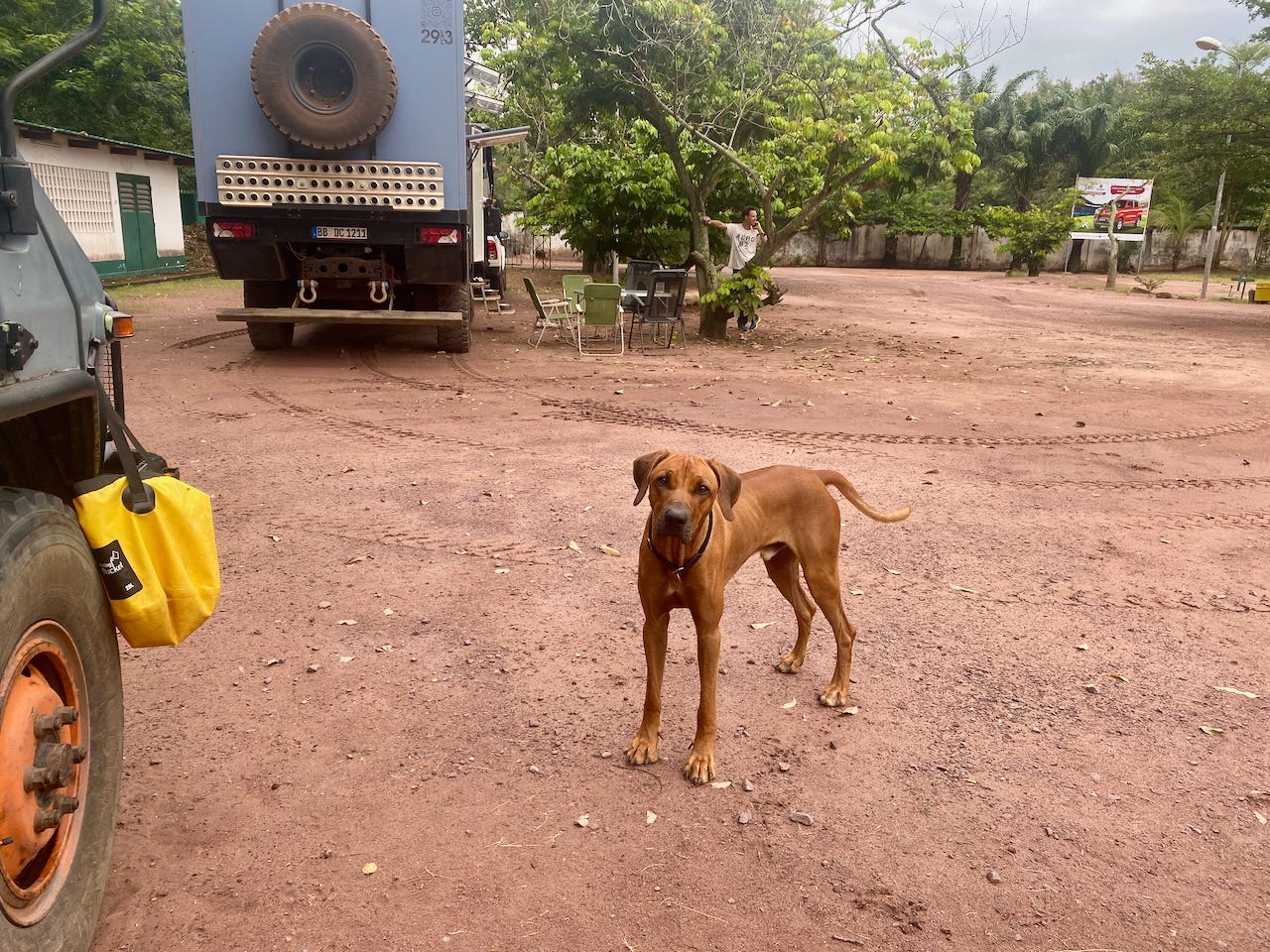
We spent a week in Brazzaville while I bashed through some work. Cities can be tricky for suitable overlanding spots but Brazzaville has a brilliant option - a large tennis club with a swimming pool, bar and toilet facilities which very kindly offers free parking for an unlimited time.
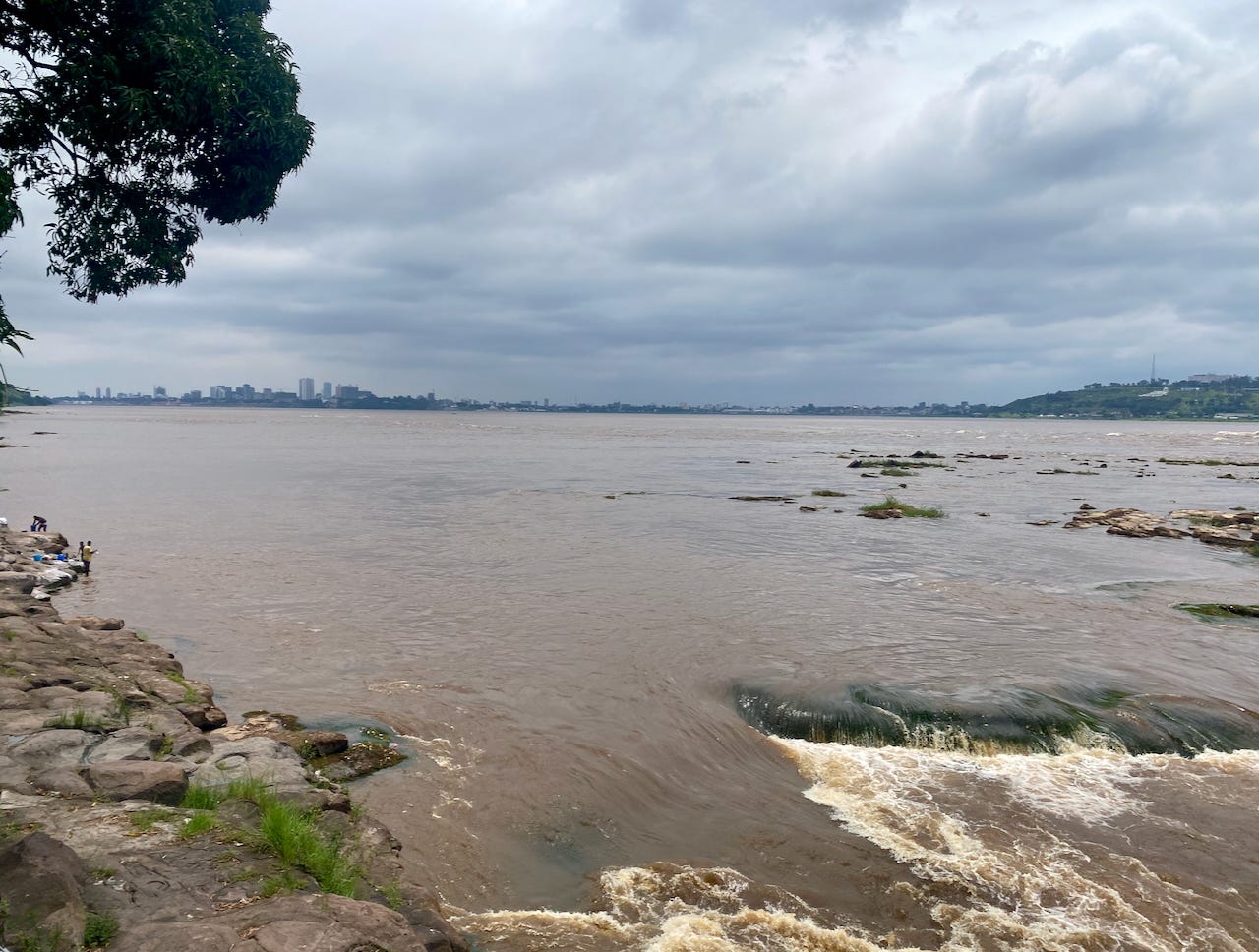
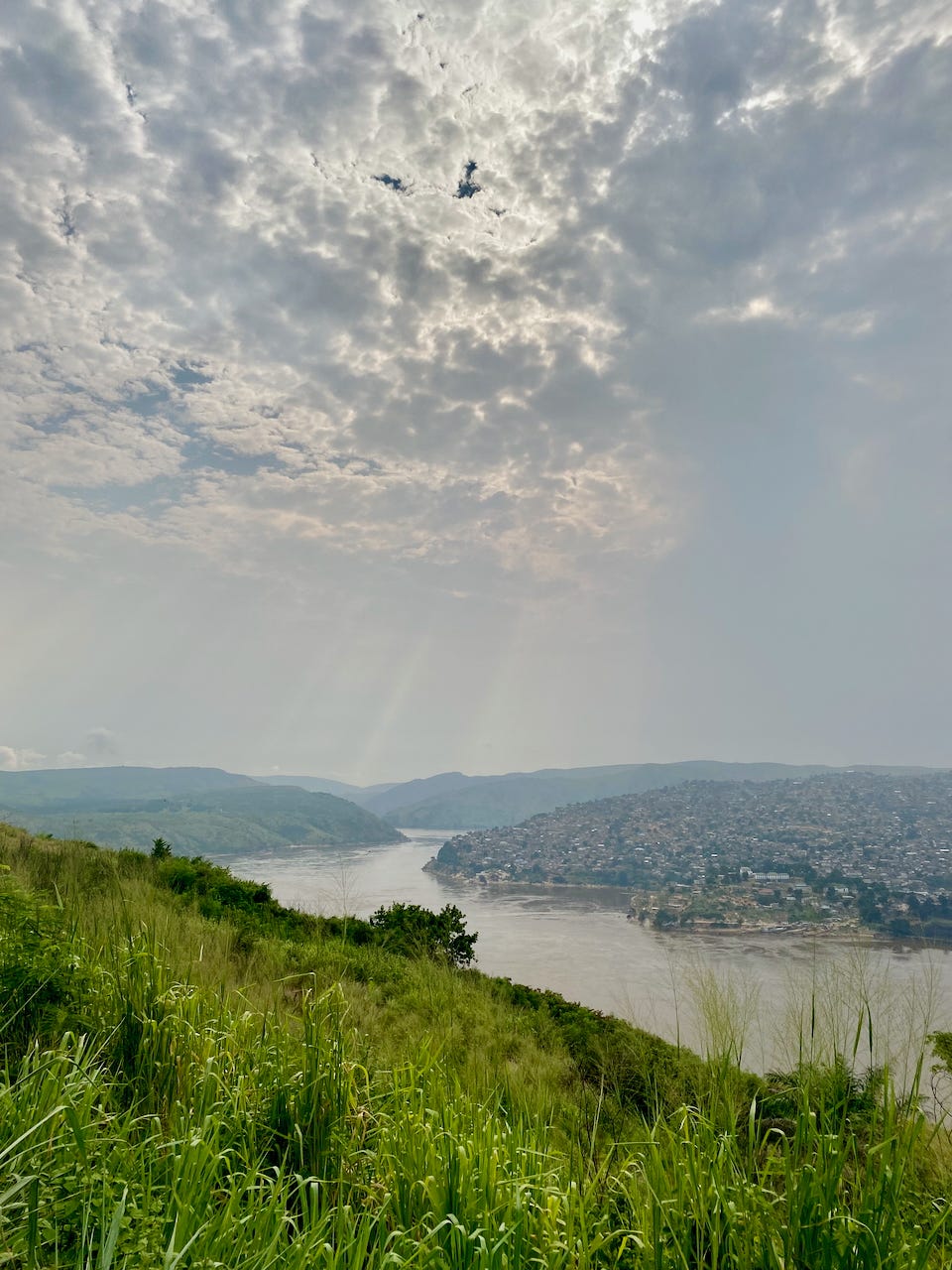
While we were in Brazzaville, it was time to hit another milestone; the mighty Congo River. If water could talk, this 4,700km long river would have some tales to tell – of migration, exploration, exploitation, slavery, colonisation and conflict. Its continuing importance as a means of transport and source of commerce is massive; while the significance to the planet of its incredibly biodiverse river basin is almost beyond measure. The water separates two capital cities – from Brazzaville we stood looking over to Kinshasa, in the DRC. Shame we couldn’t just hop on a car ferry, but the small boats plying the route would definitely not accommodate Ivy and the occasional vehicle ferry – which I think has to be chartered – costs many thousands of euros.
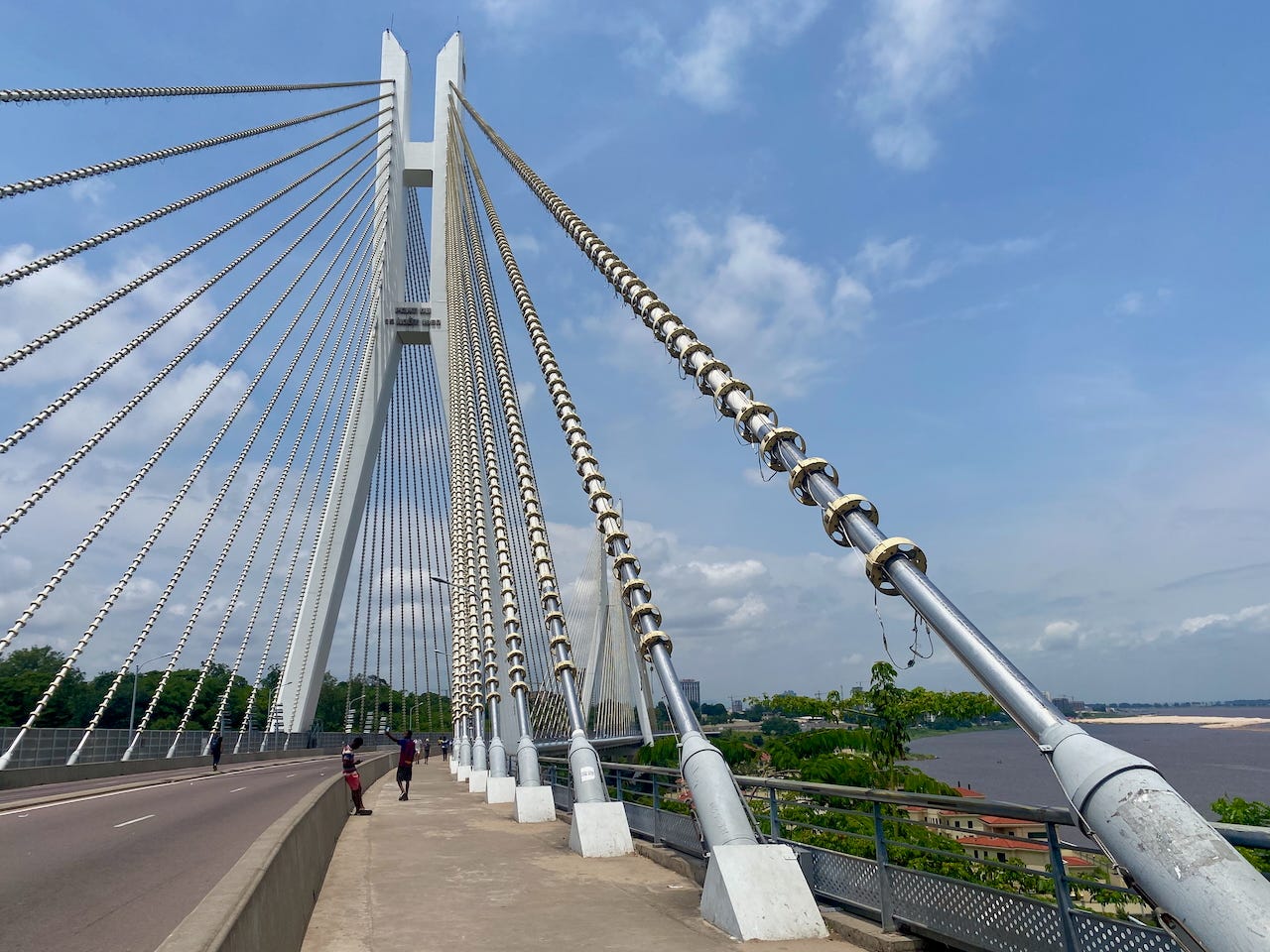
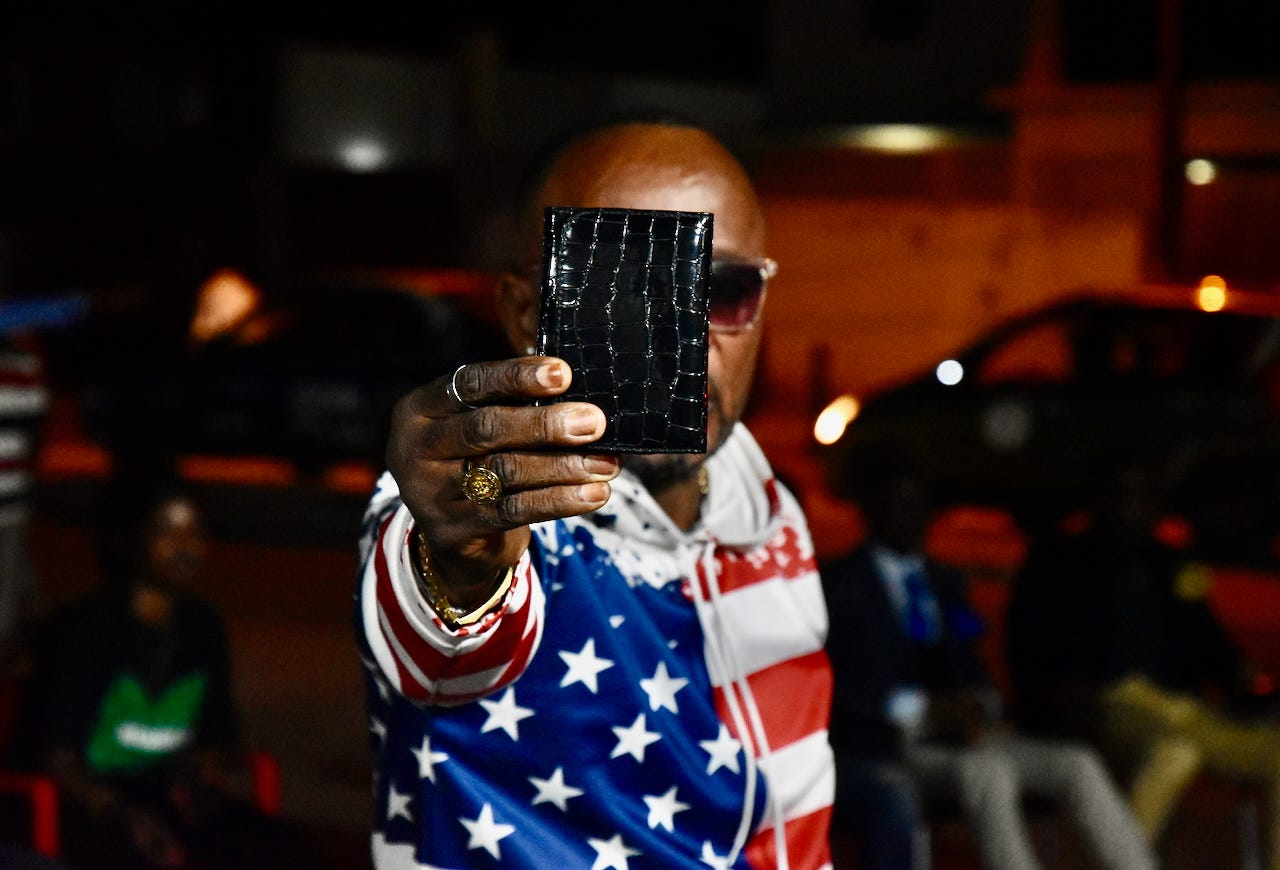
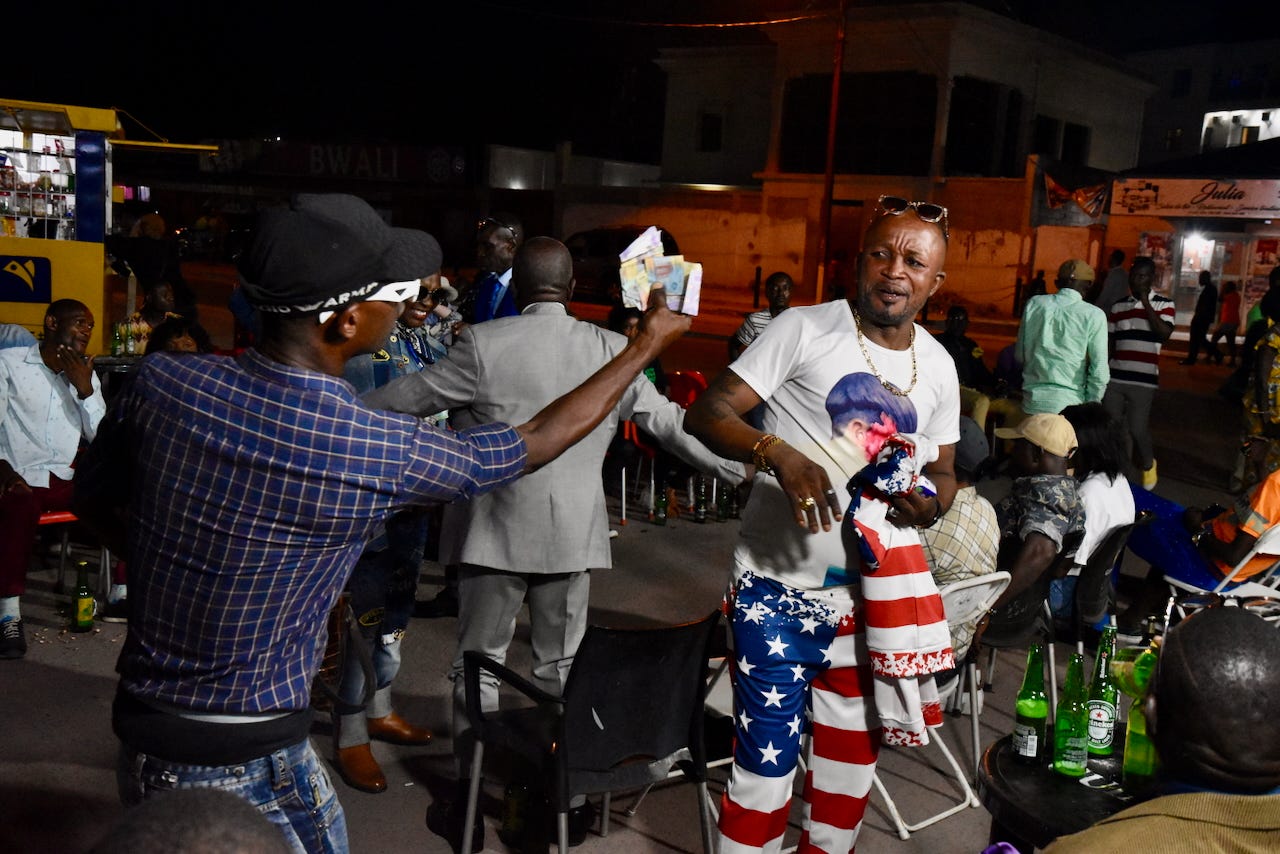
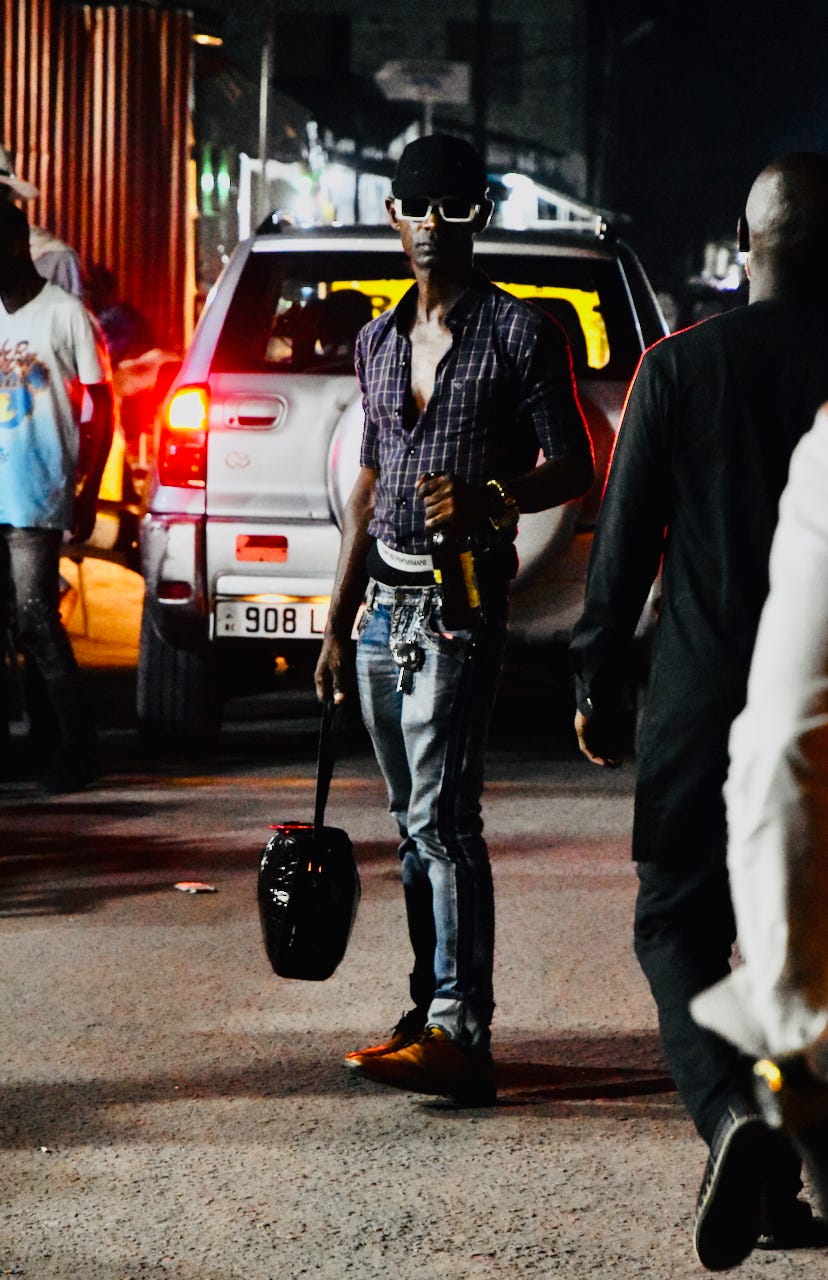
During our time in Brazzaville we took a Sunday afternoon trip into the city to see some of the famous ‘sapeurs’, a performative sub-culture of snappily-dressed dandies who display their designer style at urban gatherings, here and in DRC. As we sat sipping cold beer outside the bar Chez Deguy, they slowly drifted in and milled around chatting, drinking, and posing.
Les sapeurs belong to La Sape, which stands for Société des Ambianceurs et des Personnes Élégantes (Society of Ambiance-Creators and Elegant People). Their evolution has political, societal and colonial threads running through it, and has shifted with time. You can read a bit more about them here.


One of the characteristics of the group is to proudly show off their possessions and status, although most are working-class and not actually particularly wealthy. As the night went on, some of the men paraded and danced, and a faux argument ensued between two sapeurs comparing the contents of their wallets.
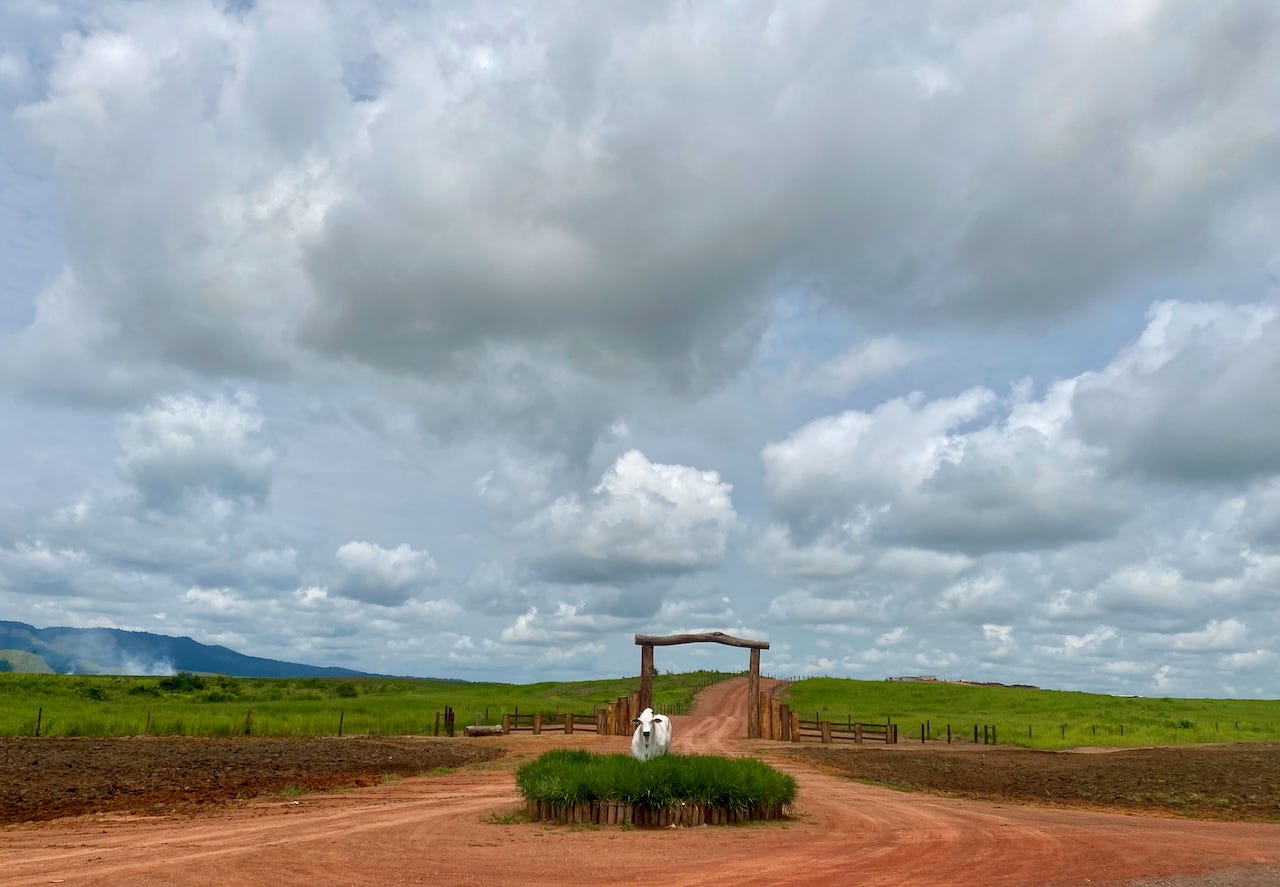
It felt like we were driving in the wrong direction as we moved west to Dolisie then north to the beautiful Monts de la Lune.
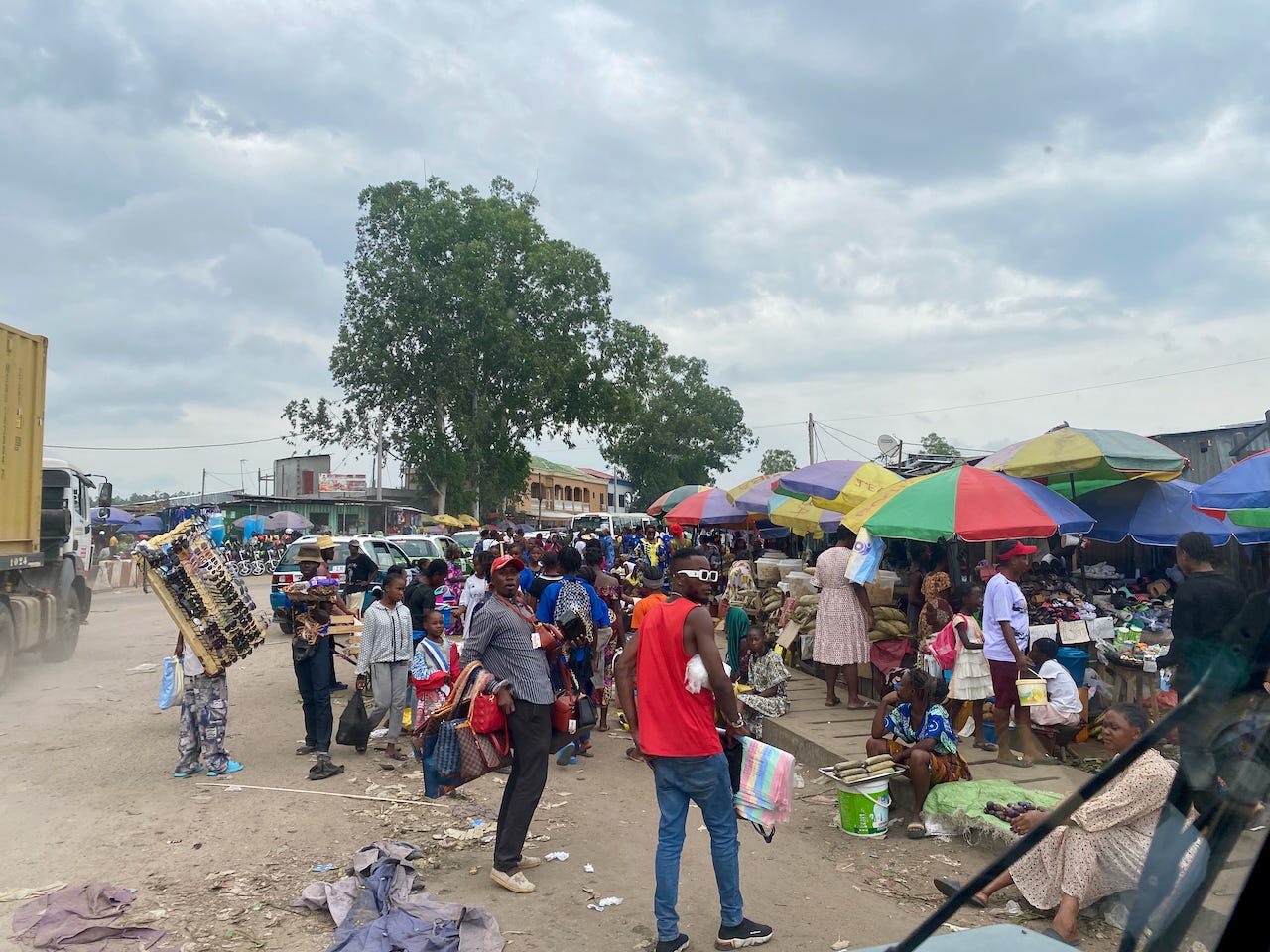
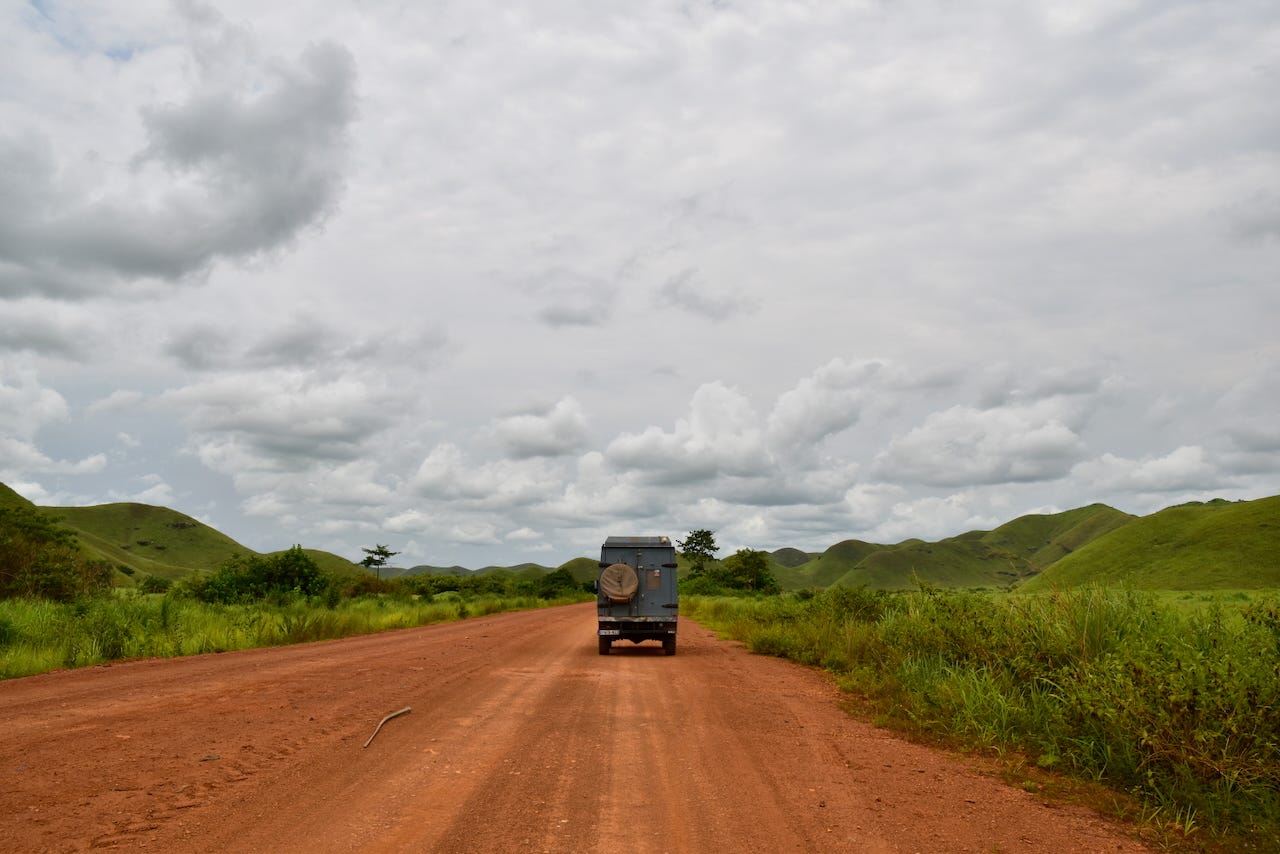
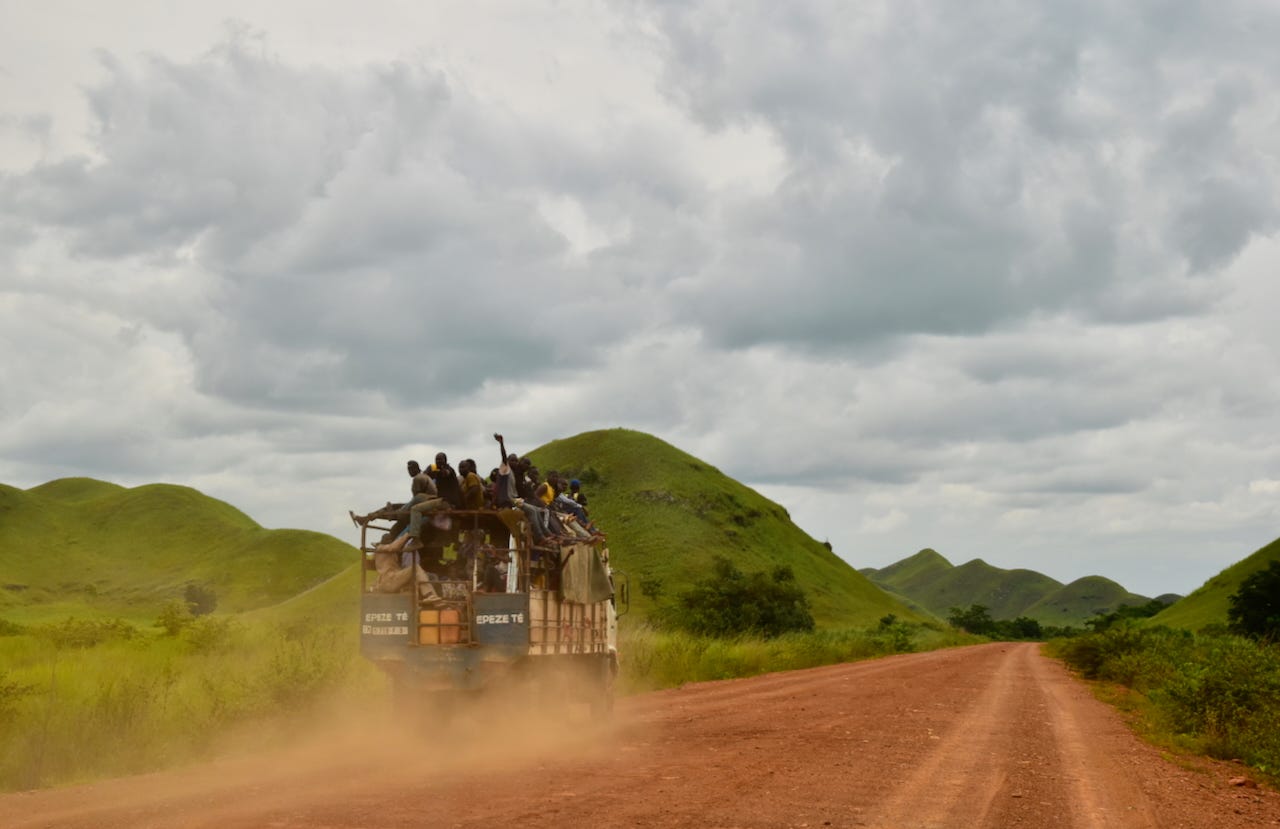
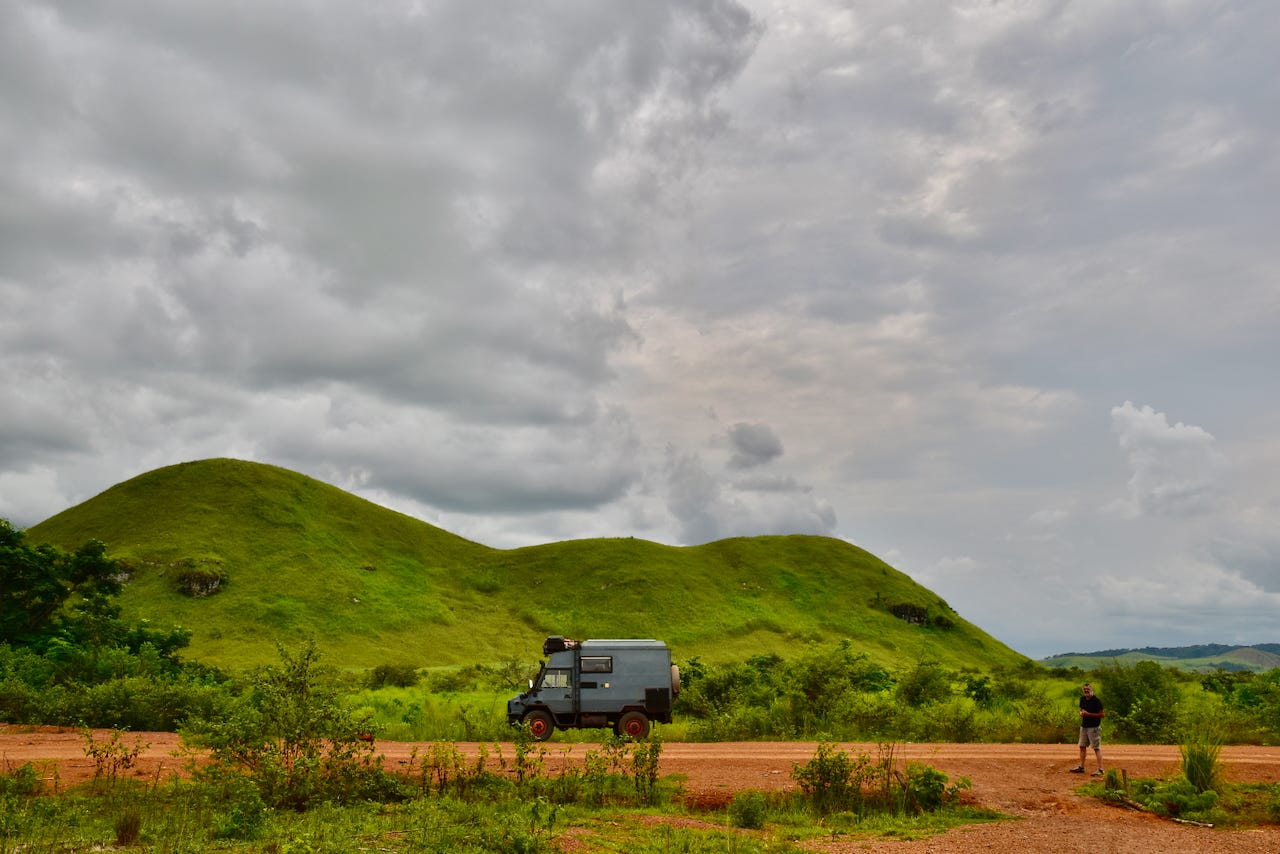
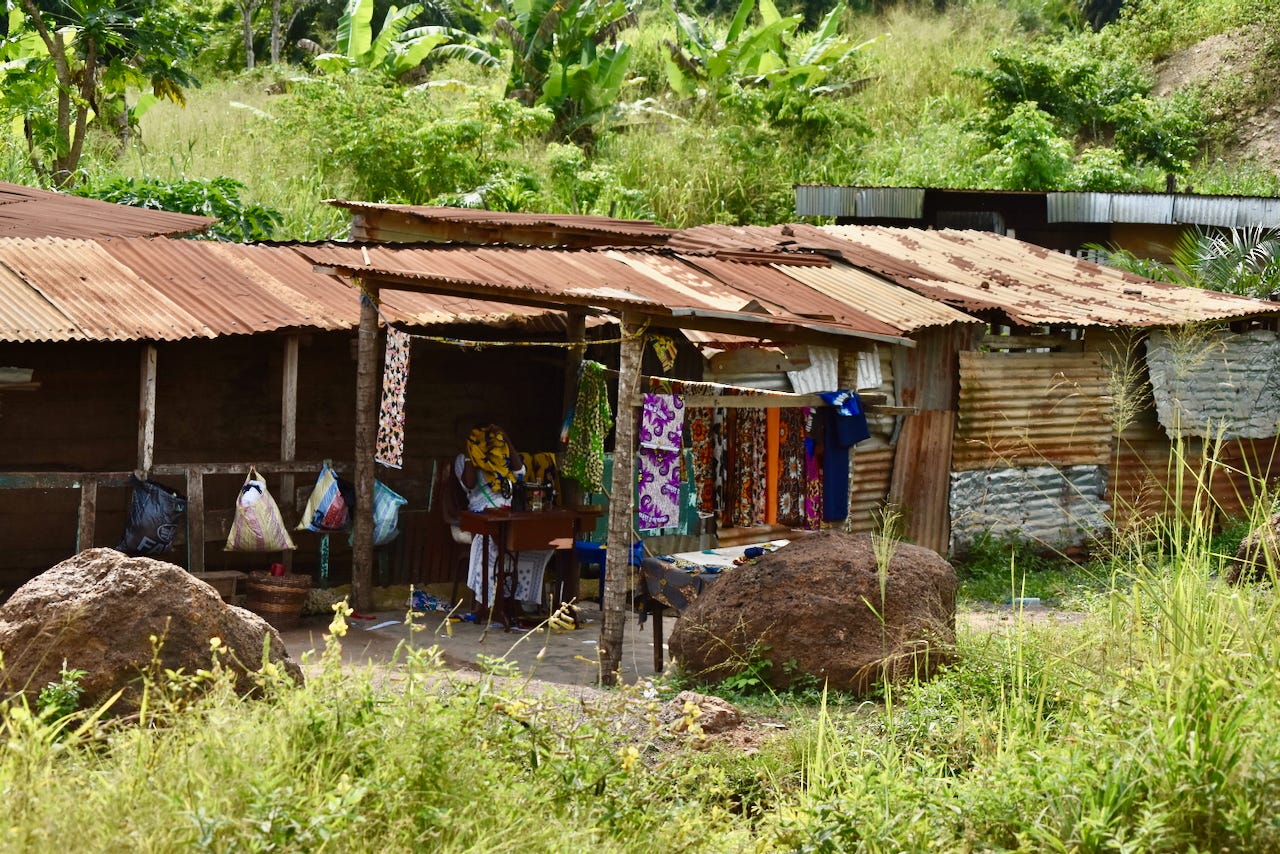
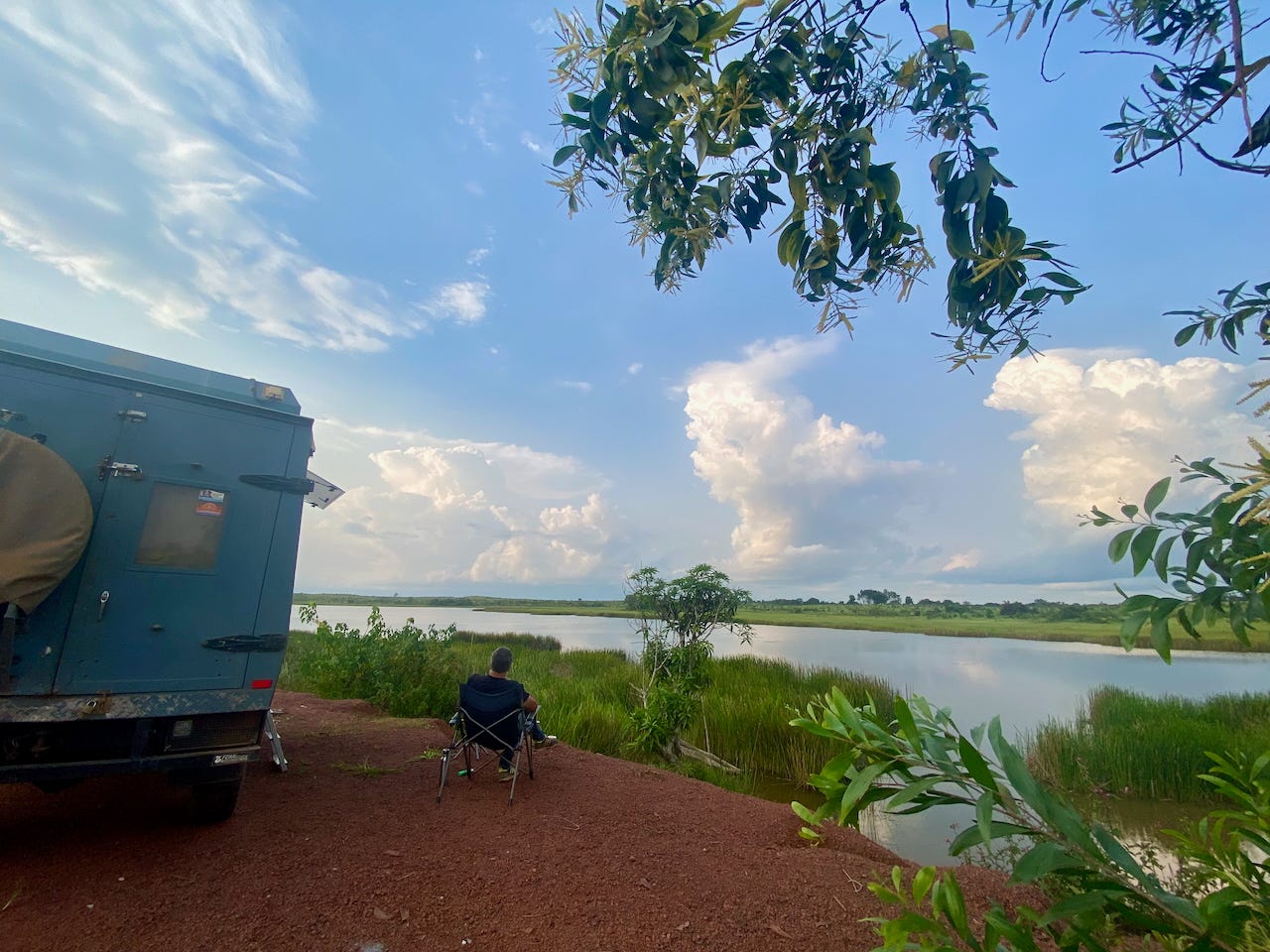
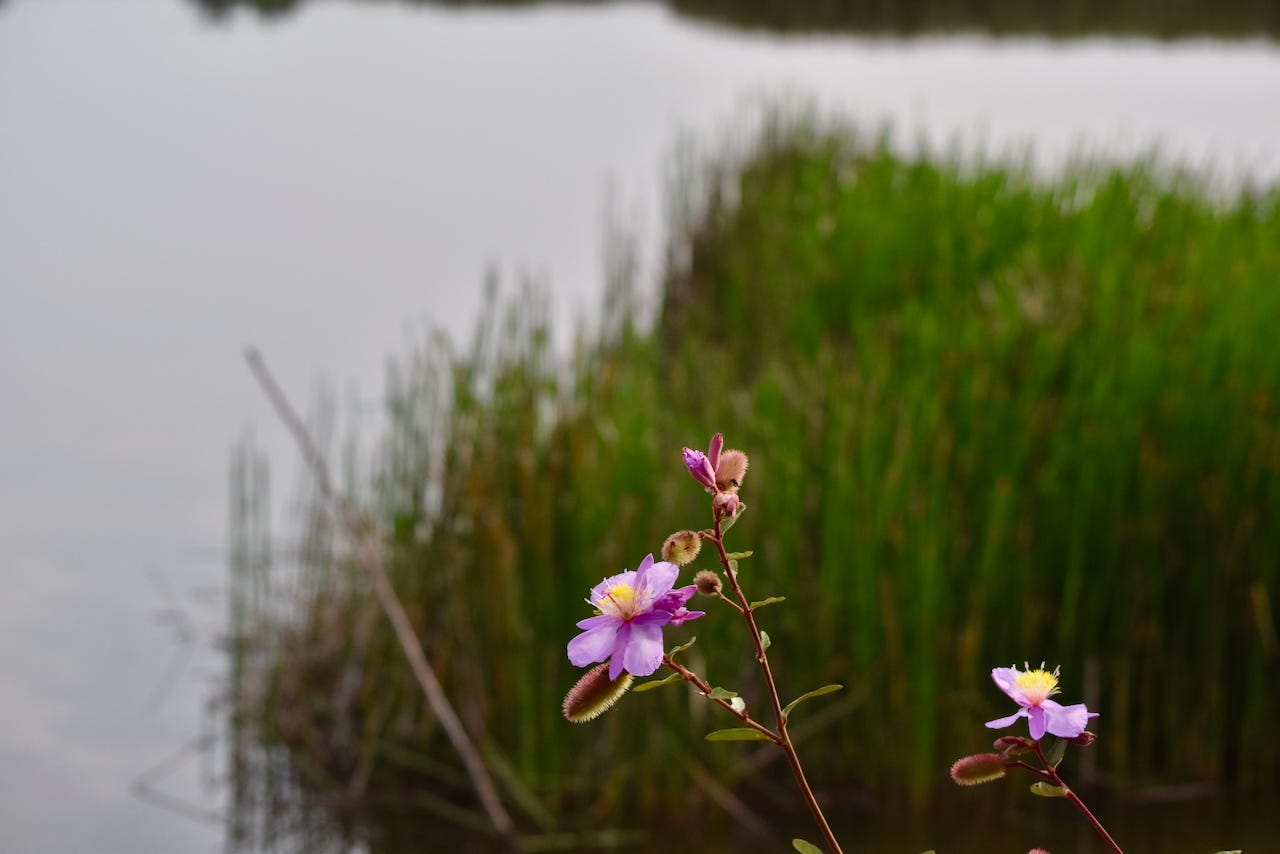
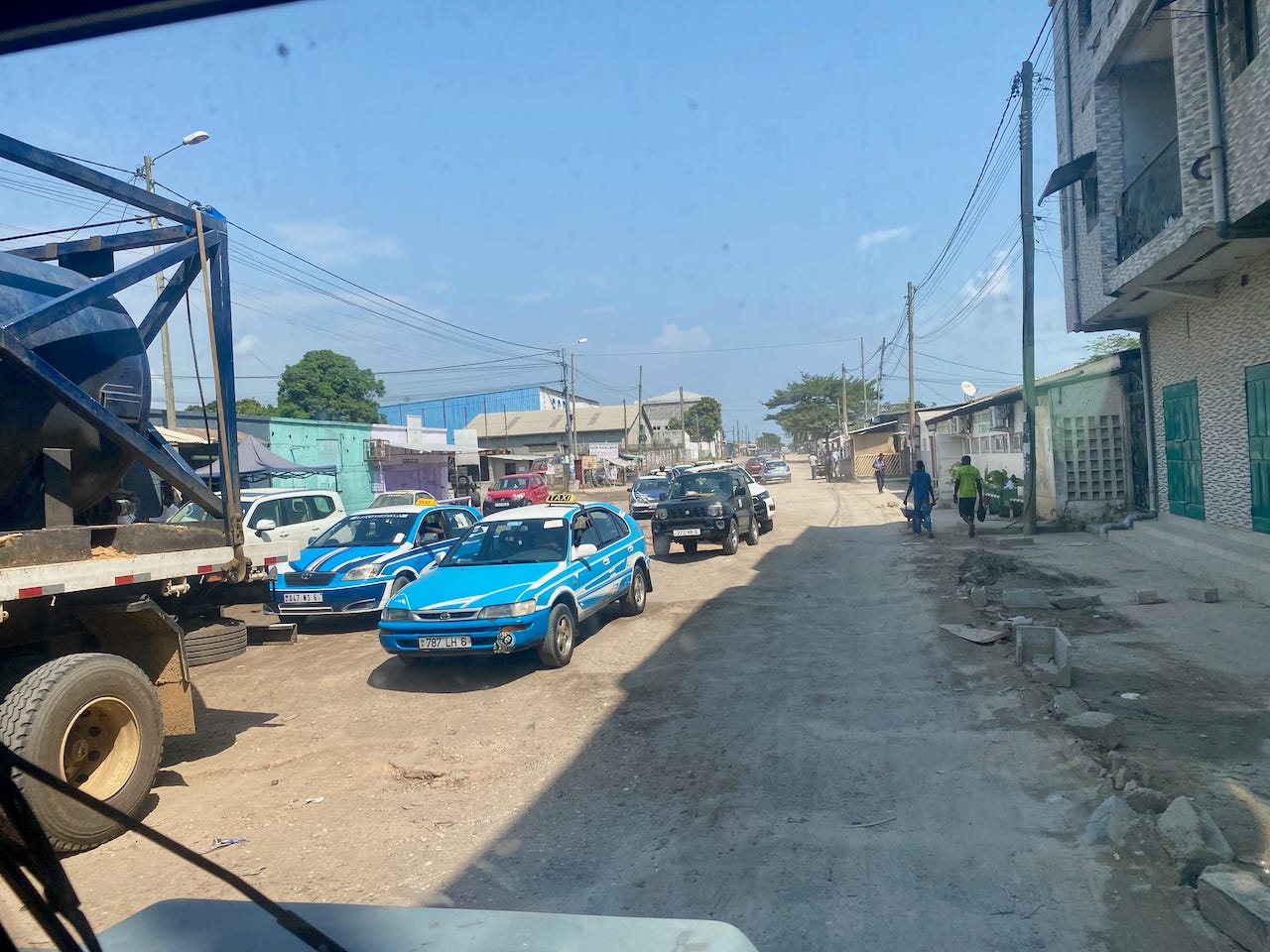
We’d been spoiled with all those lovely roads, and grimaced as we bumped through Point-Noire’s gnarly streets, where we did some essential chores before exiting for some peace and quiet again.
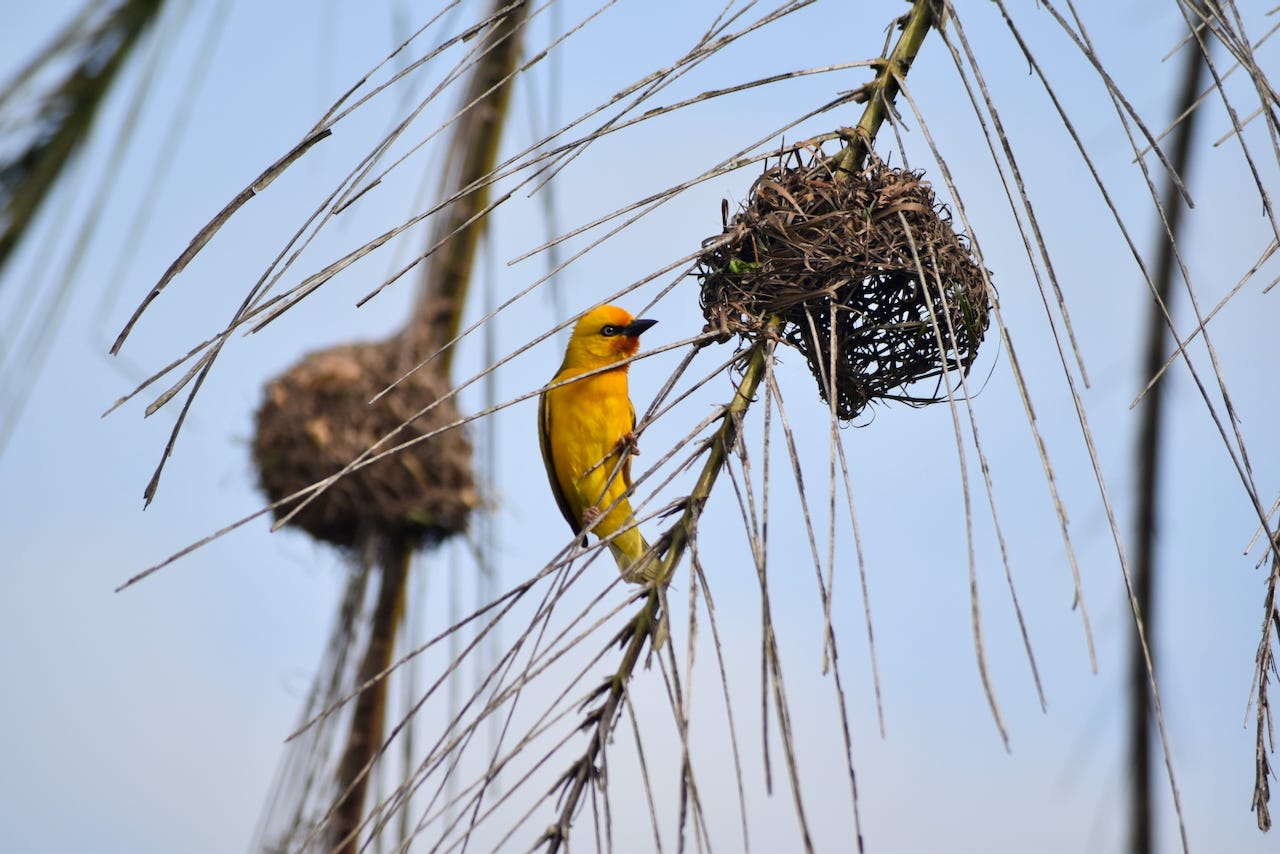
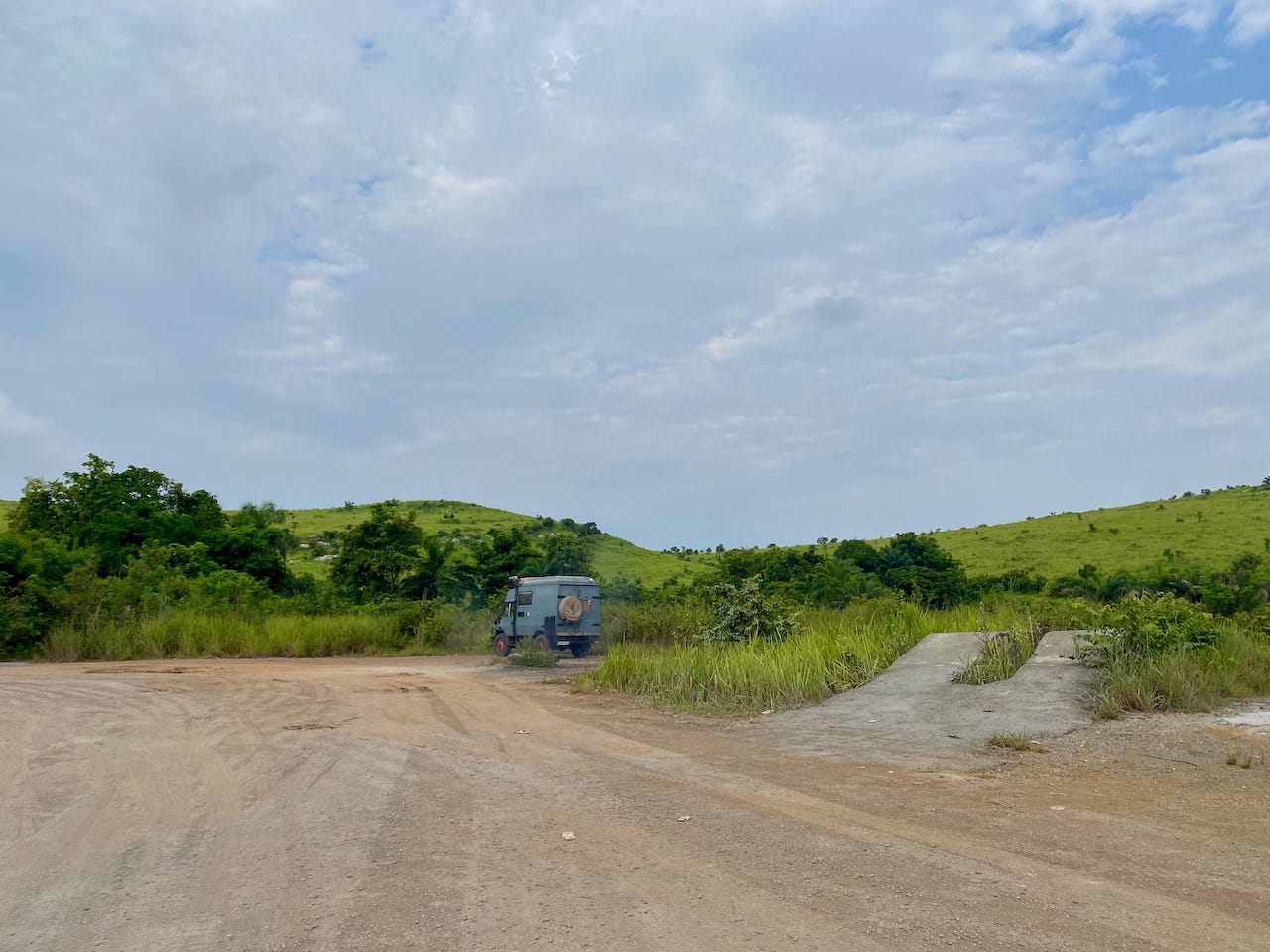
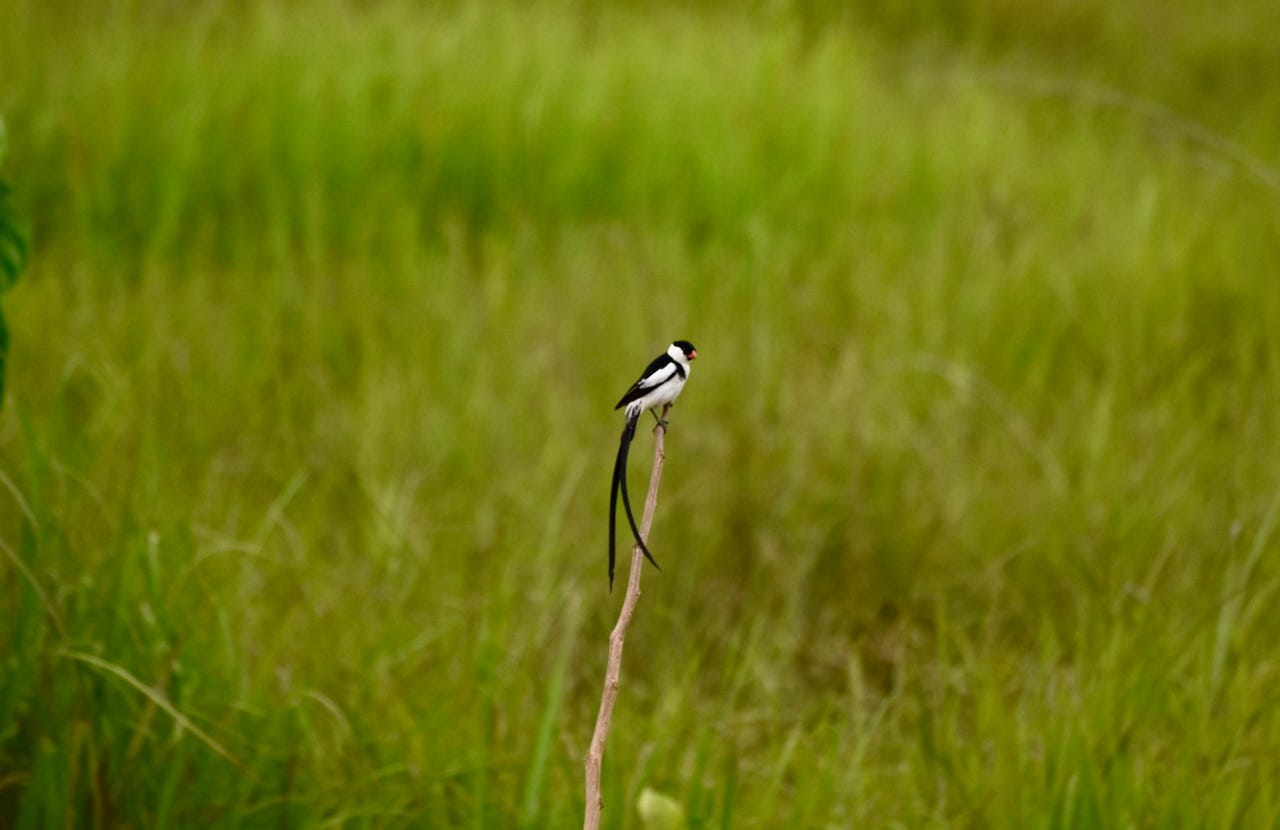
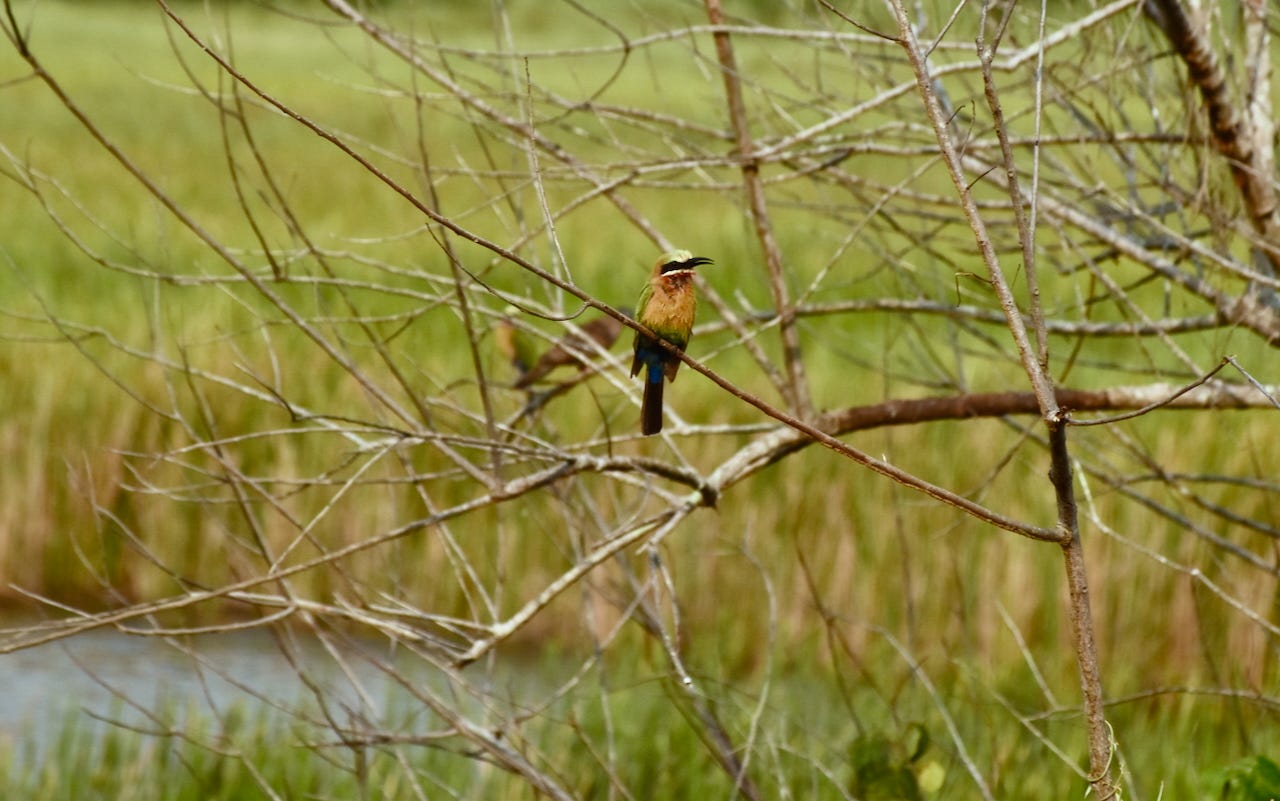
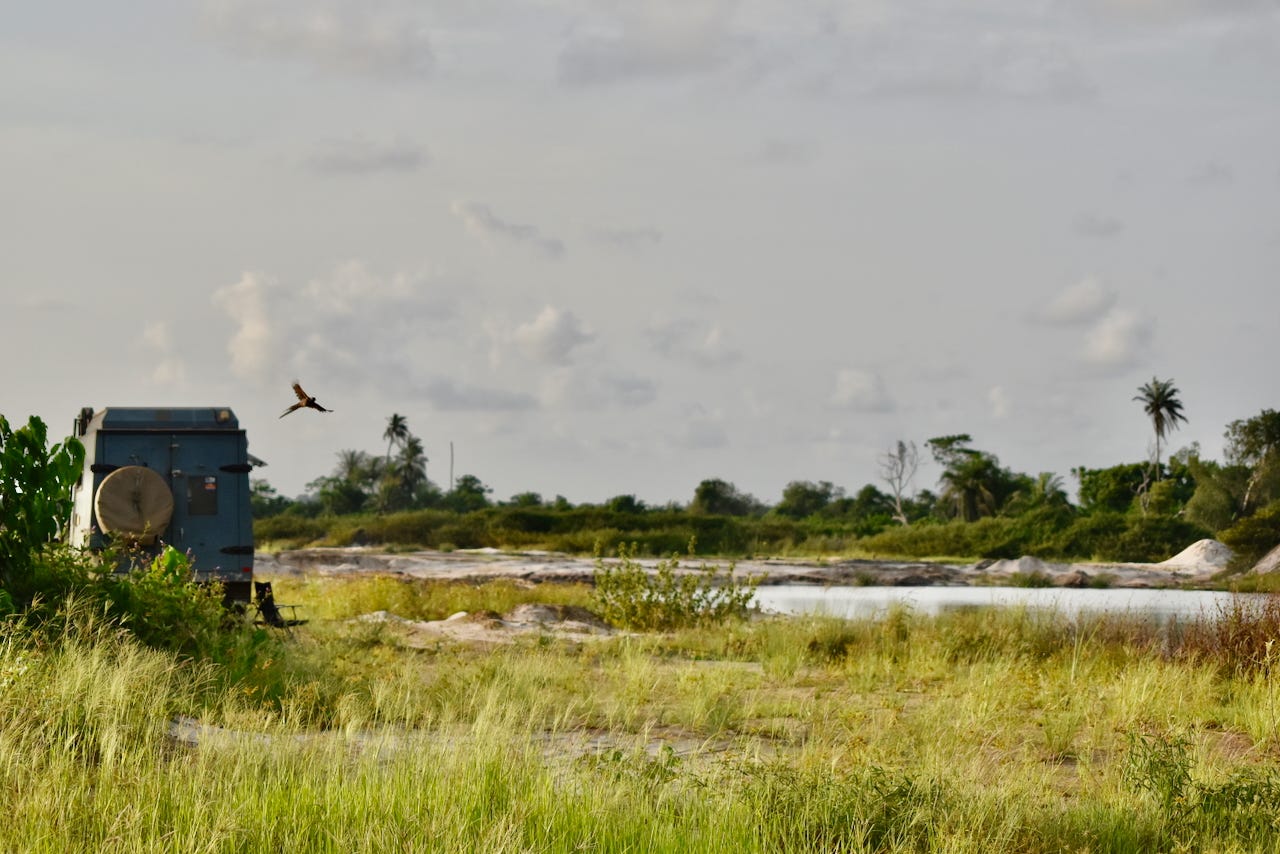
We got close to the border with Cabinda and followed a track we could see on the satellite map before ending up in another sand mining site that was chock full of birds. It was our last night in Congo, and we were on time to leave before our visa expired.
The next morning we left early and headed for the first of three border crossings in five days.
—
CABINDA
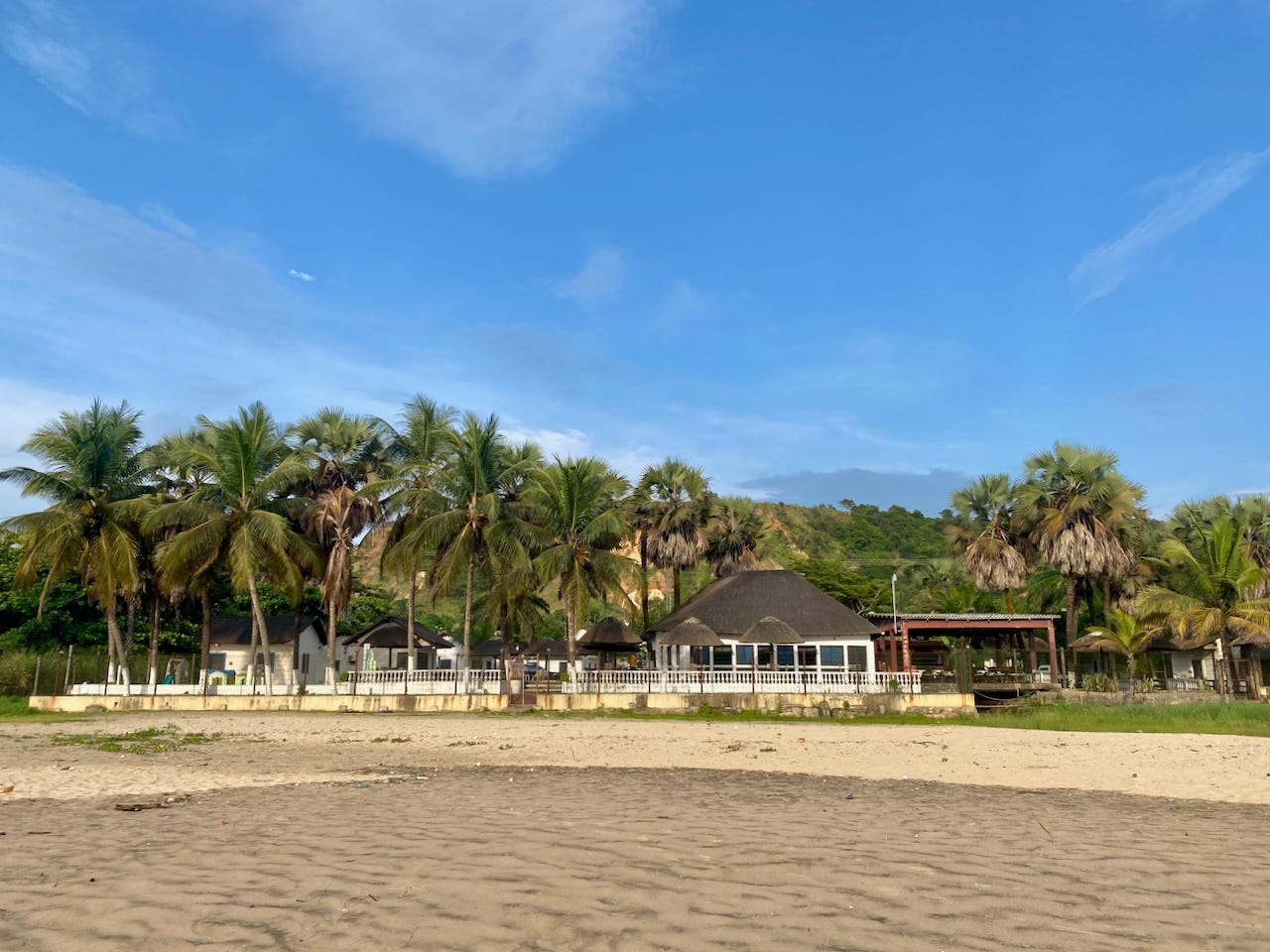
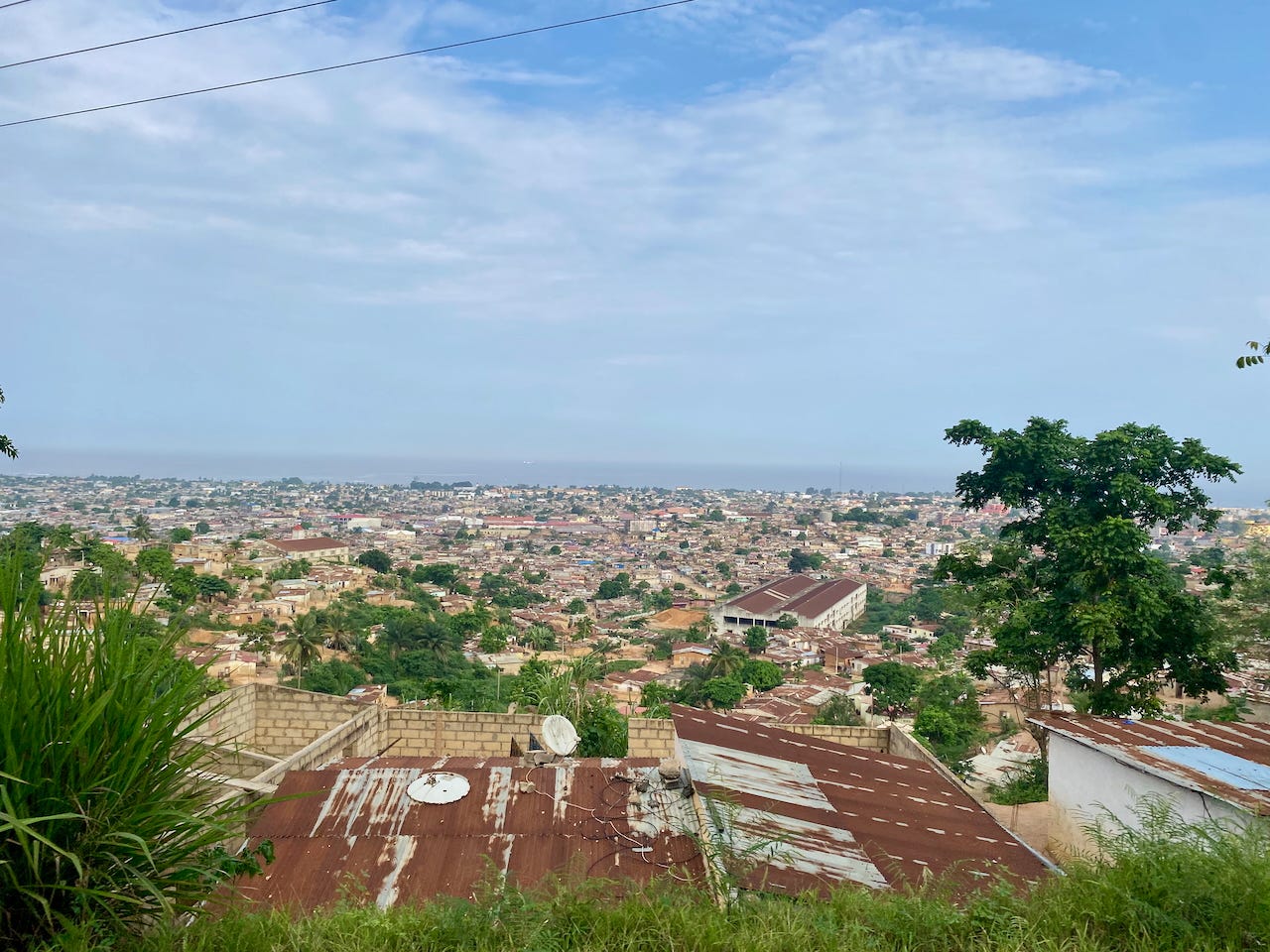
Made it to Angola! Sort of.
The tiny Angolan exclave of Cabinda is separated from the rest of the country by a sliver of the DRC, which extends to the coast – for the overlander, that bit of DRC is probably the most inconvenient and expensive finger of land on this trip.
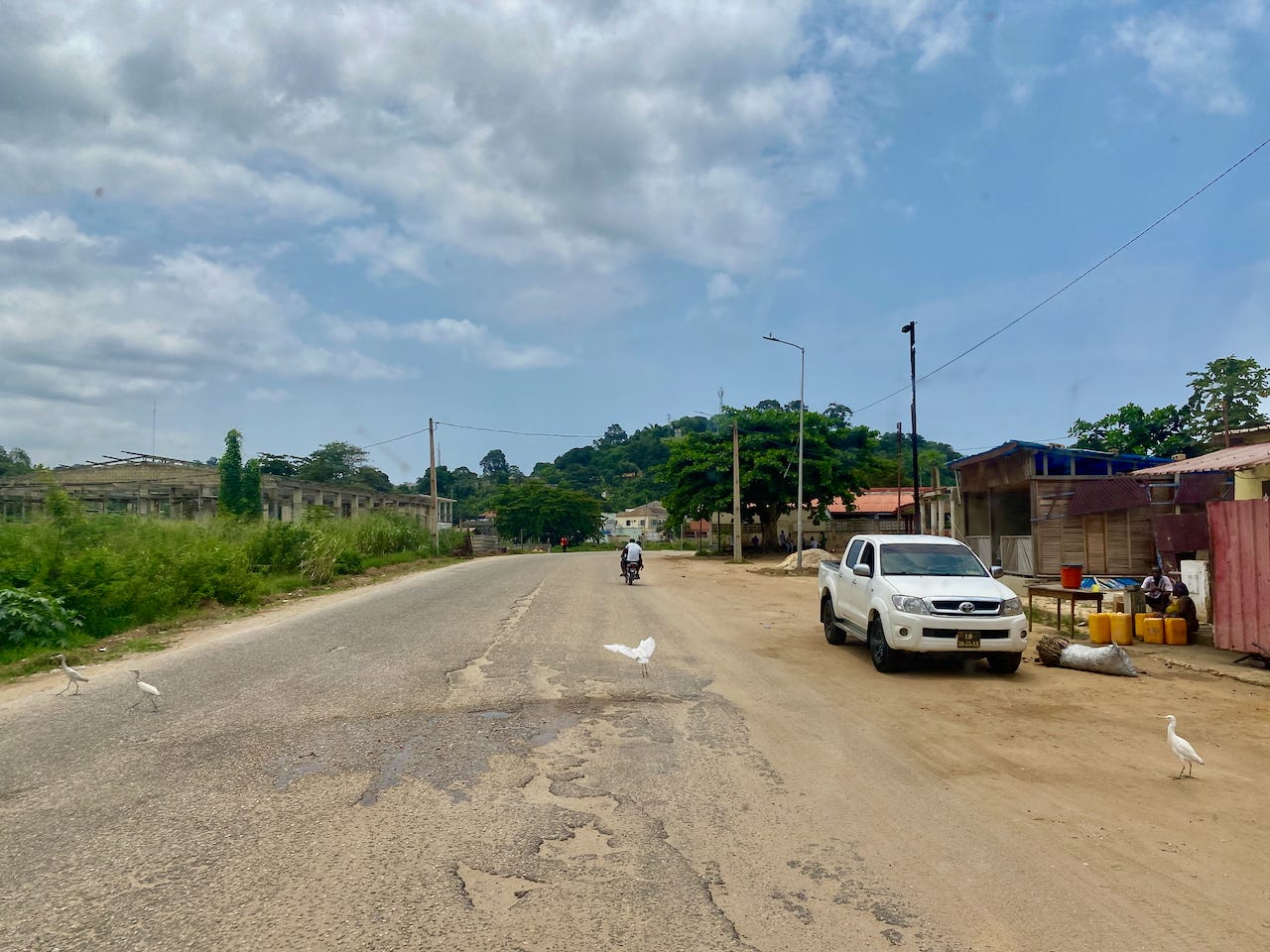
We were back in Portuguese-speaking territory again, which made the day-one task of buying SIM cards and vehicle insurance quite interesting.
It wasn’t ‘proper’ Angola yet, but we still celebrated with some cervejas and massive garlicky shrimps.


—
DRC (Congo-Kinshasa)
The three-hour border crossing from Cabinda into DRC was a faff but made so much smoother by a man called Patrick. We always go all out to avoid using ‘fixers’, who are just a pain in the neck and always seem to try to over-complicate things, but Patrick was a staff member who seems to have appointed himself to help foreigners get through the bureaucracy, no strings attached.
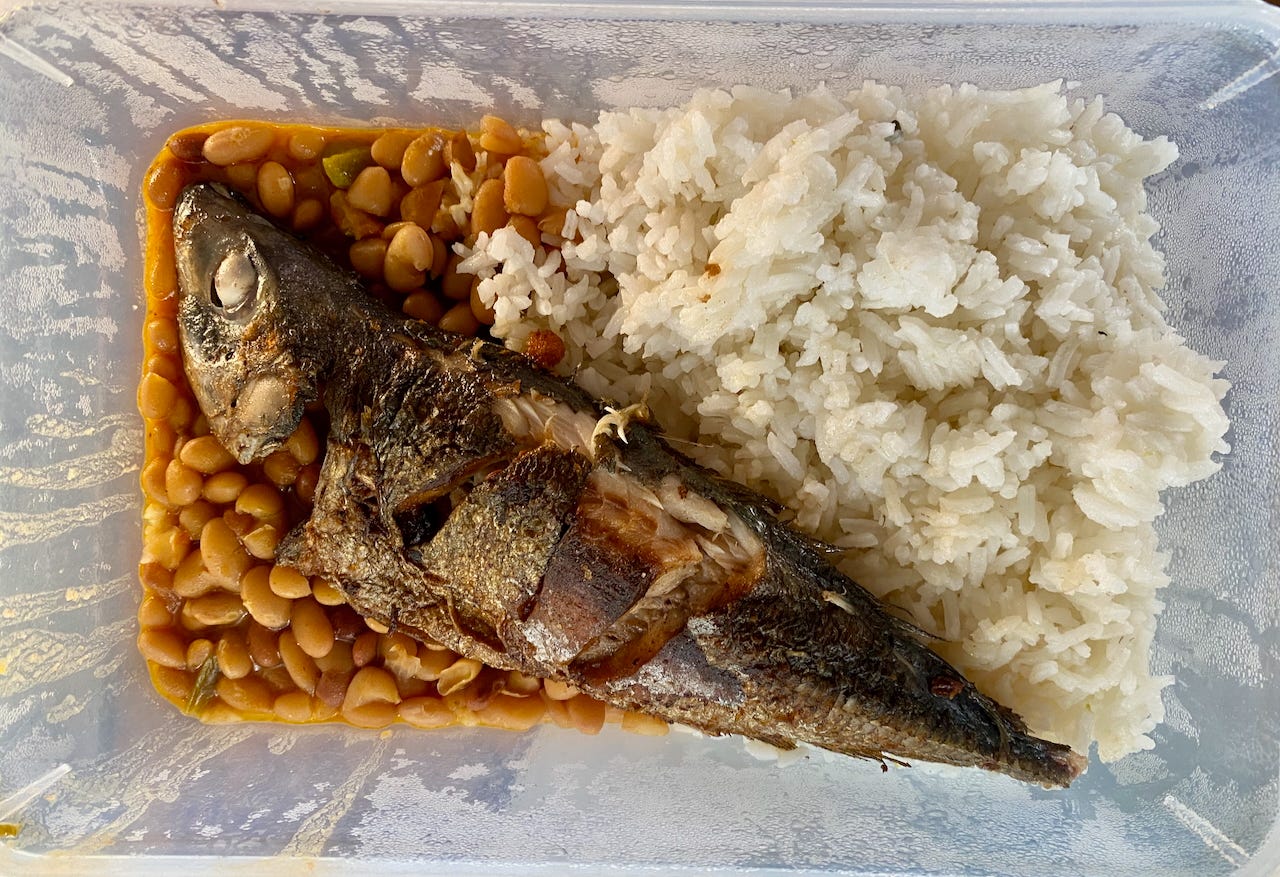
As soon as we finished the process we pulled into a foodstall and asked the lady to fill our tupperware with rice, beans and fish. In a new country, it’s always important to sample the food asap.
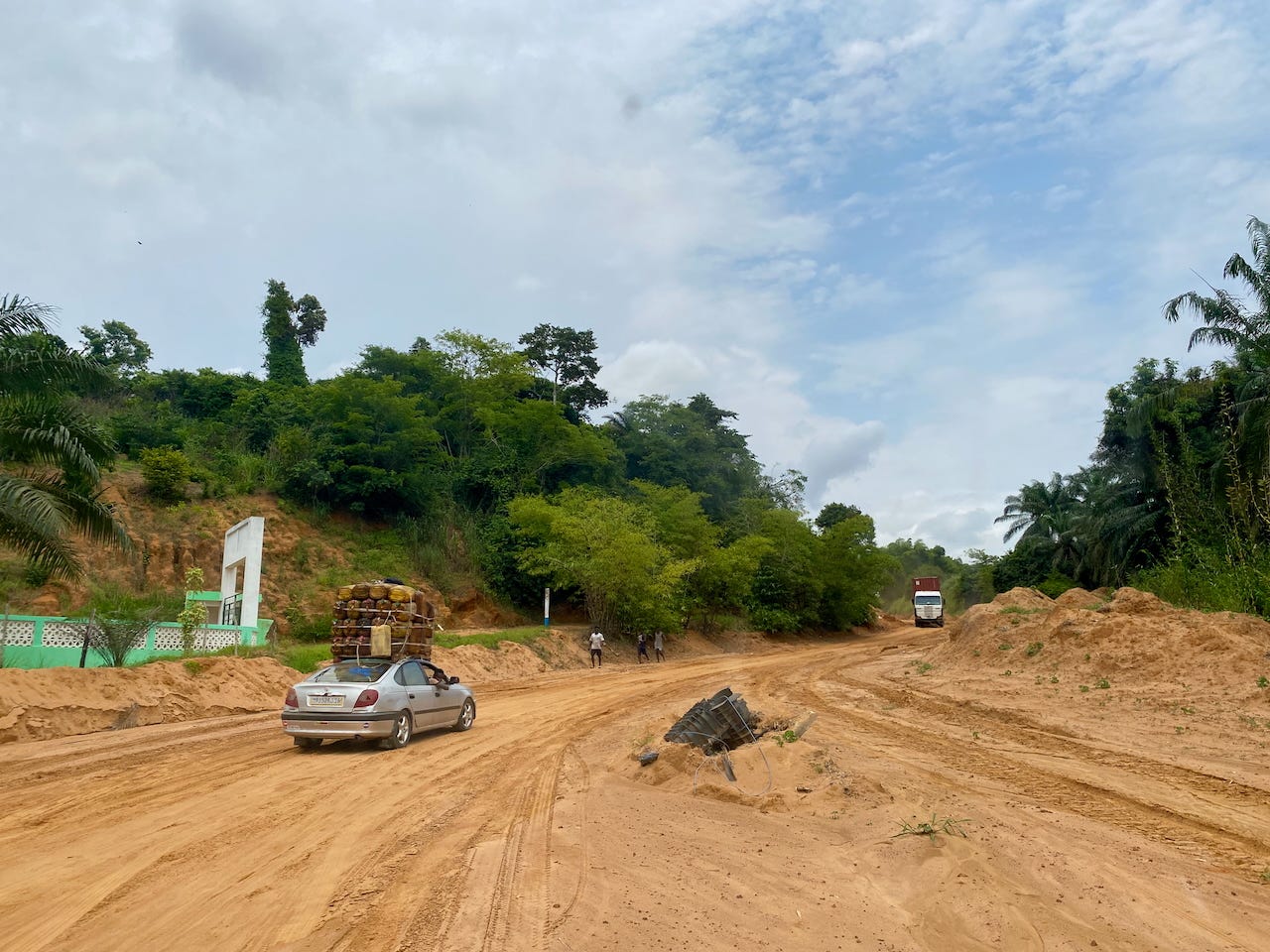
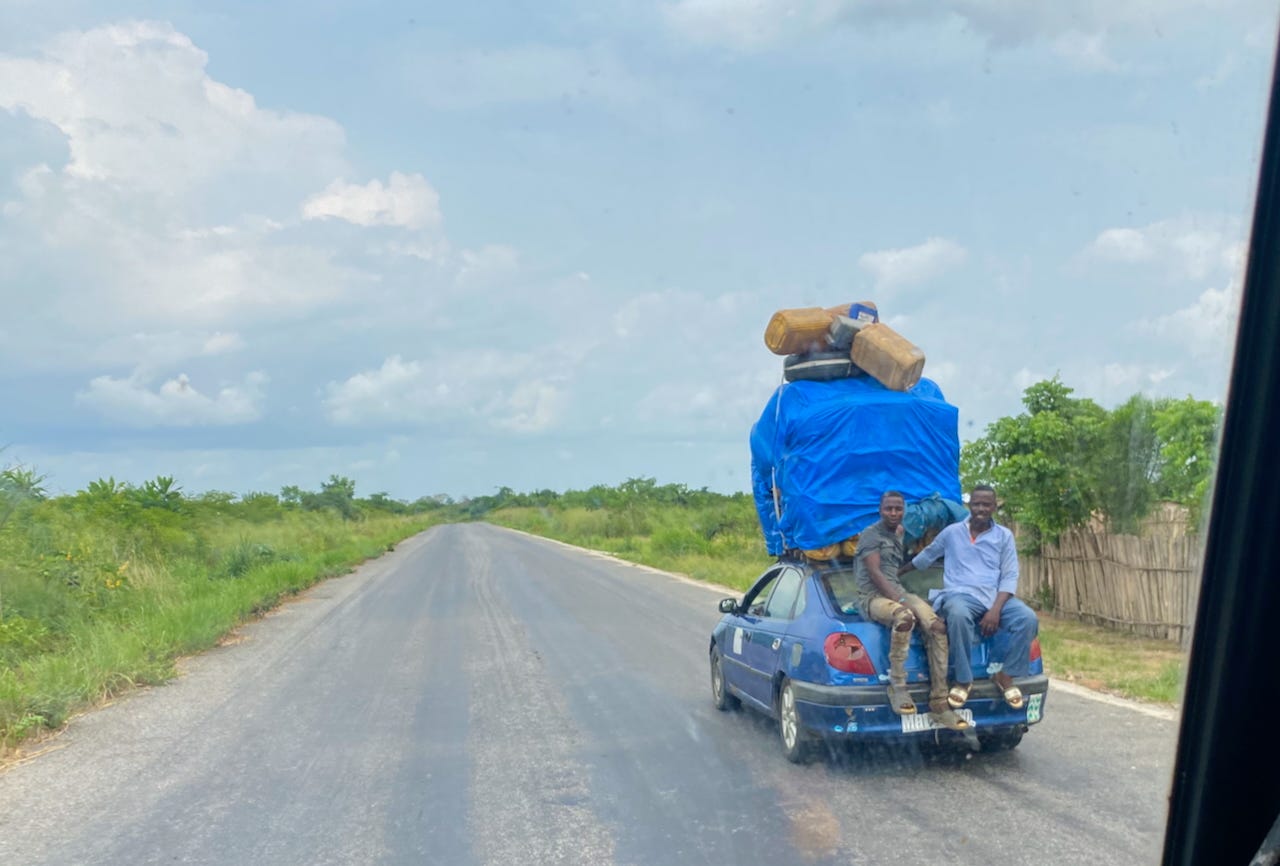
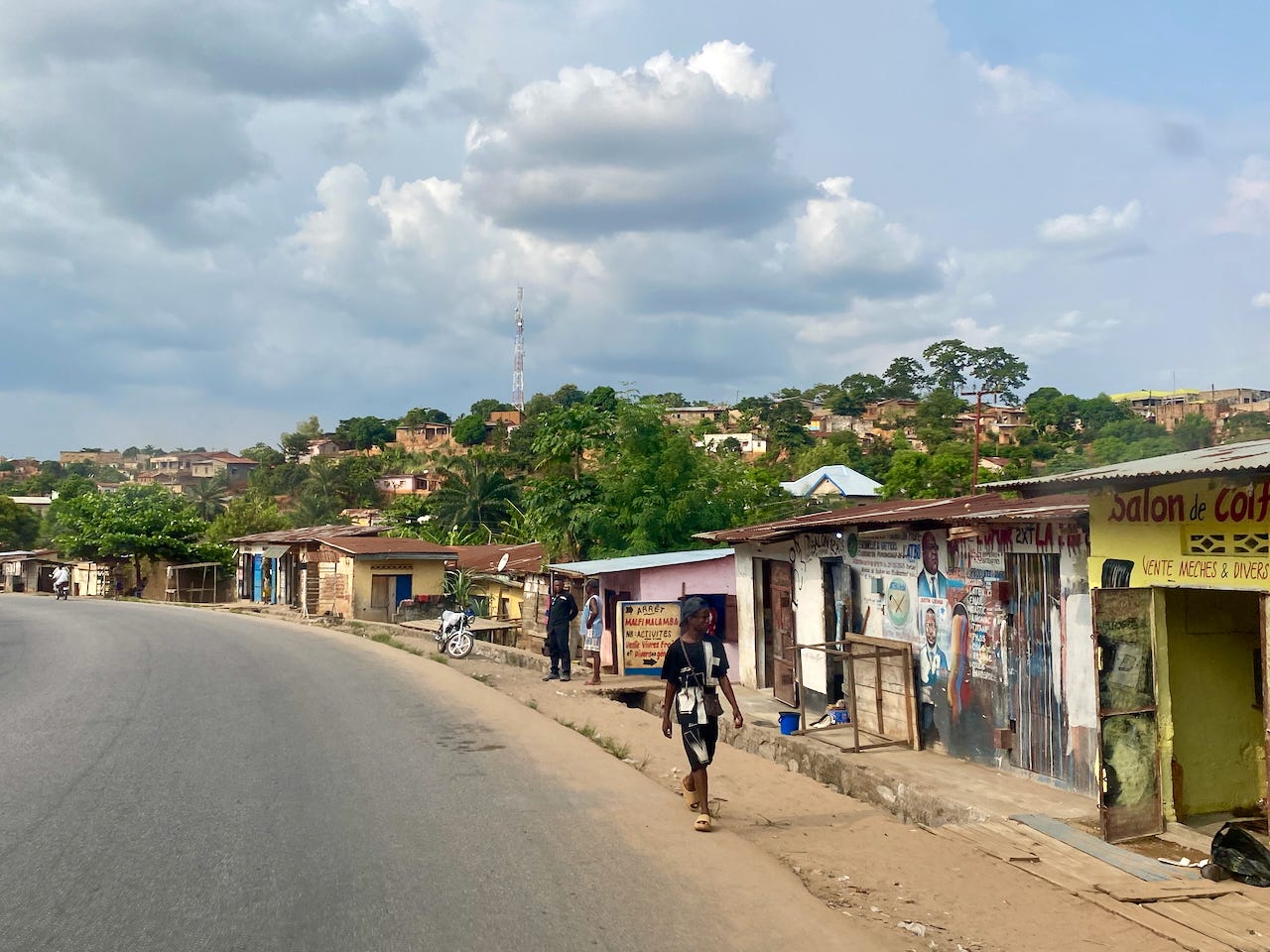
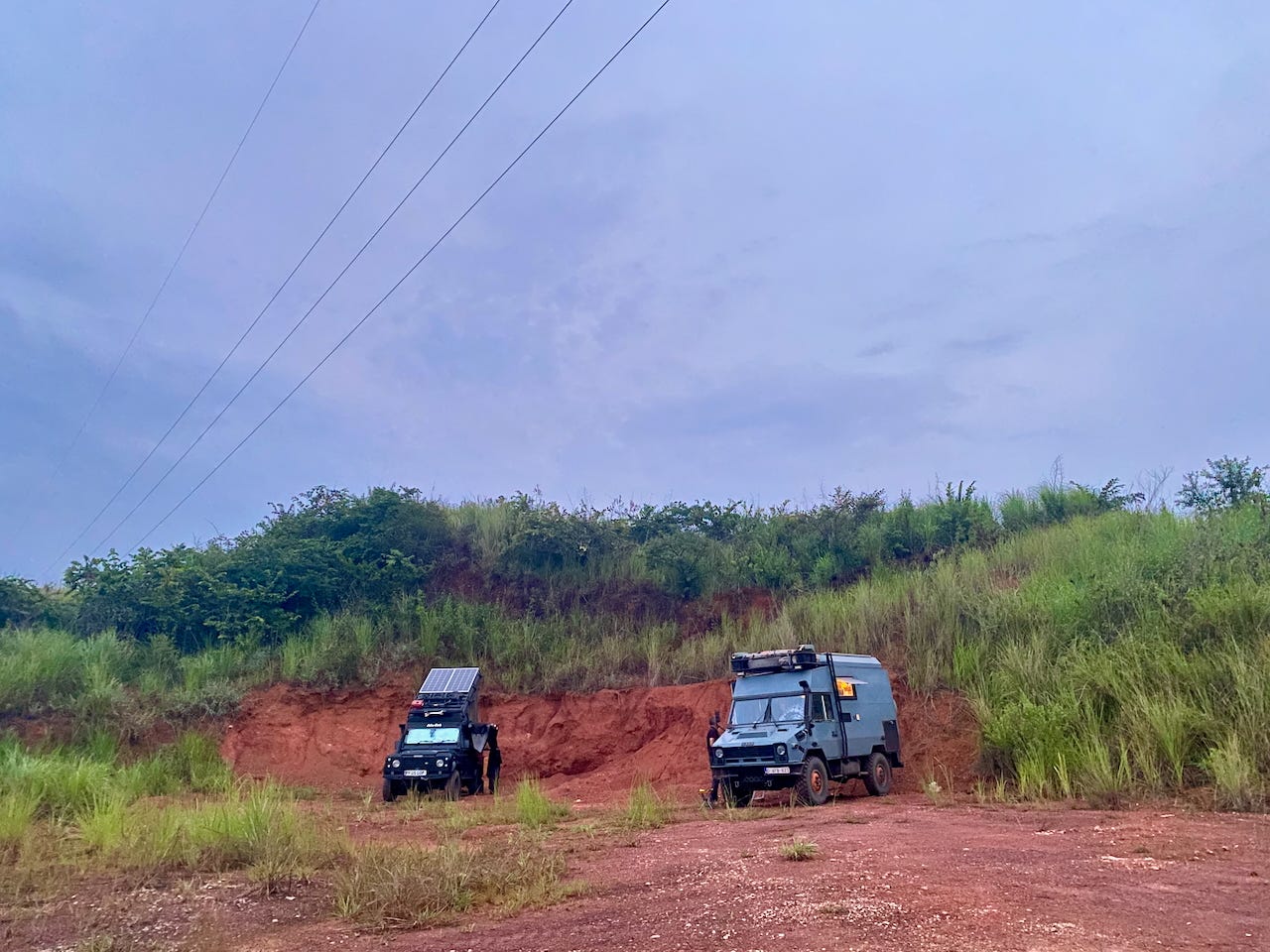
We spent just one night in DRC. We didn’t feel we had to panic-rush through it for safety reasons, but we had a bit of a work deadline and wanted a good chunk of time in Angola before we would travel back to Europe for another visit. In Cabinda we’d run into Martha and Mitch of @jammygits, and we ended up catching up with them at a quarry wild camp for the night.
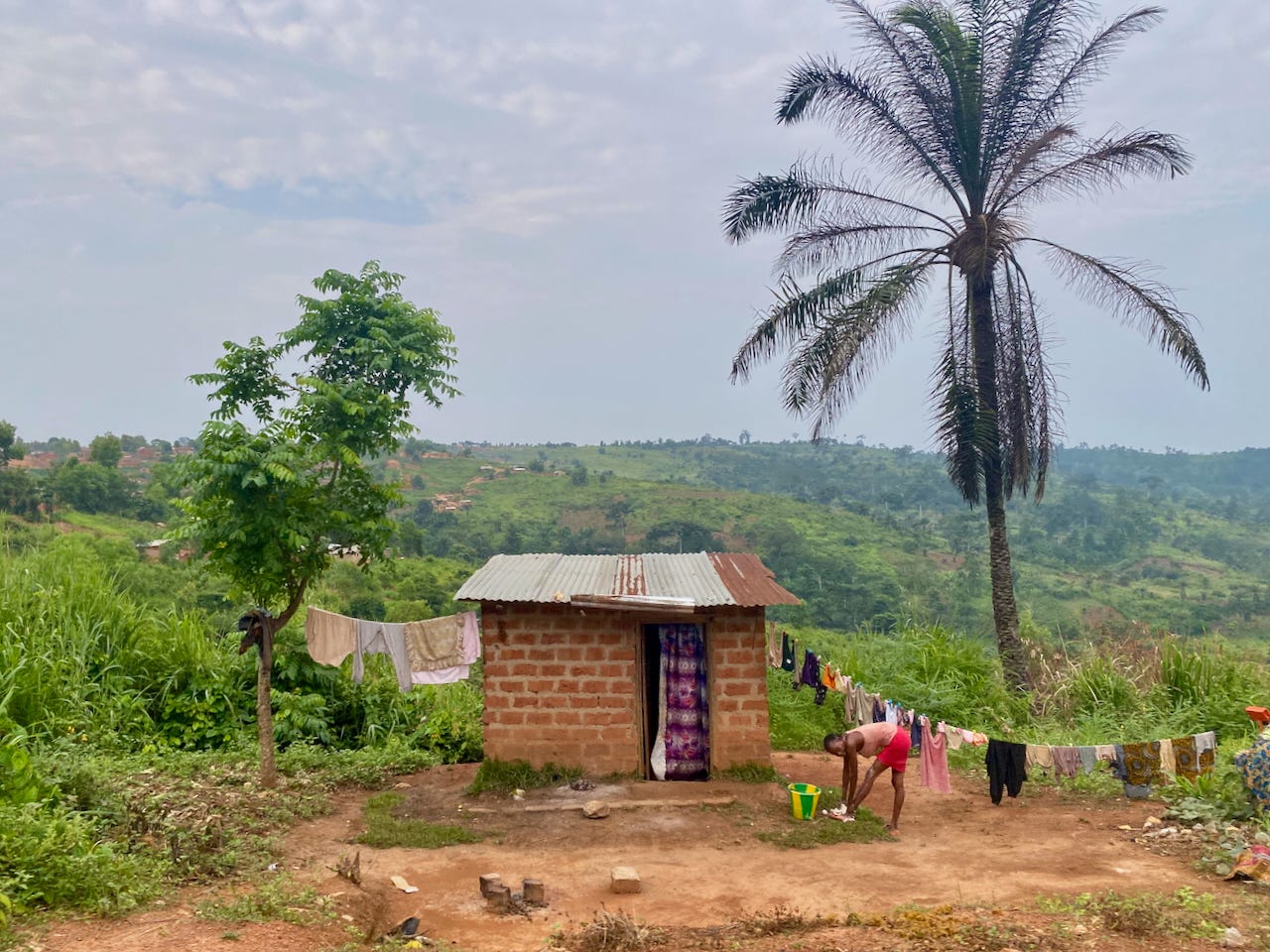
One more border to go. We crossed the Congo River at Matadi and seemed to get lucky with a relatively easy crossing, contrary to some of the tales we’d heard of gridlock and chaos.


As we approached the border post the traffic was a little busy but nothing too bad. In fact I think this one-minute video pretty much sums up a great many of our city driving days in West and Central Africa – keep your eyes open, take your time, expect the unexpected, and all will be well.
ANGOLA. We were in! All paperwork present and correct, Ivy still rolling along, our sanity intact.
Around 19 months after leaving Europe for Morocco we’d made it through the ‘hard’ part. If you read this regularly you might think it did sound hard – and, my word, some days were a test. But our overwhelming conclusion is that the difficult things were nowhere near as challenging as we’d feared from a distance. And the great things about this region were beyond our imagination. We’d relished it and would make the same decision again. If anyone wants our advice about doing it, we say ‘go’. Maybe we’ll be back?
For now we turned our minds to chapter two – the vast expanse of southern Africa.
I have always wondered about gorillas and their nose-picking, and now I know. Excellent. And if there ever was a society I'd love to belong to it would be the Société des Ambianceurs et des Personnes Élégantes (Society of Ambiance-Creators and Elegant People).
And congratulations on making it to the middle. We will celebrate our second equator crossing this year, going north this time - but we do it by ocean. It's really a thrill isn't it?
Great story Paula! Thanks!
Good to see some birds again! Not that I don't enjoy all the rest of it. Bon voyage !